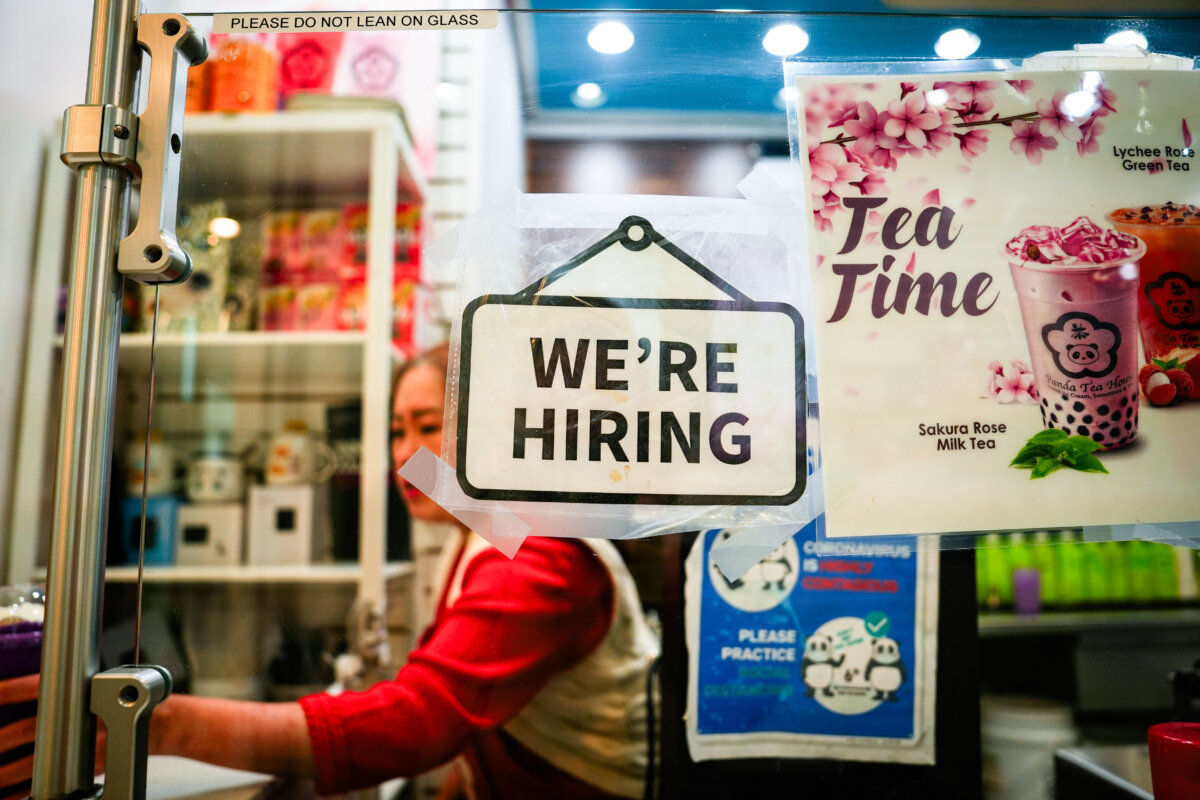

Total U.S. bankruptcy filings, which include filings made by both businesses and individuals, rose by 7 percent in May on a year-to-year basis.
Individual bankruptcy filings rose by 8 percent during the one-year period. Although overall commercial filings were down marginally by 0.1 percent, bankruptcy filings made by small businesses jumped by 36 percent, according to a June 5 statement from the American Bankruptcy Institute.
“The May data reflects a continued but measured uptick in bankruptcy activity, particularly among small businesses,” said Michael Hunter, vice president of Epiq AACER, the company that provided the bankruptcy data.
“The trend highlights the cumulative impact of elevated interest rates, persistent inflation, and higher operating costs. As access to affordable credit remains constrained, more businesses and consumers are turning to restructuring tools to stabilize and reset financially.”
The 12-month inflation rate has consistently remained above the 2 percent level over the past few years. In recent months, the rate has shot up since the Iran conflict after remaining subdued for some time.
In February, the inflation rate was 2.4 percent, which surged to 3.3 percent in March and 3.8 percent in April, according to data from the Bureau of Labor Statistics. Higher prices pose a challenge to business activities and consumer spending.
Meanwhile, the Federal Reserve’s benchmark interest rate has remained elevated at 3.5 percent to 3.75 percent in recent months, with the central bank refusing to cut rates further. This contributes to keeping loan rates high, making credit expensive for businesses and individuals.
In May, commercial Chapter 11 filings fell by 7 percent from last year, American Bankruptcy Institute said in its latest statement. A Chapter 11 bankruptcy seeks to reorganize a company’s debts, aiming to keep the business operational and, eventually, turn it solvent. This is the most common type of bankruptcy filing made by businesses.
The May decline in such filings bucks the persistent increase in such cases since the beginning of the year. In April, Chapter 11 filings rose by 42 percent from a year ago. And during the first quarter of 2026, these filings rose by 37 percent year over year.
Among companies that filed for bankruptcy last month is specialty material solutions provider Trinseo PLC. On May 26, the company announced that it would commence Chapter 11 filings as part of a restructuring plan. The company said it expects the plan to cut down its debt by roughly $2 billion.
Earlier on May 6, pet food ingredient company Integrated Proteins filed a voluntary petition for bankruptcy, citing estimated assets of $50 million to $100 million and liabilities of $100 million to $500 million.
US Business Situation
In a May 14 report, S&P Global warned that the trajectory of bankruptcy filings could increase over the coming months, citing “inflationary pressures, elevated fuel prices and other macroeconomic uncertainties, largely related to the Middle East war.”
Andrew Glenn, managing partner at Glenn Agre Bergman & Fuentes, said the existing macroeconomic factors have “still not resulted in the next wave of big filings.” The current period is the “calm before the storm” ahead of a potential barrage of commercial bankruptcy filings.
Meanwhile, sentiment among small-business owners remains positive, with optimism in this group rising marginally in April, the National Federation of Independent Business said in a May 12 statement.
Financial services company ShareBuilder 401k said in a May 11 statement that although owners are weighed down by inflation and labor shortages, they are adopting new strategies to grow their businesses.
A survey from the ShareBuilder 401k showed that 88 percent of owners took “decisive action” to counter inflation and labor challenges over the past year.
“Half of all small businesses (50 percent) have increased prices to protect margins, while others have turned to lower-cost vendors (23 percent),” the company said.
According to a June 3 report from S&P Global, four out of seven U.S. sectors reported an upturn in their business activity in May—healthcare, consumer goods, basic materials, and industrials. Financials, tech, and consumer services sectors registered declines.
On the employment front, the U.S. economy added 172,000 jobs in May, exceeding economists’ expectations. The unemployment rate remains steady at 4.3 percent. However, the number of Americans filing for unemployment benefits hit a four-month high for the week ending on May 30.
Meanwhile, the Dow Jones, which opened at about 49,832 on May 1, closed at about 51,032 on May 29, a jump of roughly 1,200 points.
The Trump administration has taken actions to help businesses acquire credit.
In March, the Small Business Administration (SBA) announced that small manufacturers will be eligible to secure loans with a 90 percent federal guarantee. This is expected to help such businesses get access to “long-term, affordable financing.”
Last month, SBA announced that it will allow eligible borrowers to get up to $10 million in combined financing from 7(a) and 504 loan programs for businesses, double the earlier limit of $5 million.
“By decoupling 7(a) loan balances from the 504 program, the SBA is giving capital-intensive small businesses—including those in construction, logistics, energy, food production, and related industries—greater flexibility to pair long-term financing for real estate and equipment with working capital to support operations and expansion,” the agency said.
 Friends Read Free
Copy
Facebook
Tweet
Friends Read Free
Copy
Facebook
Tweet