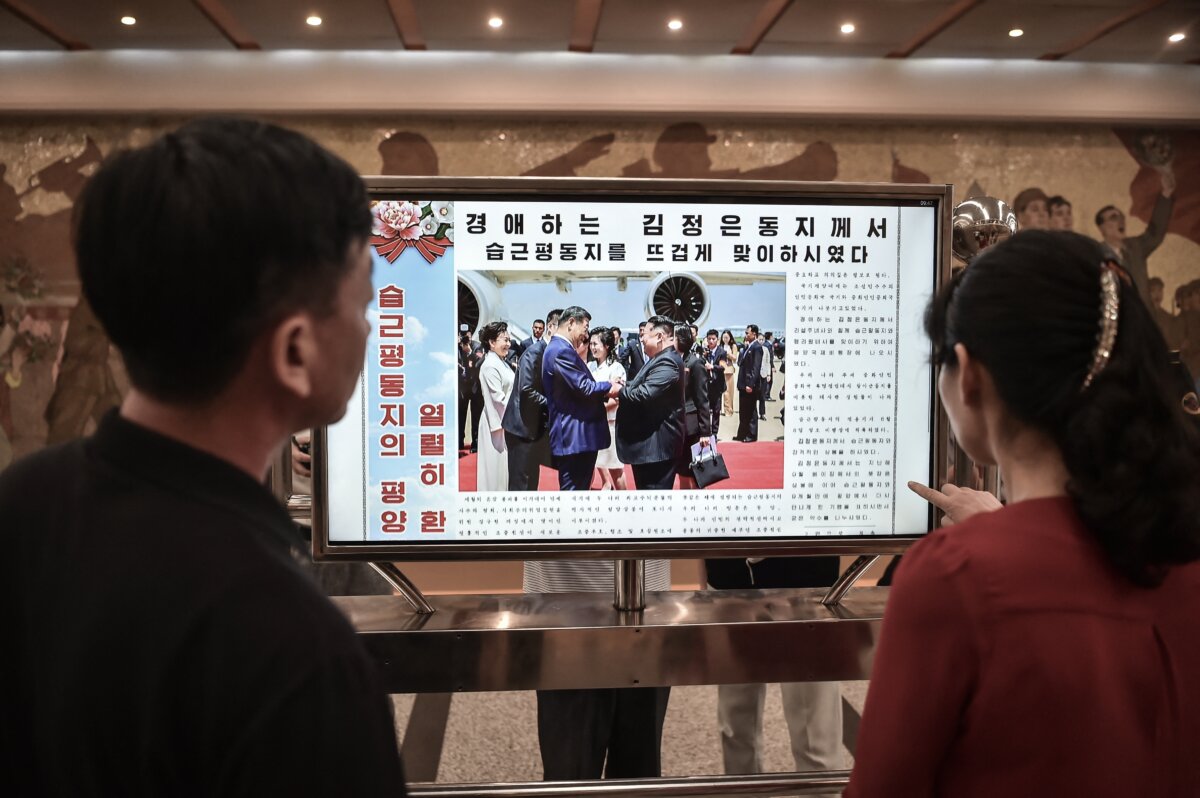
South Korean intelligence assesses that North Korea appears to be positioning Kim Jong Un’s daughter as a possible successor, raising the prospect of a fourth generation of family rule in Pyongyang.
Across the border, Chinese Communist Party (CCP) leader Xi Jinping is approaching the party’s 2027 leadership cycle with no apparent successor after breaking with several succession conventions developed in the post-Mao period.
Veteran China analyst and Epoch Times columnist Heng He suggests that the contrast with North Korea exposes a persistent weakness in the CCP system: how supreme power changes hands when neither heredity nor competitive elections determine the next ruler. Xi has not publicly said whether he will seek a fourth term.
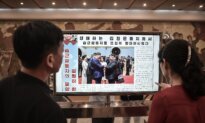
South Korea’s National Intelligence Service assessed that Kim’s daughter, Kim Ju Ae, appeared to be in the stage of being designated as his successor, according to lawmakers who spoke to reporters after a closed Sept. 1 meeting of the National Assembly Intelligence Committee, South Korea’s national news agency Yonhap reported.
Yonhap reported that the National Intelligence Service cited Ju Ae’s frequent media exposure and assessed that the appearances may be intended to establish her image among North Koreans as a future leader.
North Korea has not formally announced Ju Ae as Kim’s successor. The Sept. 1 assessment matched what the National Intelligence Service has told South Korean lawmakers in recent months.
In April, National Intelligence Service Director Lee Jong-seok told lawmakers that Ju Ae “can be seen as the successor,” according to Yonhap. He said the assessment was based on intelligence rather than merely visible signs.
A 4th Generation of Kims
North Korea has been ruled by the Kim family since Kim Il Sung established the regime in 1948. His son, Kim Jong Il, succeeded him after his death in 1994, and Kim Jong Un took power after his father died in 2011.
Ju Ae’s increasingly prominent public role has raised the prospect that supreme power could remain in the same family for a fourth generation.
The National Intelligence Service in February also cited appearances by Ju Ae at major military and political events and signs that she had expressed views on some state policies.
In April, the agency assessed that Ju Ae’s appearances in defense-related settings were intended in part to reduce resistance to a female successor and accelerate efforts to build a succession narrative.
Heng said North Korea’s hereditary arrangement does not make succession automatic or free of internal challenge. Publicly elevating an heir years in advance, however, gives that person time to accumulate experience, status, and political relationships before taking power, he said.
Post-Mao Succession
Meanwhile, in China, the CCP has an internal process for selecting its leadership but it involves neither a hereditary claim to succession nor a competitive electoral process that independently confers authority on the next paramount leader.
Once the revolutionary generation was gone, Heng wrote, each succeeding CCP leader faced the same question: Why should one senior party figure hold supreme power rather than another?
“That is the root of the CCP’s succession crisis,” he wrote in a Sept. 5 analysis.
The CCP’s written rules do not identify an automatic successor to the general secretary.
The party constitution says the Central Committee elects the members of the Politburo, the Politburo Standing Committee, and the general secretary. It does not establish a public process for determining who should replace an incumbent paramount leader.
After the upheaval during the Mao era, the party gradually developed informal conventions intended to make leadership turnover more predictable.
Mao repeatedly elevated and discarded prospective successors. Liu Shaoqi was purged during the Cultural Revolution, Lin Biao was formally named Mao’s successor before falling from power, and Hua Guofeng succeeded Mao in 1976 only to be eclipsed by Deng Xiaoping.
Heng argues that Deng recognized the dangers created by repeated succession struggles and sought greater predictability in later leadership transfers.
The arrangements that followed did not establish a formal constitutional succession system. Elite bargaining remained opaque, and retired leaders could continue to exercise influence.
Under Deng, Hu Yaobang was forced to resign as general secretary in 1987 and Zhao Ziyang was removed in 1989 after the Tiananmen Massacre, and then Jiang Zemin took the post.
Later transitions nevertheless developed recognizable patterns.
In the two transitions Heng highlights, prospective successors were elevated into the party’s top ranks years before taking power.
Hu Jintao joined the Politburo Standing Committee in 1992, a decade before becoming CCP general secretary. He became vice president in 1998 and vice chairman of the CCP Central Military Commission in 1999.
Xi followed a similar path. He entered the Politburo Standing Committee in 2007, became vice president in 2008, and was appointed a Central Military Commission vice chairman in 2010. He became CCP general secretary and military commission chairman in 2012.
Heng describes this as an informal system of designating leadership across generations. Whatever the bargaining behind it, Hu and Xi were both identifiable as likely future leaders years before taking the top post.
“That arrangement lasted for only two leadership transitions,” Heng wrote.
Xi Breaks the Pattern
At the CCP’s 19th Party Congress in 2017, none of the five new members joining Xi and Li Keqiang on the seven-member Politburo Standing Committee fit the previous pattern of elevating a younger heir apparent.
A Congressional-Executive Commission on China report subsequently noted that “no clear successor” emerged from the congress.
In March 2018, China’s National People’s Congress removed constitutional language limiting the state president and vice president to two consecutive terms.
The restriction applied to the state presidency, not the more powerful post of CCP general secretary, which was not subject to a term limit in the PRC Constitution. The amendment nevertheless removed a formal boundary associated with the leadership cycle that had developed before Xi.
Xi secured a third term as general secretary in October 2022.
The seven-member Politburo Standing Committee selected after that congress consisted of Xi, Li Qiang, Zhao Leji, Wang Huning, Cai Qi, Ding Xuexiang, and Li Xi. None was publicly identified by the party as Xi’s successor.
Heng said that is the critical change. The post-Mao arrangements had never eliminated the CCP’s succession problem, he argued, but for a period they made the next leader more foreseeable.
Under Xi, that predictability has receded.
Heng said that without an established successor, an eventual transfer of power becomes more difficult because senior party figures have fewer accepted conventions governing who should take over.
As the CCP moves toward its 21st Party Congress in the second half of 2027, Heng said the future succession struggle could become severe.
 Friends Read Free
Copy
Facebook
Tweet
Friends Read Free
Copy
Facebook
Tweet