Commentary
Biology, history, and other textbooks treat Darwin’s theory of evolution as a settled fact. Is it?
Theoretically there was once a single-celled organism (never mind how it got there) and—over millions of years of natural selection and survival of the fittest—voila! a human being appears. All the plants and animals we find on earth, but not on other planets, also appear. This is Darwin’s theory in a nutshell.
According to a National Center for Science Education survey from last year, eight out of 10 Americans agree that this theory is acceptable. Roughly half of those eight believe Darwin’s evolutionary theory is a process guided by God and the other half that it is purely natural and needs no god to guide it.
However, with or without God guiding it, Darwin’s theory is full of holes so wide that they’ve been around for at least 2,500 years. It was the ancient Greek sage Socrates, according to his student Xenophon, who pointed out how perfectly formed the human face is—the eyes, eyebrows, ears, mouth, nostrils, teeth—that there must be “an intelligent being” behind them and not “mere chance.”
The “mere chance” Socrates spoke of could be precisely equated to the genetic mutations that theoretically help drive forward the natural selection of evolutionary theory. Socrates was ahead of his time. The more scientists today study the human body, the more they find it is extremely complex and well laid out—a veritable super computer within a cathedral.
As scientist Stephen Meyer of the Discovery Institute recently pointed out, it has now been found that cells from the human body contain a highly advanced structure that is basically “a tiny rotary engine.”
“It has a stator, it has U-joints and bushings, it has a long whip-like tail that functions like a propeller. And if you have only some of those parts but not all … the motor will not function,” Meyer said in an interview on “American Thought Leaders.”
Imagine odds and ends from your garage clanging together randomly in an earthquake and forming a fully functioning engine. Impossible right? Well, that’s about the same odds as even rudimentary evolution.
Then there is also the lack of evidence of intermediate species one would expect to see in the archeological record over the millions of years that evolution theoretically took place. Yet, animals, such as those seen in the fossils of the Cambrian explosion, just seem to appear in history, no genetic mutations needed.
Still, with such long-standing gaping holes, 80 percent of Americans are evolution believers. Why is that? I think it must have to do with human propensity to want to explain away loose ends to the best of our immediate ability. We look into the vast open country, the vaulting sky, the boundless sea, and the endless void of space, and we conclude non-life must be the de facto reality and plants, animals, and human beings must have somehow arrived on earth out of the non-life we mostly see around us.
This paradigm—which I call “no life, then life”—is also the starting point of most of those who criticize the theory of evolution. People and organizations, like the Discovery Institute, do excellent work explaining why the theory of evolution does not make sense based on the complexity of human life and the fossil record. They argue that there must be an intelligent designer.
But still, the intelligent design theory, still presumes there was no life on earth, then someone designed life. That does not really tie up the loose end. It leaves open the question of how that designer managed to get from no life on earth to there being life. “What is under the hood?” the average American may ask. From that perspective, evolution still provides an answer that seems the most reasonable based on what is currently repeatable and testable by science.
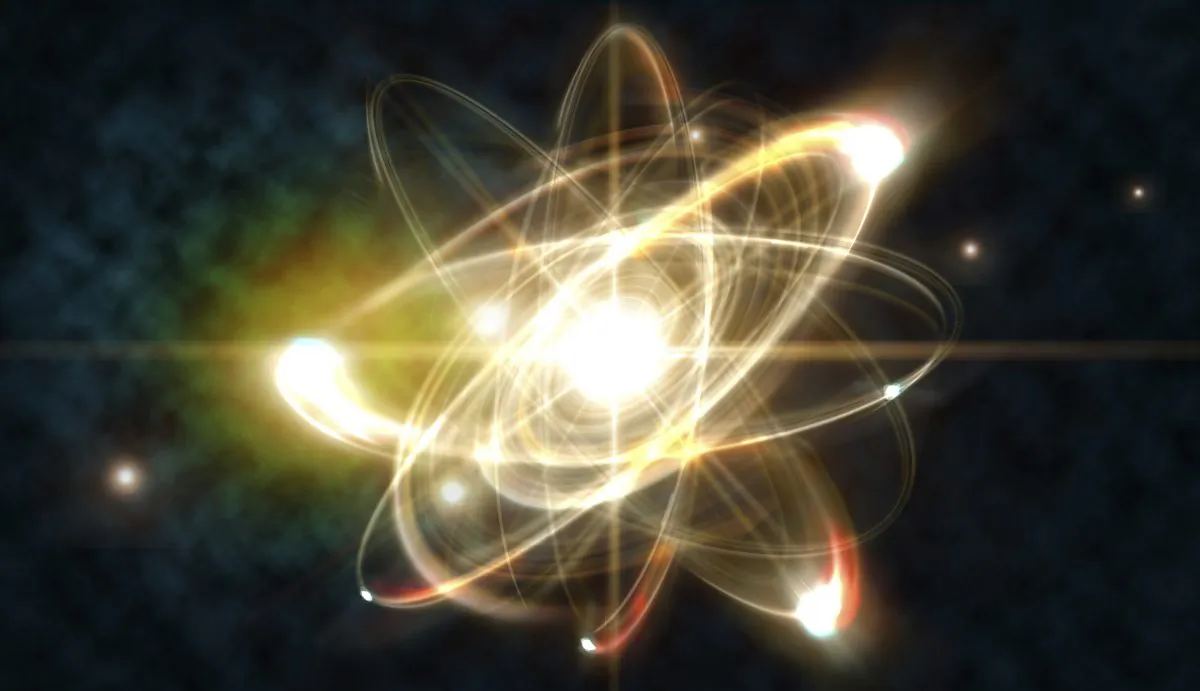
But what if what we see on earth, in the sky, and in the universe also contains or is contained within life? Just think of all the atoms that make up our bodies. These atoms are more than 99 percent empty space. If you were standing on an atom’s nucleus in someone’s body you would look around and see no life; but it is actually also life. Could we be doing something similar now when we look up?
In his book “The Science Delusion,” Rupert Sheldrake, a researcher with a PhD. in Biochemistry from the University of Cambridge, identified 10 questionable dogmas of science, including that “nature is mechanical or machine-like” and that “the whole universe is made up of unconscious matter.”
“This is the default worldview, which is held by almost all educated people all over the world,” he says. “It’s the basis of the educational system, the national health service, the medical research council, governments and it’s just the default worldview of educated people.” And yet, there are serious holes, some very obvious, in these dogmas (to get into the specifics of those would need another column).
If what Sheldrake calls the mechanistic perspective and I call the “no life, then life” paradigm are indeed wrong, then it would finally bury Darwin’s theory and open up new fields of inquiry. Speaking from a scientific perspective, if we accept the proposition that life is all around us despite our immediate senses or what is all around us is at least fundamentally connected to life, there would be no nagging need to explain how we went from no life on earth to life. In fact, there is absolutely no direct evidence that there was ever no life on earth!
If the universe around us is indeed alive, we then have other questions to ask, such as “What being are we inside?” or “How do we resemble a more original state of life?” These questions, unlike Darwinian evolution, naturally connect to belief in a Supreme Being, in God, and harmonize with the traditions and moral values that have defined the highest aspirations of human civilization for thousands of years.
This shift in paradigm is long overdue and is fertile ground for new research and advancements that could lead to more fulfilling and sustainable ways of living. It could be the end of Darwin’s outdated theory and the beginning of the science of the future.
Views expressed in this article are the opinions of the author and do not necessarily reflect the views of The Epoch Times.
 Friends Read Free
Copy
Facebook
Tweet
Friends Read Free
Copy
Facebook
Tweet