

Local health authorities in China’s Qinghai Province have urged the public to report suspected infectious disease cases, while Macao has tightened entry health checks, following other regions, amid ongoing concerns over the death of a researcher who worked at an anti-plague institute in Siberia.
Meanwhile, a Chinese Communist Party (CCP) insider told The Epoch Times that Beijing has issued internal measures to deal with a possible plague outbreak, and public suspicion lingers amid social media posts of suspected cases.
The Xining City Center for Disease Control and Prevention in Qinghai issued a public notice on Oct. 13 urging citizens to report leads regarding infectious diseases. While the notice does not specify the disease or mention any confirmed cases, the list of reportable situations explicitly includes the onset of “suspected plague symptoms”—such as fever or swollen lymph nodes, as well as cases of sudden death accompanied by unexplained high fever.
Macao health authorities are also stepping up fever screening at entry and exit points, after Hong Kong’s Center for Health Protection announced on Oct. 12 enhanced health checks of airport passengers arriving from Russia.
Darya Shipilova, a 28-year-old laboratory worker at the Irkutsk Anti-Plague Research Institute for Siberia and the Far East, was hospitalized with severe pneumonia on Sept. 29 and died on Oct. 2, causing global concerns of a possible pneumonic plague outbreak.
Russian authorities told the World Health Organization (WHO) that they immediately placed approximately 200 contacts under quarantine, which was lifted on Oct. 8.
Irkutsk Gov. Igor Kobzev said the cause of death was pneumonia of unknown origin.
Russian authorities denied that Shipilova had died of pneumonic plague. They also denied reports of a second employee’s death at the research institute linked to the suspected plague.
Russian authorities have not given any additional information about the exact cause of Shipilova’s death as global concerns over plague linger.
The WHO stated in its latest announcement on the suspected plague case, issued on Oct. 10, that based on information provided by the Russian government, “[the] WHO has not identified evidence of ongoing transmission associated with this event.”
“A key uncertainty remains the absence of a confirmed diagnosis in the deceased laboratory worker,” the organization stated.
The WHO said that it will continue to monitor the situation and assess any potential public health implications as further information becomes available.
Soon after Shipilova’s death, Russia’s neighboring countries—including Uzbekistan, Kazakhstan, Kyrgyzstan, Tajikistan, and Mongolia—stepped up quarantine measures and testing to prevent a potential outbreak from spreading to their territories.
As of Oct. 13, Beijing has not announced any nationwide border controls, and travel between China and Russia continues as usual, despite a few regions issuing plague-related health alerts.
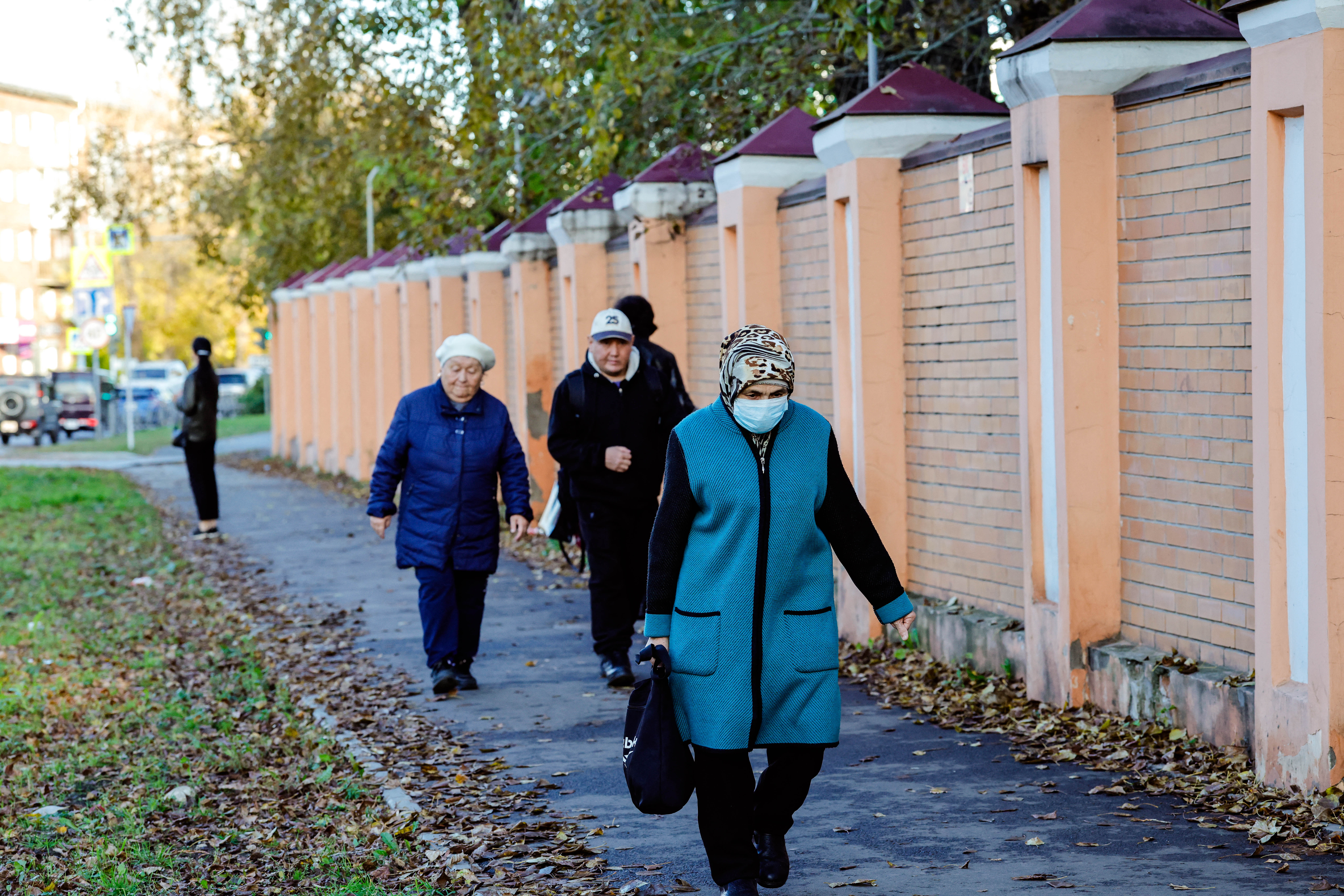 A masked woman passes the anti-plague institute in Irkutsk, Russia, on Oct. 7, 2026. (Tatyana Makeyeva/AFP via Getty Images)
CCP’s Strict Internal Control Measures
While the CCP is downplaying the suspected Russian case, its National Health Commission issued an internal notice on Oct. 5 to all local health authorities regarding the strict measures to take in plague prevention and control, according to a CCP insider who requested anonymity out of fear of reprisal.
The commission required local health authorities to step up public awareness campaigns on plague prevention measures, the insider told The Epoch Times.
“Local governments were instructed to activate a Level III or Level IV emergency response upon the detection of an outbreak,” he said. “For instance, if an individual presents with symptoms such as high fever, nausea and vomiting, severe headache, or generalized tremors, hospitals must immediately confirm the diagnosis, the patient’s living quarters must be disinfected, and close contacts placed under quarantine and observation.”
Lockdowns would be implemented, according to the insider. “A lockdown zone with a radius of 300 to 500 meters, centered on the site of the incident, must be established,” he said. “In the event of a case in a rural village, the entire village is to be sealed off, with no entry or exit permitted.”
City leadership would also be required to immediately establish a task force to deal with a possible plague outbreak, he said.
“The epidemic is to be contained through localized lockdowns, precise epidemiological tracing, and standard prevention and control measures, thereby preventing its spread beyond the province,” the insider said.
The Chinese regime’s health quarantine, and animal and plant quarantine departments have already taken measures such as remote temperature measurement and biological sampling and testing for incoming passengers at the entry ports from Russia, but hasn’t announced them publicly, according to the insider.
At the same time, the Chinese Embassy and consulates in Russia are also paying close attention to local reports on the epidemic and collecting relevant information, the insider said.
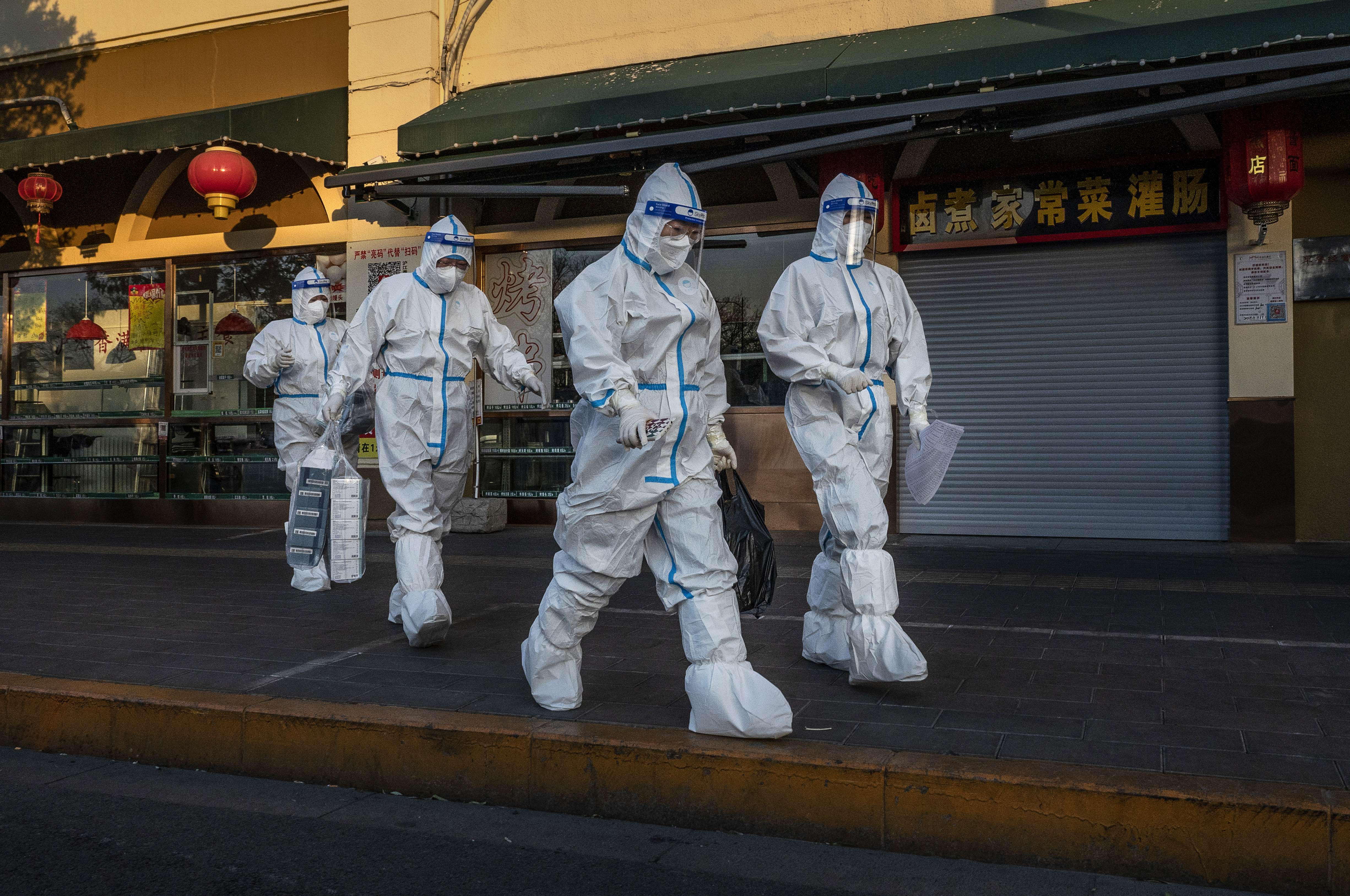 Pandemic control workers walk by a closed shop near a community with residents under health monitoring for COVID-19 in Beijing on Dec. 4, 2022. (Kevin Frayer/Getty Images)
Public Suspicion Lingers
Previously, health authorities in Hulunbuir, Inner Mongolia, issued a plague risk alert on Oct. 10. Disease control authorities in Hunan and Guangdong provinces in southern China also issued public health reminders regarding plague prevention on Oct. 9. However, Hulunbuir authorities took the risk alert down from its website on Oct. 13 after it had attracted international attention.
A staff member told mainland Chinese media outlets that the removal of the alert was to “avoid public misunderstanding,” while stating that there was no plague case in the region.
Meanwhile, public suspicion continues, as posts and videos on social media have reported suspected plague cases in Shanghai, Chongqing, and Erenhot in Inner Mongolia, while showing crowded hospitals.
Dr. Cheng Yuan-yu, a respiratory disease specialist at Shangwen Clinic in Kaohsiung, Taiwan, told The Epoch Times that local officials’ actions show that “local governments must conceal the limited facts they do possess while simultaneously trying to avoid taking the blame should a plague epidemic erupt.”
“Consequently, a few sporadic and inconsistent official announcements and epidemic control measures have been rolled out,” he said. “Under this system, if a serious disease were to enter China from Russia—or had already spread into the country—it would be fundamentally impossible to even identify the pathogen involved.”
Sporadic cases might have already appeared in certain areas in China, yet regulations—specifically the rules in communist China—prohibit reporting them publicly, Heng He, a U.S.-based senior China analyst who worked in China’s infectious disease research and control sector, told The Epoch Times.
“Consequently, the only option for these local authorities is to issue an alert; that is how such situations come to light,” he said.
Wang, a Shanghai resident who gave only his surname out of fear of reprisal, told The Epoch Times that the social media posts regarding the plague cases involving China and Russia are circulating widely: “Although some of these reports lack official confirmation, the public tends to adopt a ‘better safe than sorry’ attitude—preferring to believe they might be true rather than dismissing them entirely.”
He believes this reaction is closely linked to experiences during the COVID-19 pandemic. “The memory of how the COVID-19 outbreak was deliberately covered up by officials—leading to a global outbreak and a massive catastrophe—remains vivid to this day,” he said.
Luo Ya contributed to this report.
 Friends Read Free
Copy
Facebook
Tweet
Friends Read Free
Copy
Facebook
Tweet