




Hunchback (kyphosis) is common among modern people, but most are unaware of its potential harm. Aside from affecting aesthetics, hunchback can also impair cardiovascular and gastrointestinal functions. Let’s delve into the causes of hunchback and the self-rehabilitation methods to address it.
Causes of Hunchback
Apart from congenital spinal developmental issues, the following are common causes of hunchback:
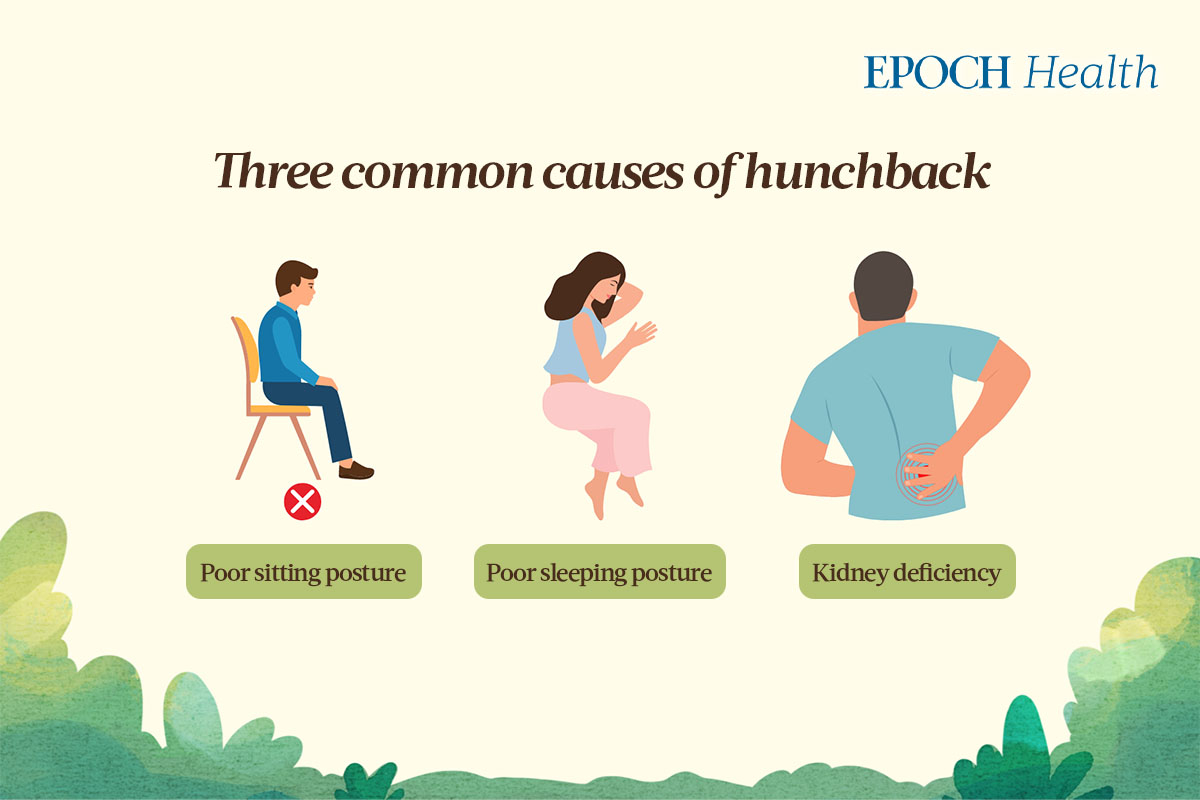
1. Poor Sitting Posture
The most common cause is poor sitting posture. A sedentary office worker or student may develop thoracic kyphosis due to constantly leaning their heads and necks forward, which causes back muscle tension. Prolonged habits of poor sitting posture will develop hunchback. Another cause is when people sit with their buttocks pushed forward while their upper body leans backward, with their heads and necks tilted forward and their upper body hunched.
2. Poor Sleeping Posture
Sleeping with two pillows under the head is considered poor sleeping posture. People with nasal congestion or gastroesophageal reflux may adopt this sleeping method to alleviate symptoms. However, this can lead to hunchback over time and result in tight and stiff muscles in the entire head, neck, shoulder, and lower back, causing frequent pain and discomfort.
3. Kidney Deficiency
Some may say, “I can’t sit up easily; my back is weak, and my upper body is flabby.” This indicates their lower backs lack sufficient support and strength to maintain an upright posture. Traditional Chinese medicine (TCM) would diagnose this as kidney deficiency. Kidney deficiency is related to kidney health and inadequate kidney energy. In TCM, the concept of organs goes beyond individual internal organs; TCM asserts there is a holistic system that includes functions and energy dynamics. According to TCM, the kidney generates marrow and governs bone. People with kidney deficiency can develop osteoporosis, which, in severe cases, may contribute to hunchback.
4. Lumbar or Lower Thoracic Vertebral Compression Fractures
Accidental falls or direct impact on the buttocks or spine can lead to lumbar or lower thoracic vertebral fractures and compression. When a vertebral body in the lumbar or lower thoracic region collapses, the lumbar support weakens, resulting in an inability to sit upright and a hunchback. In such cases, seeking medical attention from an orthopedic specialist is necessary, and treatments like bone cement injection may be required.
Hazards of Hunchback
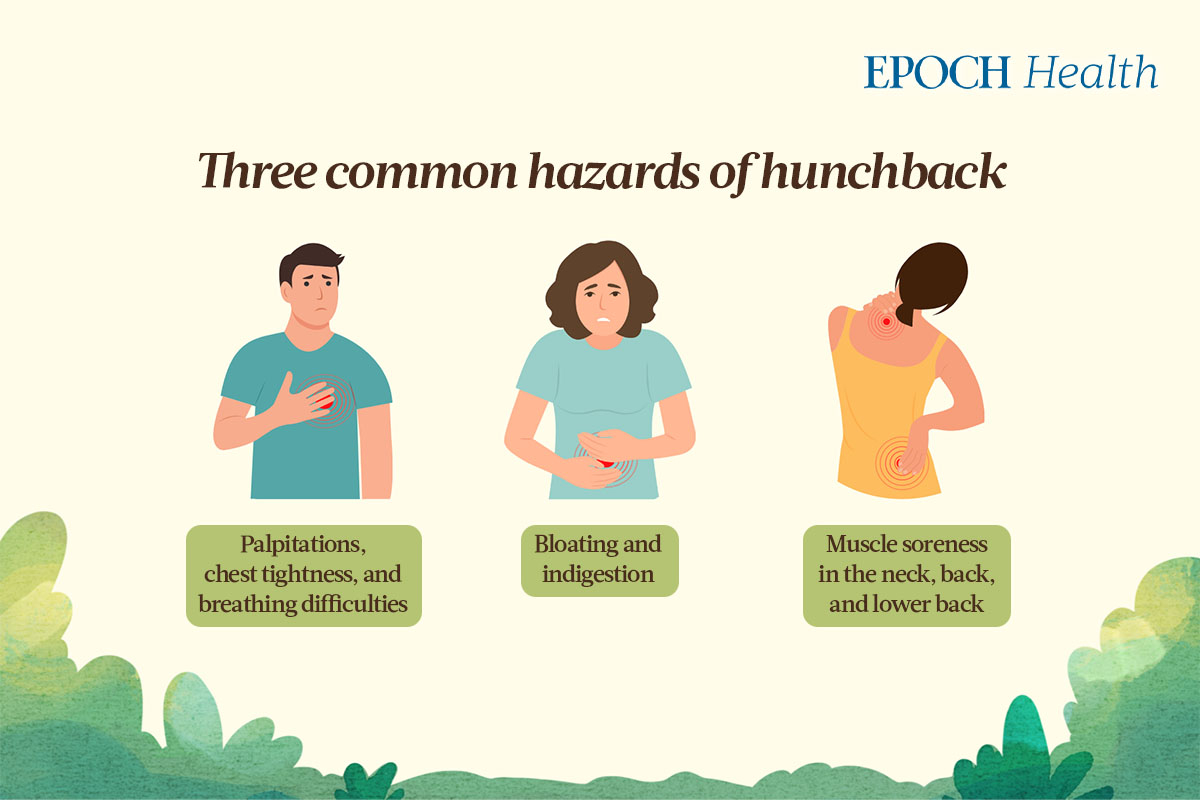
1. Palpitations, Chest Tightness, and Breathing Difficulties
Hunchback compresses the ribs, reducing lung capacity and impairing heart and lung functions.
A 2018 study published in the Journal of Clinical Medicine revealed that patients with cervical spine problems have a twofold higher risk of experiencing cardiac arrhythmias compared to the general population.
2. Bloating and Indigestion
Hunchback can exert pressure on the stomach, leading to frequent gastric bloating and indigestion. While gastrointestinal medications may provide limited relief, correcting spinal structure and improving posture to alleviate hunchback is the most effective way to address this issue.
3. Muscle Soreness in the Neck and Back
When we have a hunchback posture, the muscles, ligaments, and fascia in the body’s entire posterior, including the neck, back, and waist, become especially tense and tight. This will cause frequent soreness, back pain, and even neck pain and headaches.
Treatment for Hunchback
Hunchback does not always require medical attention, and it cannot be entirely resolved with a single treatment. Even if a doctor treats you once, without maintaining good habits, hunchback may recur. The best approach is to perform self-rehabilitation exercises at home.
Relying on Self-Determination
One of my patients has a friend who had a severe hunchback. He went to a renowned Chinese medicine practitioner in mainland China for treatment. However, the practitioner did not even examine him. Instead, the practitioner gave him a jar of massage oil and instructed him to diligently massage both sides of his spine for three months. After three months of dedicated massage, his back gradually straightened.
7 Self-Rehabilitation Techniques to Correct Hunchback
The following techniques can alleviate numbness, palpitations, and chest tightness:
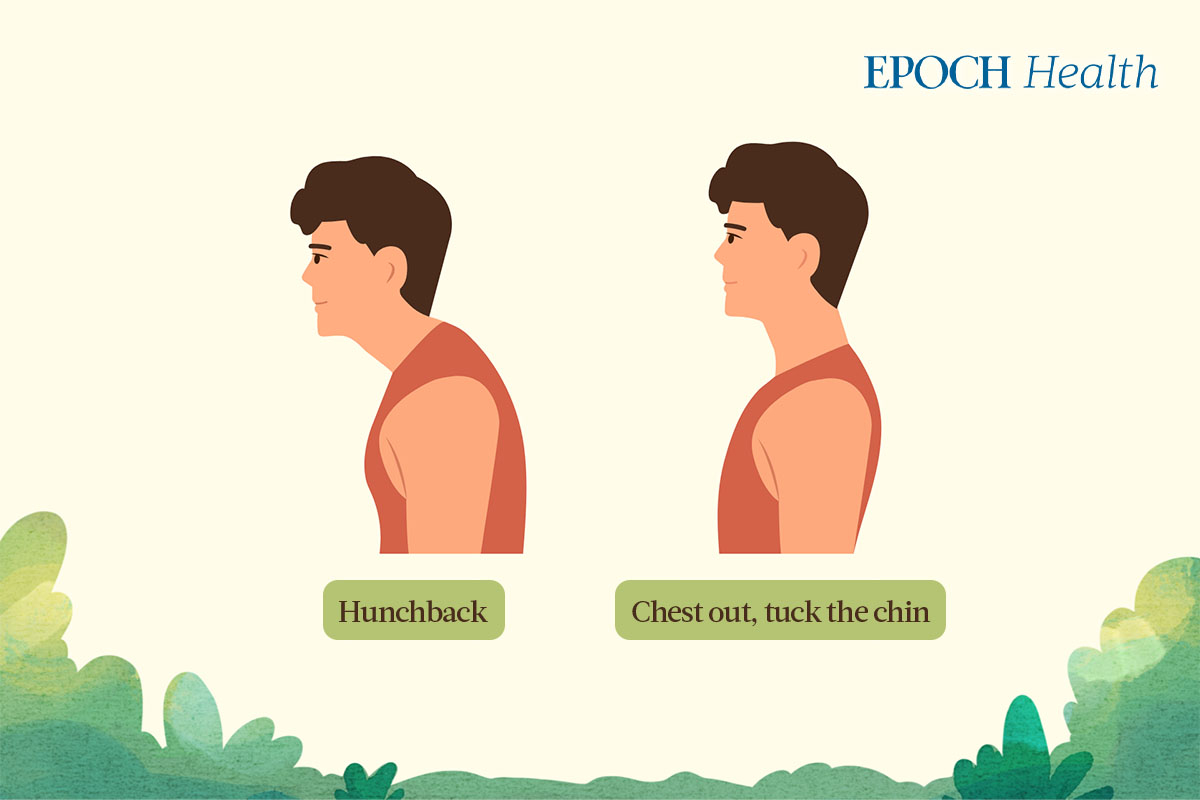
1. Chest Out, Tuck the Chin
Individuals with hunchbacks tend to lean their heads forward, so the first step in hunchback treatment is to keep the chest out and tuck the chin backward frequently.
2. Butterfly Swimming Method
- Open both arms horizontally with palms facing down and fingers gripping tightly like an eagle’s claws. Move both arms and scapulas in a butterfly swimming motion from the back to the front, repeating this movement 10 times.
- Open both arms horizontally with palms facing upward, repeating the same butterfly swimming motion from the back to the front 10 times.
Note: The key to this exercise is to let the scapulas rotate from the back to the front. This movement can instantly release tension in the neck, shoulders, and upper back muscles. Although it may cause some soreness, the results are compelling.
3. Tilt Head Backward With Left-Right Swing
After performing the previous Butterfly Swimming exercise, the muscles and ligaments around the sixth cervical vertebra to the second thoracic vertebra are already relaxed. At this point, tilt your head back, look straight ahead, and swivel your head from side to side 10 times to open the joint surfaces of the sixth and seventh cervical vertebrae.
Note: Combining exercises No. 2 and No. 3 can effectively improve numbness caused by nerve compression between the sixth and seventh cervical vertebrae.
4. Palms Together, Outward Circular Movement
Put your hands together in front of your chest, straighten your arms upward, turn your palms forward, and draw a big circle around the sides of your body. Repeat 10 times.
Note: This exercise can relieve tension in the upper back muscles and ligaments, improving symptoms like palpitations and chest tightness caused by respiratory difficulties.
5. Thoracic Left-Right Swing
Bend both arms and place the elbows on each side of the body at the height of the thoracic vertebrae. Swing the thoracic region left and right 10 times while moving the body forward, upright, and backward slightly.
Note: During this exercise, you can adjust the position of the elbows to target specific thoracic vertebrae, allowing for relaxation of the upper and lower thoracic vertebrae.
6. Head Backward Tilt With Arm Stretching
- Stand with one foot in front and one back, and stretch both arms upward while rotating the palms outward. Simultaneously, tilt the head slightly backward.
- Switch the positions of the feet and repeat 10 times.
Notes:
- Keep arms close to the ears, avoiding overstretching.
- Individuals with chest diseases, such as lung or breast cancer or heart problems, often exhibit hunchback. This exercise can increase lung capacity, promote lymphatic circulation in the upper chest and armpits, and prevent and improve upper chest disease conditions.
7. Supine Position With Raised Back
This method is the most straightforward and most relaxing. Lie flat on the bed, place a pillow under the head, and stretch both legs. Fold a bath towel to create a pad about 5 to 8 centimeters (approximately 2 to 3 inches) high, 15 to 20 centimeters (about 6 to 8 inches) wide, and slightly longer than the body’s width. Position the pad at the highest point of the hunchback and lie flat for five to 10 minutes multiple times a day. After the exercise, roll to the side to remove the pad.
Hunchback Acupuncture Treatment
During acupuncture, the patient sits on a chair while the practitioner inserts a half-inch needle vertically into the acupoints Human Center (GV 26) and Unyielding Space (GV 18).
The practitioner stands behind the patient, and the patient’s arms are straightened upward. The practitioner holds the patient’s shoulders with both hands and presses the patient’s thoracic vertebrae with one knee from the back to the front. The patient slightly stretches backward, allowing the practitioner to straighten the curved thoracic vertebrae one by one, from the bottom to the top.
TCM believes the body has a meridian system, a channel for energy circulation. Acupoints are particular points along the meridians with specific functions. Stimulating these acupoints can treat diseases related to the corresponding meridians. The Human Center and Unyielding Space acupoints are above the spinal area where the Du meridian passes. Stimulating these two acupoints can instantly relax the muscles and ligaments on both sides of the spine.
This acupuncture technique has excellent results in treating hunchback and provides immediate effects. However, observing the patient’s reaction and avoiding excessive force during the procedure is essential. After the treatment, the hunchback self-rehabilitation exercises mentioned earlier should be continued to consolidate the treatment effect.
Views expressed in this article are the opinions of the author and do not necessarily reflect the views of The Epoch Times. Epoch Health welcomes professional discussion and friendly debate. To submit an opinion piece, please follow these guidelines and submit through our form here.