



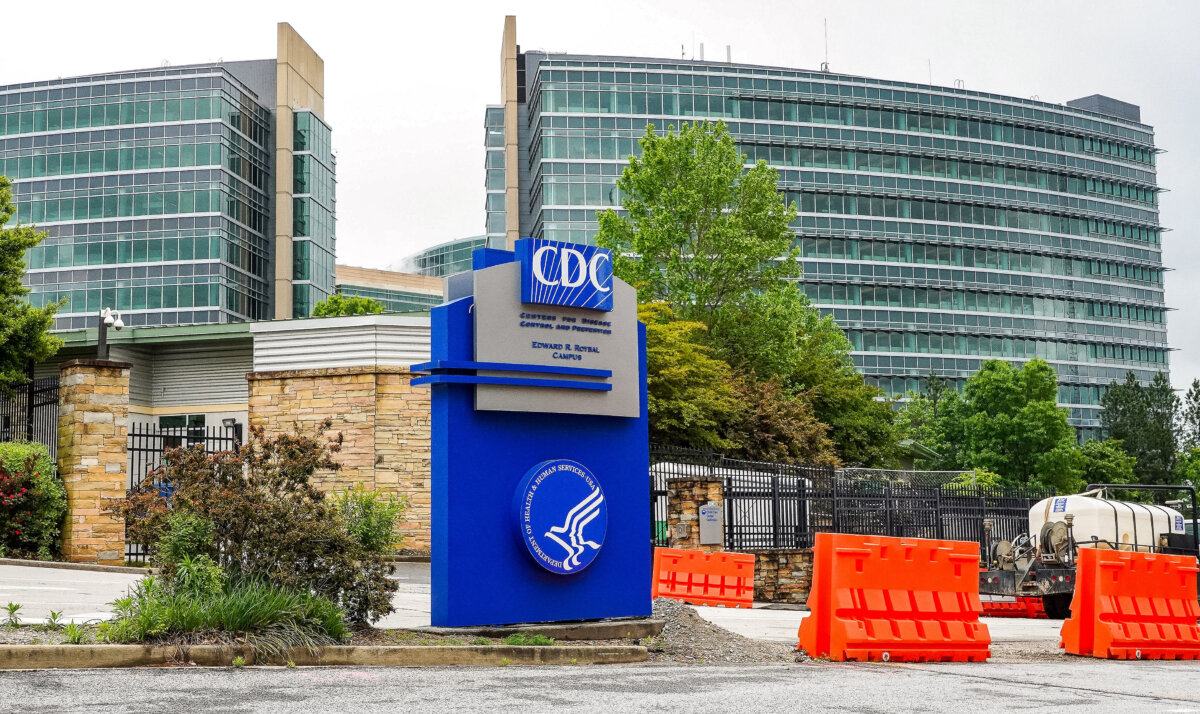
The U.S. Centers for Disease Control and Prevention (CDC) announced on Feb. 23 that hospitalizations and deaths from COVID-19 are overall on the decline in recent years despite some episodic episodes of elevated transmission.
“Severe outcomes from COVID-19 have substantially decreased since 2020 and 2021,” the agency said. Hospital admissions in the United States for COVID-19 have dropped by more than 60 percent from the peak in 2021, and have also decreased to just 900,000 hospitalizations in 2023—from 2.5 million in 2021.
“The decline in deaths associated with COVID-19 is even more dramatic than the drop in hospitalizations. In 2021, over 450,000 deaths among Americans were associated with COVID-19, while in 2023, that number fell to roughly 75,000,” it said.
The federal agency further noted that COVID-19 infections have stayed at a level similar to previous years, but the chance of being hospitalized has dropped.
“While other factors are involved, the increase in the percent of the population with COVID-19 antibodies indicates that rising population immunity is partially responsible for the decline in severity,” the agency said. “In January 2021, only 21 percent of people aged 16 years and older had COVID-19 antibodies.”
At the same time, the CDC said that hospitalization rates have dropped across all age groups. But it stressed that certain older adults, infants, pre-existing medical conditions still appear to have a higher risk of developing a severe case of COVID-19, adding that adults aged 65 and older accounted for 63 percent of hospitalizations and 88 percent of in-hospital deaths from the virus for the first half of 2023.
More than 90 percent of that group had “multiple pre-existing medical conditions,” and it also noted that infants aged six months and younger have higher rates of COVID-19 hospitalizations, the CDC said.
Despite the positive update, the CDC warned that the virus is a “public health threat” and again recommended everyone, including infants and pregnant women, to take one of the updated booster vaccines. It once again suggested that people wear masks and improve ventilation in closed areas.
On Feb. 16, the CDC said that the 2023–24 respiratory illness season appears to have peaked but stressed it is “far from over.” It noted that hospitalizations for COVID-19, influenza, and RSV have dropped in recent weeks.
“However, respiratory disease activity remains elevated, and some flu activity indicators have increased again,” according to the agency’s update. “Test positivity for flu rose nationally in late January and has leveled off since but continues to increase in parts of the country. Emergency department visits for flu have been going up in some areas of the county.”
Notably, the combined peak for hospitalizations associated with the three viruses “was not as high” as the previous season, adding that there were also “fewer reports of healthcare strain” for 2023 and 2024. Overall hospitalizations and deaths for the flu and COVID-19 were lower, too, it added.
Major COVID Study
This month, researchers from the Global Vaccine Data Network—an arm of the World Health Organization—looked at about a dozen medical conditions considered adverse events of special interest in a population study of 99 million people who were vaccinated.
“The size of the population in this study increased the possibility of identifying rare potential vaccine safety signals,” lead author Kristýna Faksová of the Department of Epidemiology Research, Statens Serum Institut in Denmark, said in a news release. “Single sites or regions are unlikely to have a large enough population to detect very rare signals,” she added.
Cases of a type of heart inflammation known as myocarditis were found in first, second, and third doses of the Pfizer mRNA shot, while the rate was higher in Moderna’s second shot, according to the research.
Pericarditis, which is inflammation of the pericardium, saw a 6.9-times higher risk in people who took AstraZeneca’s vaccine, while there was a 1.7-fold to 2.6-fold chance of developing the condition after taking Moderna’s first and fourth dose, respective, it found.

“This unparalleled scenario underscores the pressing need for comprehensive vaccine safety monitoring, as very rare adverse events associated with COVID-19 vaccines may only come to light after administration to millions of individuals,” the authors wrote.
They also found an increase in Guillain-Barré syndrome for those who received the AstraZeneca shot within a few weeks, and higher-than-anticipated cases of disseminated encephalomyelitis, a form of inflammation of the brain and spinal cord, among people who got the Moderna first vaccine dose.
“Moreover, overall risk–benefit evaluations of vaccination should take the risk associated with infection into account, as multiple studies demonstrated higher risk of developing the events under study, such as GBS, myocarditis, or ADEM, following SARS-CoV-2 infection than vaccination,” the authors concluded.