



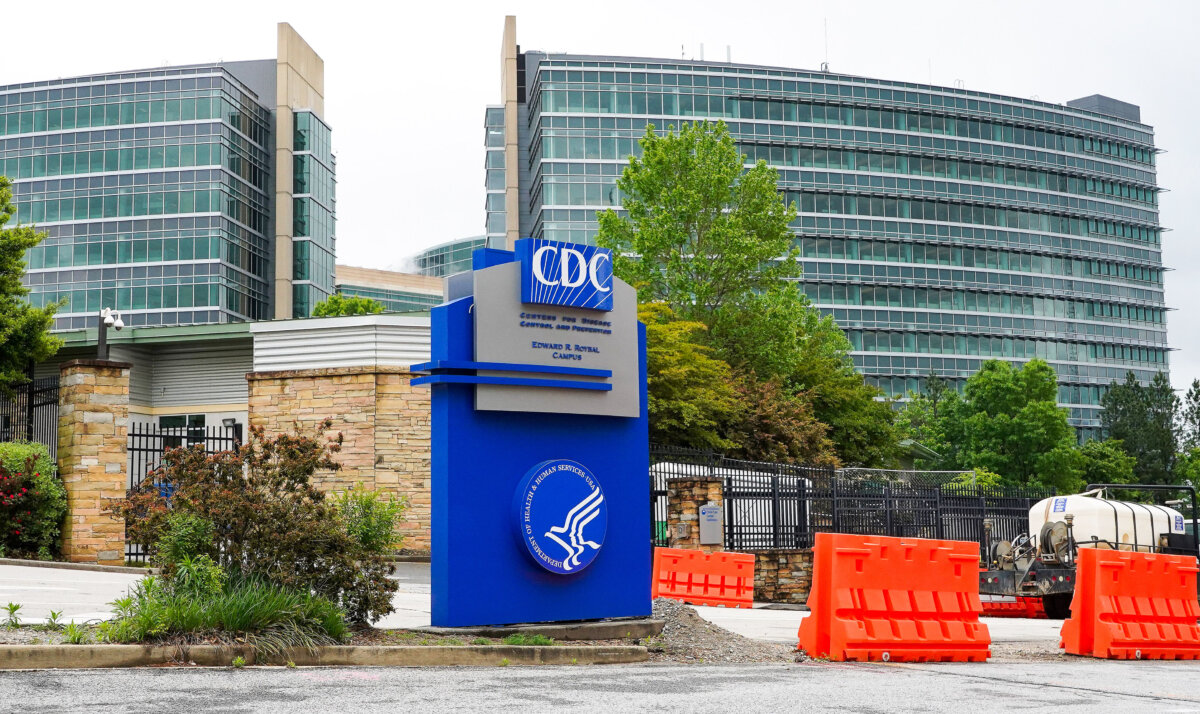
U.S. Centers for Disease Control and Prevention (CDC) officials this week said they are investigating a link between a neurological disorder in older Americans and newly approved vaccines.
Vaccines for RSV, known as respiratory syncytial virus, might have caused cases of Guillain-Barre syndrome (GBS), which has been described as a condition, officials told a CDC Advisory Committee on Immunization Practices and reporters on Thursday.
Those officials said that data suggests about two cases out of 100,000 people who have received the RSV vaccine developed the condition. In 2023, the U.S. Food and Drug Administration (FDA) approved Pfizer’s Abrysvo and Glaxo-Smith-Kline’s Arexvy shots for the virus.
Specifically, the CDC said that as of Feb. 16, it had detected 23 cases of GBS occurring within weeks of the RSV vaccination, according to reporters. Fifteen cases occurred in those who got the Pfizer RSV shot and eight occurred in the Arexvy shot.
“At this point, due to the uncertainties and limitations, these early data cannot establish if there is an increased risk for GBS after vaccination in this age group,” Dr. Thomas Shimabukuro, the head of the CDC’s Immunization Safety Office, told the meeting on Thursday.
The doctor, however, said it may be too early to see if there is an increased risk for the condition after vaccinations for RSV.
“We’re still in the early uptake phase of these new RSV vaccines,” he told STAT News on Thursday. He was the one who presented the RSV data at the CDC meeting.
“Some of these data and findings are based on small numbers of cases and relatively small numbers of doses administered,” he added in the interview. “And due to uncertainties and limitations, based on these early data we can’t establish if there is an increased risk for GBS after RSV vaccination in these individuals 60 and older.”
This month, the CDC official said, the agency would conduct a different analysis on the vaccine, adding that “better risk estimates will be forthcoming in the coming weeks and months.”
Amadea Britton, of the CDC’s RSV group in Atlanta, also cautioned that it’s too early to make a conclusion.
“Due to uncertainty and limitations in these early data, there is currently insufficient evidence to confirm whether RSV vaccination is associated with increased risk for GBS in older adults, or to estimate the magnitude of any increase in GBS risk after RSV vaccination,” she told the meeting. “Any increase in potential risk of GBS should be placed in the context of the benefits of RSV vaccination.”
Later in the meeting, the official said the agency currently believes that despite the apparent GBS risk, it “continues to believe that the estimated benefits of RSV vaccination outweigh potential risks when vaccination is implemented using the current recommendation.”
There were concerns in 2023 that the RSV vaccines present an elevated risk of GSK after several cases were found among those who got the vaccine during clinical trials from Pfizer and GSK before the FDA approved them both.
The CDC has said that patients should talk to their doctors about the RSV vaccines and then decide whether to get them.
Previous data from the U.S. Food and Drug Administration also showed an above-expected number of Guillain-Barre cases being reported in RSV vaccine recipients, with more among Pfizer shot recipients. “Taken together, these data suggest a potential increased risk” in RSV vaccine recipients 60 and older, Dr. Shimabukuro said Thursday.
An estimated 3,000 to 6,000 people develop GBS in the United States each year, and it’s more commonly seen in older people, according to the CDC. The condition can result in a person’s immune system damaging nerve cells, causing muscle weakness and paralysis.
Most people fully recover from the syndrome, but some have permanent nerve damage. Guillain-Barre can occur in people after they are infected with a virus, but in some instances cases have been linked to vaccinations.
Officials for Pfizer and GSK said Thursday that it’s difficult to monitor the GBS safety signal. “Pfizer is committed to the continuous monitoring and evaluation of the safety of Abrysvo” and is conducting four safety studies, Reema Mehta, a Pfizer vice president, said in the meeting.
RSV is a virus that often leads to common cold symptoms, but officials say it can progress to cause health problems in infants and elderly people. It can progress to symptoms including high fever, trouble breathing, a wheezing cough, and shortness of breath.
Officials, meanwhile, have said that for this season, RSV vaccine update is low with about 22 percent of older adults having taken them.
The Associated Press contributed to this report.