



Jacqueline Davis can still remember the stress of taking her husband, Jack, to his doctor appointments.
Jack was in his 80s and living in rural New York when he struggled with late-stage Parkinson’s disease. Routine medical visits were an ordeal for him. Getting dressed alone could take an hour.
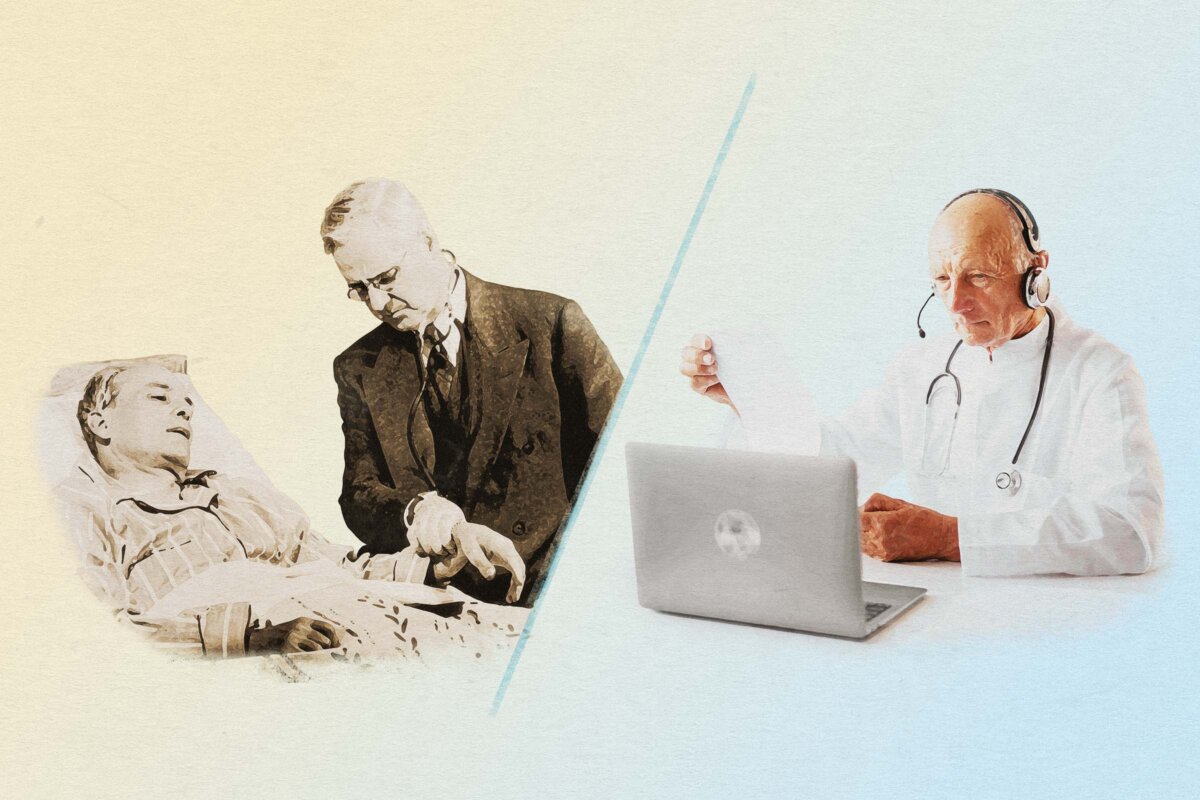
That all changed the first time Jack’s doctor’s face appeared on a screen in his room. So too did something that had nearly vanished from American medicine: the house call.
“It allowed him to talk to his neurologist from the comfort of his room in a long-term care facility,” 81-year-old Davis, professor emerita at SUNY Brockport in New York, who cared for her husband for many years until his passing, told The Epoch Times.
Telehealth has returned nonurgent medical care to the home. Although a less personal touch, it is especially beneficial for families with young children, older adults, people with disabilities, and those living in rural areas. Still, questions remain about when virtual visits are most effective and where they fall short.
From Black Bag to Broadband
For much of U.S. history, physicians made house calls. Trusted family doctors toting black bags treated generations of families.
Dr. Bruce Cohen, a neurologist, told The Epoch Times that, as a child, he had a stubborn case of recurring strep throat. His pediatrician made the short drive to his home, examined his throat, and was off to the next patient.
In the United States, house calls were fairly common into the 1960s, yet faded as medicine became more centralized. By the 1970s, they were in steep decline. Medicare changes in 1998 revived home care specifically for homebound or elderly patients, and some physicians continued remote consultations by telephone and, later, email.
However, the COVID-19 pandemic was the biggest game-changer in accelerating the return of home-based medical visits—although in a completely different format.
The use of telemedicine surged during and after the pandemic, according to research published in the National Library of Medicine.
When Getting There Is the Hardest Part
For some people, such as those with neurological conditions, the effort required for an office visit can be prohibitive.
For example, it can take significant time for a caregiver to help a person like Jack to simply get dressed. Never mind getting into the car, driving to the appointment, parking, and walking to the doctor’s office, Cohen said.
“The 20-to-30-minute doctor’s visit ends up taking half a day—and sometimes a whole day,” he said.
In some rural areas, access to specialists can be limited. The virtual appointments saved Jack from long travel and allowed his in-house nurse to participate in his sessions, something an in-person visit might not have easily accommodated.
In addition to helping Parkinson’s patients, telehealth is beneficial for many patients with limited access to specialists, including the elderly, those with mobility challenges and chronic conditions, and those seeking mental or behavioral health care.
Teletherapy for Mental Health
One area where telehealth has been particularly useful is mental health care. A study published in JAMA found that virtual visits are as good or better than in-person treatment for reducing symptoms.
According to the study, receiving care at home can be less intimidating than visiting a clinic, allowing people to feel more relaxed and open. For some patients with mental illness, getting to a medical office might seem like a daunting task.
Telepsychiatry often matches in-person care in treatment outcomes for substance misuse, ADHD, schizophrenia, and dementia.
For schizophrenia, studies have found that telemedicine is a useful method to help improve treatment adherence and prevent relapse.
The Cost Case for Virtual Care
Contributing to the popularity of virtual visits is their cost-effectiveness. An analysis published in 2025 in JAMA Network Open found that telemedicine was less expensive than in-person appointments for common conditions. Virtual visits were billed about $400 less on average and often resulted in fewer follow-up appointments.
However, telehealth can lead to higher rates of follow-up visits and increased risks of misdiagnosis for certain conditions, such as rashes; ear, nose, and throat infections; and neurological testing.
Today, some doctors are asking Congress to protect the telehealth regulations implemented during the pandemic by passing the CONNECT (Creating Opportunities Now for Necessary and Effective Care Technologies) for Health Act, which would permanently allow patients to see their doctors via video and audio services.
Cohen, who is chair of the advocacy committee at the American Academy of Neurology, said losing access to telehealth could lead to longer wait times for appointments, resulting in avoidable hospitalizations and unnecessary emergency department visits.
“It also places significant strain on family caregivers, causing missed work and other obligations,” he said.
While the CONNECT Act is pending, Congress has extended key Medicare telehealth waivers through Dec. 31, 2027.
A Complement, Not a Replacement
Most medical professionals acknowledge the benefits of the modern-day house call. However, they often recommend a hybrid approach to patient care—a mix of remote and in-person appointments.
Virtual appointments are not appropriate for first-time patient visits, the assessment of new disorders, and emergency visits, Cohen said.
“These are things that should be done in person,” he said.
One of the best things about the old house calls was the familiarity and personal touch it enabled, Cohen said.
The new virtual house call is not a replacement for face-to-face interaction between doctors and patients, where the physical senses, such as sight, hearing, smell, and touch, come into play.
Davis, who has used telehealth herself for minor conditions such as poison ivy, agreed that its value is greatest for ongoing care.
Virtual care has caused a permanent shift in the health care industry. Learning when to use it and how to make the most of a virtual doctor visit is the key to success with the new house call.