



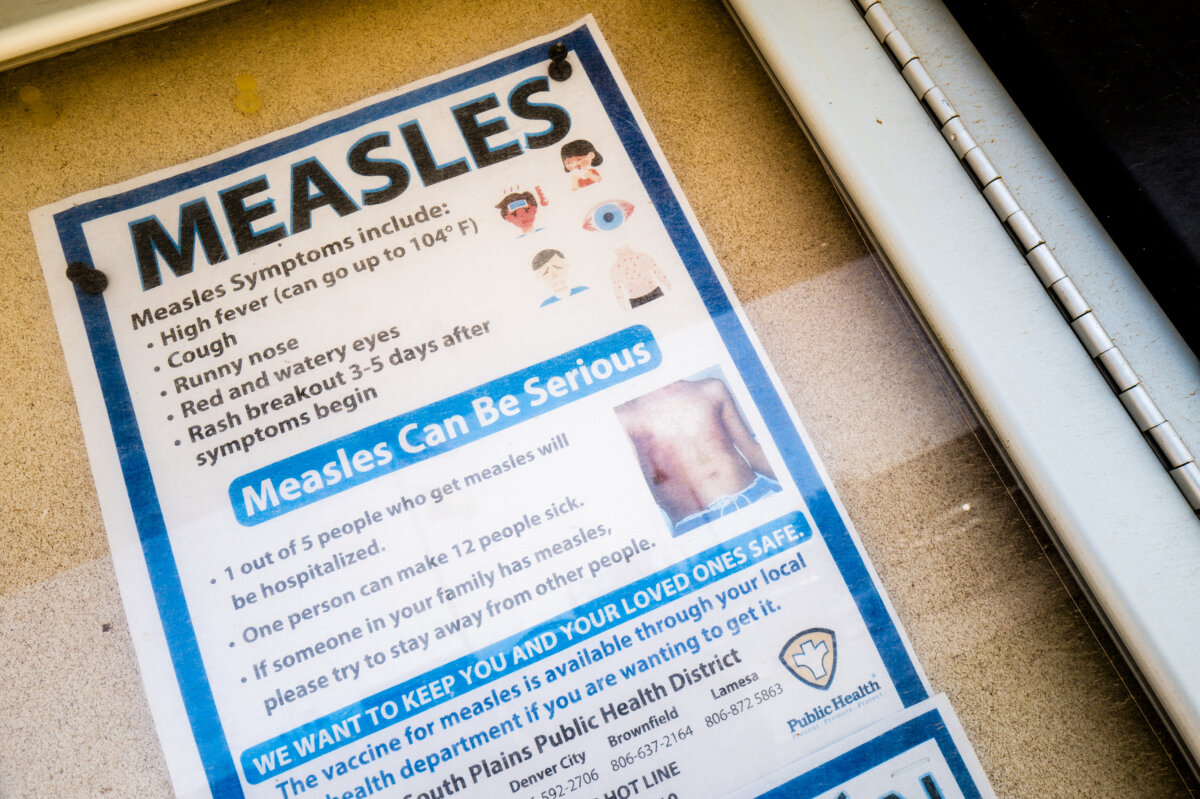
Officials have confirmed 171 measles cases across nine states so far in 2026, the Centers for Disease Control and Prevention (CDC) stated on Jan. 14.
Arizona, Florida, Georgia, North Carolina, Ohio, Oregon, South Carolina, Utah, and Virginia have confirmed cases, the CDC said in an update on its website.
The case count does not include probable cases, officials said.
The number of measles cases in the United States in 2025 was also revised upward, to 2,242, the highest total since 1991.
In 2026, most of the cases are linked to outbreaks that started in 2025, including a growing outbreak in South Carolina, according to the CDC. None of the cases involved international visitors to the United States.
South Carolina officials said this week that 124 new cases were confirmed there and that more than 400 people are quarantining because of possible exposure.
Several states have reported confirmed or possible measles cases linked to the South Carolina outbreak, including New Mexico, North Carolina, and Washington.
A separate outbreak is ongoing in the southwest, primarily in Arizona and Utah.
Arizona officials said on Jan. 13 that three cases were confirmed for the first full week of 2026, and Utah officials recently reported several new cases.
Nationwide, 60 percent of cases confirmed in 2026 were among people aged 5 to 19, the CDC said. Another 25 percent were among children younger than 5.
The rest were among adults or did not have an age listed.
Four percent of the patients had received at least one dose of the measles, mumps, and rubella vaccine. The rest were described as unvaccinated or having unknown vaccination status.
Two cases required hospital care. No deaths have been reported this year, after three were reported in 2025.
Dr. Linda Bell, South Carolina’s state epidemiologist, said at a press conference on Jan. 14 that schools in Spartanburg County, the epicenter of the outbreak, have vaccination rates as low as 20 percent.
“What’s going on in Spartanburg County now is the best example that even small pockets of under-vaccinated people can result in widespread transmission for this highly infectious virus,” Bell said.
Health Secretary Robert F. Kennedy Jr. has said the measles vaccine prevents measles, and he noted that, like all vaccines, it can cause side effects. He said doctors should know how to treat measles if they see measles patients.
“Vaccination remains the most effective way to prevent measles. Secretary Kennedy has been clear and consistent on this point,” a spokesperson for the Department of Health and Human Services, the CDC’s parent agency, told The Epoch Times in an email on Jan. 15.
“Individuals should consult with their health care provider about what is best for them and their family.”
The spokesperson said that the CDC is working with health officials, investigating measles transmission patterns, and preparing to provide technical assistance, laboratory support, vaccines, and medicines if requested.
The department said that in 2025, it would be looking into the best treatments for measles. The spokesperson said on Jan. 15 that the CDC added vitamin A to its protocol for managing measles in children and that additional therapeutics such as the steroid budesonide and the antibiotic clarithromycin can also be used.