



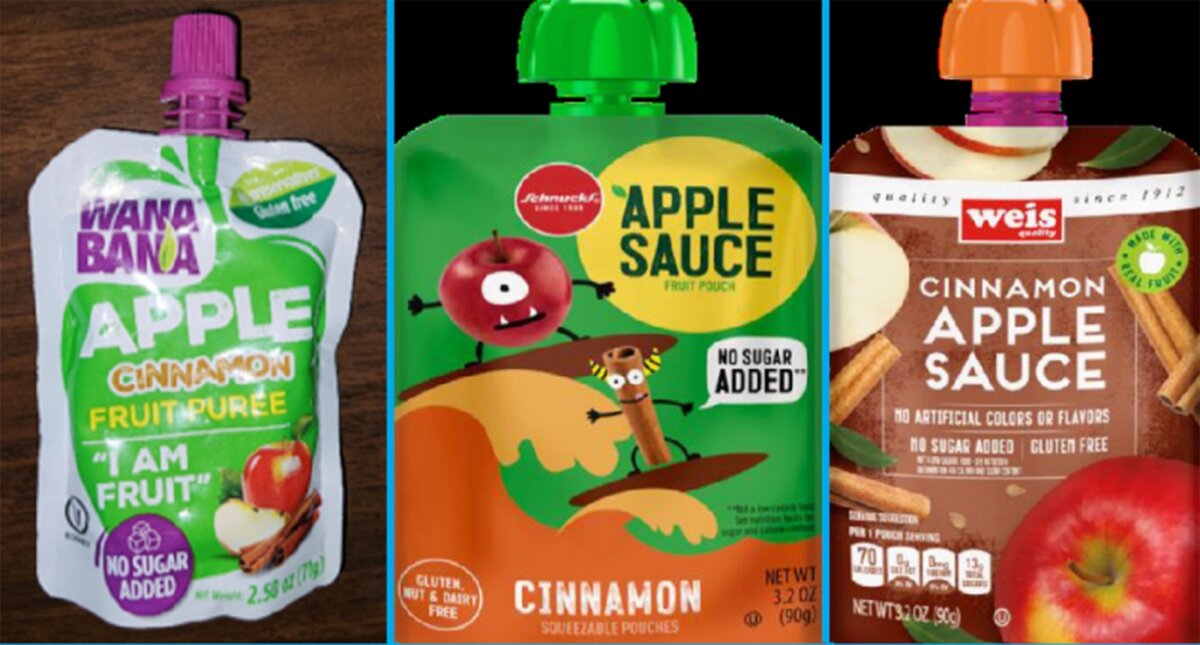
At least 205 lead poisoning cases in 33 states have been linked to recalled applesauce pouches, the U.S. Centers for Disease Control and Prevention (CDC) said on Dec. 19.
That figure is up from 125 cases reported the past week.
The rise in cases comes after the U.S. Food and Drug Administration (FDA) said it is still investigating the source of allegedly tainted cinnamon from Ecuador that was blamed for the lead contamination. The FDA said that it cannot take “direct action” in that country.
But U.S. food inspectors found “extremely high” levels of lead in cinnamon at a plant in Ecuador that made applesauce pouches tainted with the metal, the FDA said on Dec. 18. Cinnamon tested from the plant had lead levels more than 2,000 times higher than a maximum proposed by the FDA, officials said.
Most of the previously reported cases have been in younger children, who are particularly vulnerable to developmental problems caused by lead poisoning. Some children had been consuming the applesauce pouches multiple times per day, according to several FDA reports.
“Do not eat any recalled apple cinnamon fruit puree pouches. Throw them away or return them to where you bought them,” the CDC said in its update. “Call your healthcare provider about getting a blood test for lead if you or your children may have consumed recalled products.”
To “properly discard the product,” the CDC advises that “retailers should carefully open the pouch and empty the content into a trash can before discarding the packaging to prevent others from salvaging recalled products from the trash.”
Consumers should “clean up any spills after discarding the product, and then wash your hands.”
The CDC reported new cases from Alabama, Arkansas, Georgia, Maine, Michigan, Missouri, Montana, North Dakota, Pennsylvania, Virginia, and Washington.
Previously, CDC officials reported cases in California, Colorado, Iowa, Idaho, Illinois, Kansas, Kentucky, Louisiana, Minnesota, Michigan, New York, New Hampshire, North Carolina, Ohio, Oklahoma, Oregon, Tennessee, Texas, Wisconsin, and West Virginia.
‘An Intentional Act’
The applesauce pouches were sold under three brands: WanaBana, Schnucks, and Weis. The FDA has said that lead has not been detected in WanaBana products made without cinnamon and sold in the U.S.
The agency continues to investigate how the cinnamon was contaminated. Jim Jones, who heads the agency’s human foods program, told Politico this past week that it appeared to be “an intentional act.”
Some agency officials speculated that the contamination may have occurred for economic reasons because compounds like red brick, red lead salt, lead oxide, and lead chromate, which mirror cinnamon’s red color, may have been added to increase the product’s value.
AustroFood, the maker of the now-recalled cinnamon-flavored applesauce products, said in a statement on Dec. 18 that the firm will reimburse customers for up to $150 for lead testing.
Authorities have had problems trying to get the pouches recalled from some store shelves after they were recalled in late October, according to the FDA’s Dec. 18 notice.
The agency said it received recent reports that some of the pouches are still being sold at some Dollar Tree stores.
“FDA is aware that, as of December 13, recalled WanaBana Apple Cinnamon Puree product (including recalled three packs) was still on the shelves at several Dollar Tree stores in multiple states,” the agency said on Dec. 18.
Symptoms of Lead Poisoning
According to federal health agencies, children who are exposed to lead might not have any “apparent acute symptoms,” but “even low levels of lead have been associated with learning and behavior problems, hearing and speech problems, and slowed growth and development.”
“This can show up as lower IQ, decreased ability to pay attention, and underperformance in school,” it said.
Children exposed to significant levels of lead can develop acute symptoms such as nausea, constipation, abdominal pain, weakness or fatigue, anemia, and neurological problems. Those issues can include seizures, encephalopathy, and coma, said the CDC.
“If parents suspect that a child may have been exposed to lead, they should talk to their child’s healthcare provider about getting a blood lead test,” the agency says.
“Healthcare providers and most local health departments can test for lead in the blood. Many private insurance policies cover the cost of testing for lead in the blood. The cost of blood lead testing for children enrolled in Medicaid is covered by the Centers for Medicare & Medicaid Services.”
Some tests show that children who ate the pouches had blood lead readings up to eight times higher than the reference level that sparks concern, health officials said.
Samples of the puree showed lead contamination more than 200 times higher than the FDA allows, FDA officials said on Dec. 18.
The Associated Press contributed to this report.