



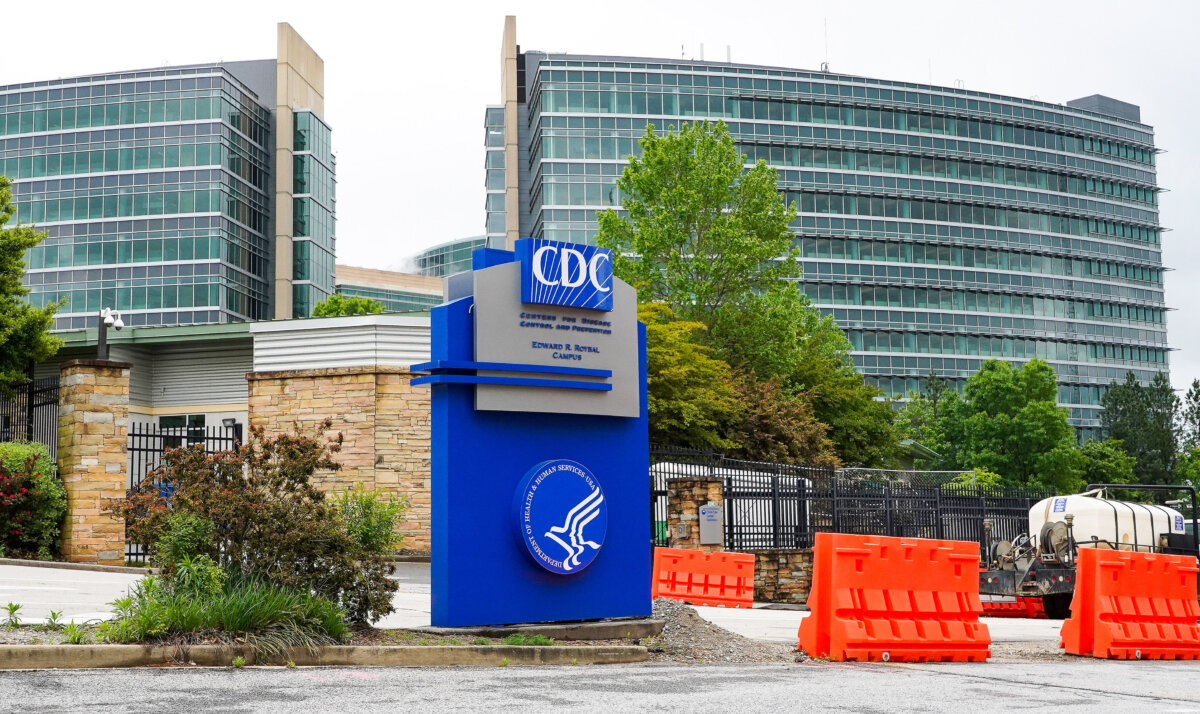
The percentage of American kindergartners who were exempted from school vaccination mandates has hit its highest level ever, officials with the Centers for Disease Control and Prevention (CDC) said Thursday.
A CDC report found that 3 percent of children going into kindergarten for the 2022–2023 school year were given an exemption in their state. That represents the highest rate ever reported in the United States, officials said.
Forty-one out of 50 states saw rises in vaccine exemptions. Meanwhile, the states of Alaska, Arizona, Hawaii, Idaho, Michigan, Nevada, North Dakota, Oregon, Utah, and Wisconsin saw the rate go over 5 percent, respectively.
Idaho, with a 12 percent exemption rate, had the lowest percentage of children who got all the vaccines this school year, according to the report. Mississippi had the highest percentage of children who got all the shots, it found.
Connecticut and Maine saw significant declines, which CDC officials attributed to recent policy changes that made it harder to get exemptions.
Hawaii saw the largest increase, with the exemption rate rising to 6.4 percent, the CDC said. That’s nearly double the previous year.
The officials did not make mention of COVID-19 vaccines. Instead, they were referring to the common childhood vaccines for measles, mumps, and rubella (MMR), as well as for diphtheria, tetanus, and whooping cough (DTaP), as well as shots for polio and chickenpox. It also did not include the hepatitis B vaccine, which is sometimes given to schoolchildren in some states.
“During the 2022–23 school year, coverage remained near 93 percent for all reported vaccines, ranging from 92.7 percent for DTaP to 93.1 percent for measles, mumps, and rubella and polio,”‘ the report said. It added that the exemption rate increased 0.4 percentage points from 2.6 percent last school year to 3.0 percent for this school year.
The federal health agency proclaimed that it’s the “highest exemption rate ever reported,” adding that the vaccination rate among kindergartners stood at around 95 percent or higher for years before the COVID-19 pandemic.
All states allow children to be exempt from vaccines if they have certain medical conditions. Many states also allow children to be exempt from the shots if they have religious or other non-medical reasons.
In recent years, California and New York state have passed laws that restrict parents’ abilities to obtain an exemption for religious or philosophical reasons. The CDC report found that 0.1 percent of children had exemptions in New York for this school year.
“It is not clear whether this reflects a true increase in opposition to vaccination, or if parents are opting for nonmedical exemptions because of barriers to vaccination or out of convenience,” the CDC report stated. “Whether because of an increase in hesitancy or barriers to vaccination, the COVID-19 pandemic affected childhood routine vaccination.”
The report then warned that declines in vaccination rates could lead to future outbreaks of childhood illnesses.
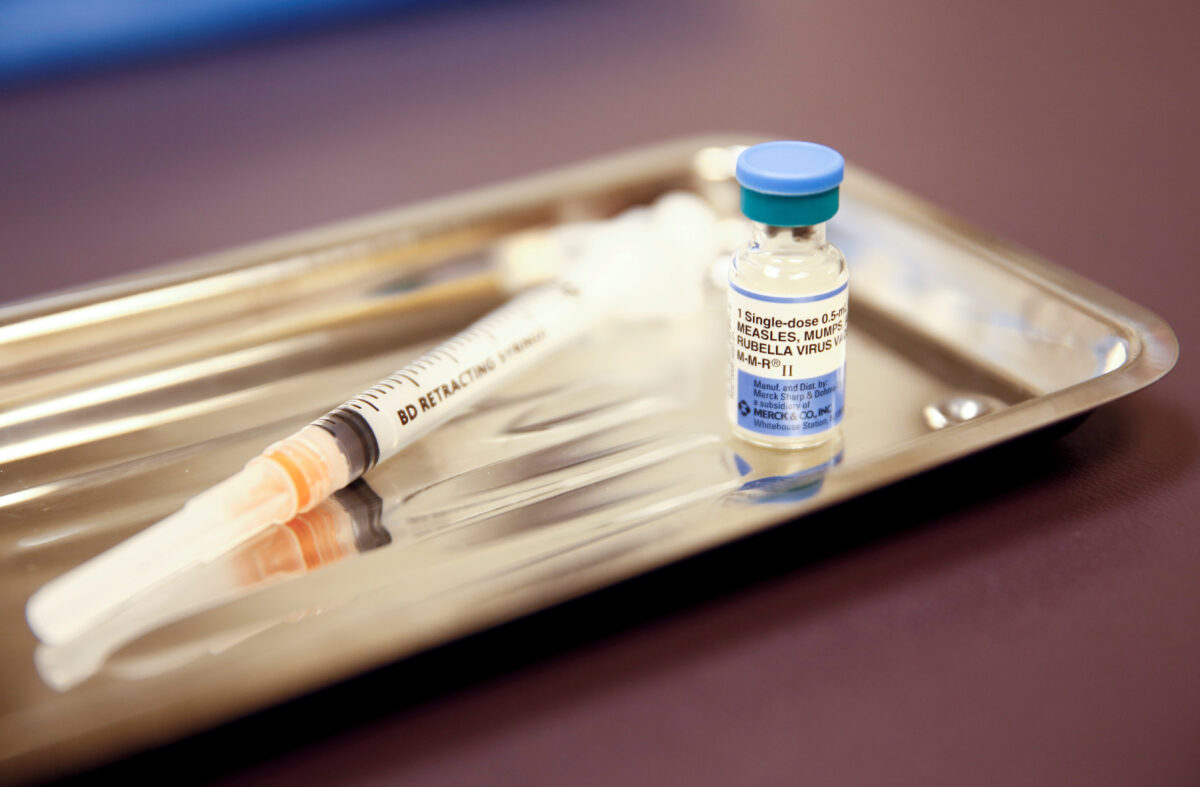
“Because clusters of undervaccinated children can lead to outbreaks, it is important for immunization programs, schools, and providers to make sure children are fully vaccinated before school entry, or before provisional enrollment periods expire,” the report said.
Unusual Finding
There was one apparent paradox in the report: The national vaccination rate held steady even as exemptions increased.
CDC officials say it’s because there are actually three groups of children in the vaccination statistics. One is those who get all the shots. A second is those who get exemptions. The third are children who didn’t seek exemptions but also didn’t get all their shots and paperwork completed at the time the data was collected.
“Last year, those kids in that third group probably decreased,” offsetting the increase in the exemption group, the CDC’s Shannon Stokley told The Associated Press this week.
Americans Increasingly Wary
A recent survey carried out by the Annenberg Public Policy Center with the University of Pennsylvania that polled 1,500 American adults between Oct. 5 and Oct. 12 found that about 63 percent of Americans think that getting the COVID-19 vaccine is safer than getting the virus itself—a drop of 12 percentage points from April 2021 when 75 percent held that viewpoint.
Notably, according to the poll, more Americans believe that the vaccine for measles, mumps, and rubella (MMR) is linked to autism. Nine percent of respondents in June 2021 believed that statement, but 12 percent now say that statement is true, the poll found.
And regarding the COVID-19 vaccines, about 15 million people in the United States received the latest booster shot as of Oct. 27, recent figures from the Department of Health and Human Services (HHS) show. That amounts to more than 4.5 percent of the American population.
By Oct. 26 of last year, approximately 23 million people had received the initial updated booster shot, according to CDC data. The 2022 fall vaccination campaign started around 10 days earlier than the 2023 season. In all, about 56.5 million people, or 17 percent of the U.S. population, got last year’s booster.
The Associated Press contributed to this report.