



Hospitalizations for COVID-19 have continued to drop, coming after a relatively small increase in cases over the summer, according to data released by the U.S. Centers for Disease Control and Prevention (CDC).
Hospitalizations fell by 5 percent for the week ending Oct. 14, while emergency department visits also dropped by 11.9 percent, and reported case numbers decreased by 0.7 percent. Deaths rose by 4.2 percent, although officials say that deaths generally lag case and hospital numbers.
For the week ending on Oct. 7, hospitalizations were down by 8.2 percent, emergency visits fell 17.7 percent, and reported cases were down by 0.8 percent, while deaths fell 3.8 percent, the data show.
Amid the drop in hospitalizations over consecutive weeks, the CDC sent out a report earlier in October claiming the virus remains a “public health threat” for older Americans, arguing that it’s a reason they should take the updated COVID-19 vaccine.
The Food and Drug Administration (FDA) and CDC both signed off last month on the updated shots made by Pfizer, Moderna, and Novavax.
Few Americans Taking Updated Shots
Around the same time, the CDC said officials are expecting a “moderate COVID-19 wave” for the winter months ahead and predicted this year’s peak will match last winter’s hospitalization figures. The virus levels, however, could peak earlier this season because of “limited summer activity compared to past years,” the agency said in September.
“This increase could result from the emergence of a new COVID-19 variant with an increased ability to evade the body’s prior immunity, or from a severe influenza season combined with COVID-19 and RSV waves that are similar to last year, or, as we saw last year, an increase in RSV infections,” the CDC stated. “A key factor is the timing of the peak number of hospitalizations associated with each disease and whether those peaks coincide.”
About 3 percent of all Americans who are eligible have received the updated COVID-19 booster shot, nearly two months after it was rolled out, according to officials with the Department of Health and Human Services (HHS). Overall, about 10 million people have taken it, the data show, up from 7 million a week before.
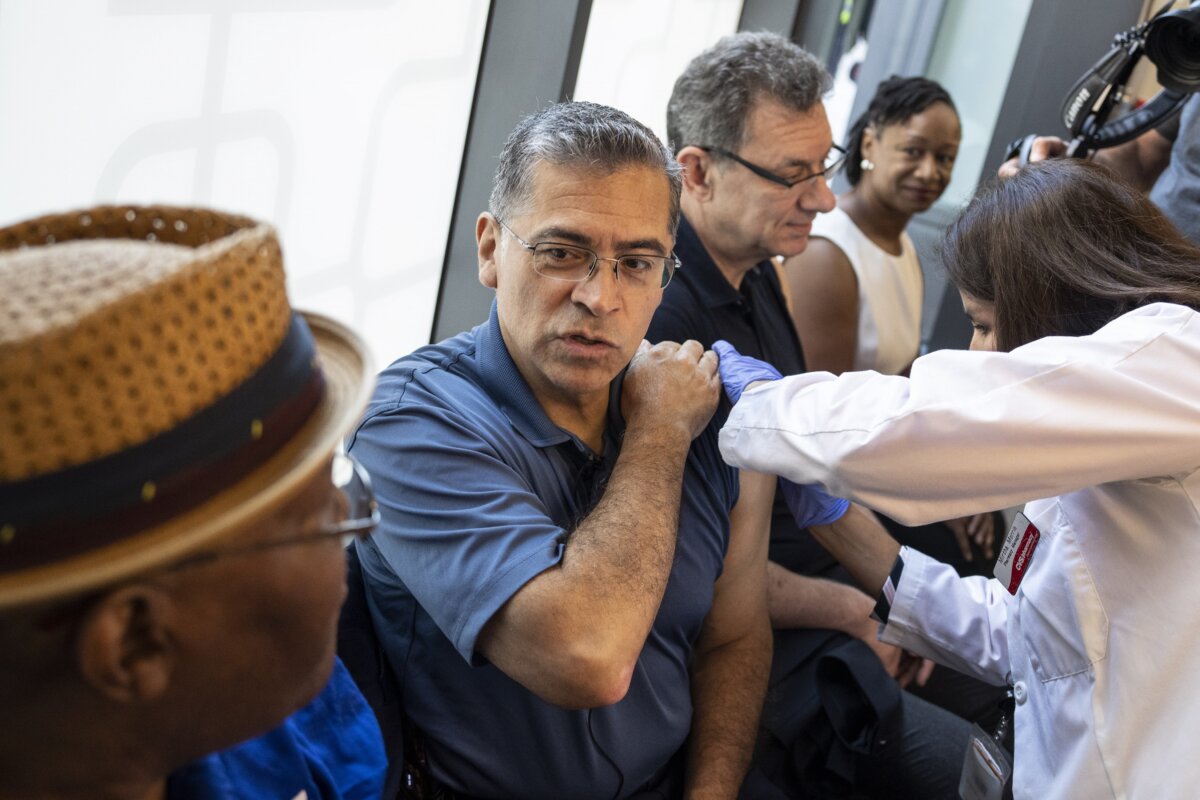
“The administration remains committed to pulling every lever at its disposal during the fall respiratory vaccination campaign, encouraging the American public to stay up to date on their vaccines to keep themselves and their loved ones safe,” an HHS spokesperson told The Epoch Times earlier in October. “As a result of these efforts, around 10 million Americans have been vaccinated since the updated vaccines were authorized and recommended last month.”
The relatively lower pace of vaccinations prompted drug giant Pfizer to revise its revenue guidance for the year, warning that demand for COVID-19 products such as vaccines has plunged.
Pharma Profits Plunge
Pfizer, which has seen its stock drop by about 40 percent for 2023, slashed its outlook by about $9 billion due to the weakened demand, the company said on Oct. 13. It particularly expects sales of its mRNA vaccine to be about $2 billion lower than it previously anticipated.
As for Moderna, the company reiterated earlier this month that its COVID-19 vaccine sales will be between $6 billion and $8 billion. It’s still too early to predict the U.S. vaccination rate, Moderna said this month, coming as the company’s stock plunged $7 billion in about a week and as its stock has dropped 83 percent since its peak in August 2021.
Some analysts said that the pharmaceutical companies should be worried about their vaccine sales.
“COVID-19 vaccine revenue concerns should be at an all-time high right now,” Hartaj Singh, an analyst at Oppenheimer, said in a recent Bloomberg report. “A good third-quarter print should allay some of these fears. And good guidance early next year on 2024 potential revenues could get the stock’s mojo back.”
It comes also as multiple U.S. hospitals in recent days have dropped their COVID-19 mask mandates after they reinstated the rule several weeks ago. A handful of hospitals across the United States reimplemented mandates over the summer, although some didn’t make masks a requirement for patients or visitors, just staff such as nurses and doctors.
The largest hospital group in New Jersey, Hackensack Meridian Health, reinstated mask mandates last month. However, officials with the company have confirmed it has lifted its mandate for all its hospitals except for Bayshore Medical Center in Holmdel, Old Bridge Medical Center, and Southern Ocean Medical Center in Stafford, local media reported.