



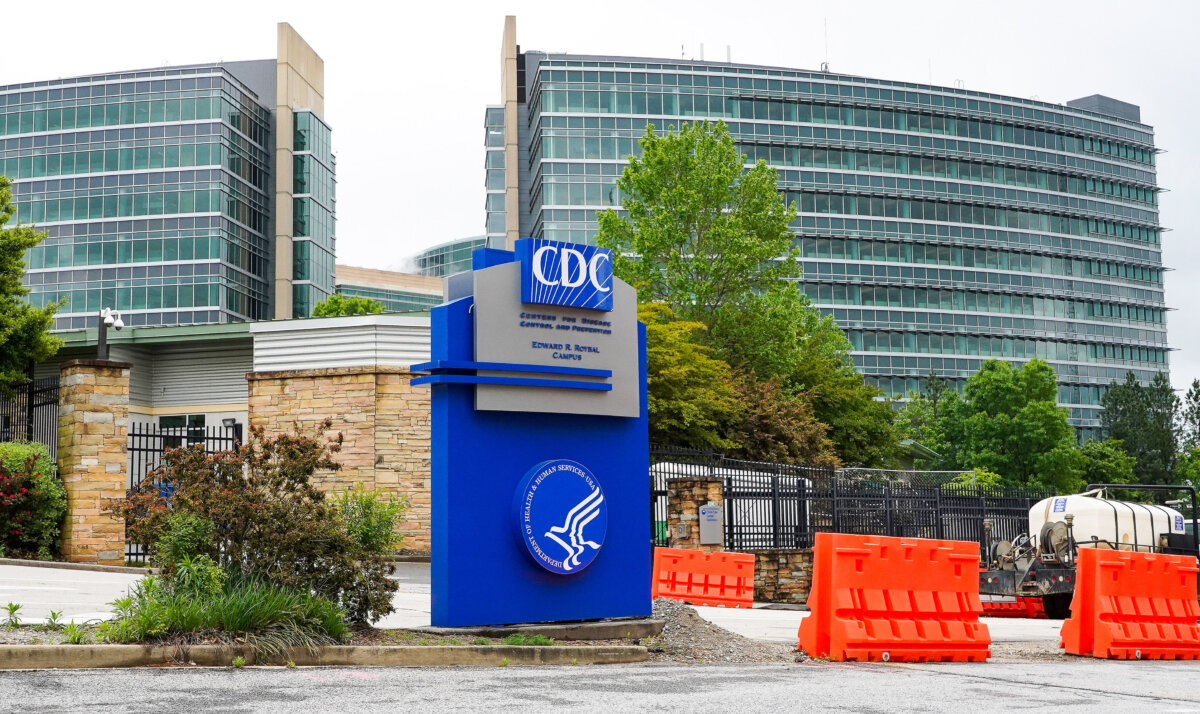
The U.S. Centers for Disease Control and Prevention (CDC) stated in its latest update that current U.S. flu activity has declined for the first time in several weeks.
Influenza cases are down by 14 percent in the past week, while the number of hospitalizations has “decreased slightly,” the CDC stated on Jan. 12 in an update to its influenza weekly report. But the agency noted that “influenza activity remains elevated in most parts of the country.”
“After several weeks of increases in key flu indicators, a single week of decrease has been noted,” the agency stated. “CDC will continue to monitor for a second period of increased influenza activity that often occurs after the winter holidays.”
The CDC further estimated that this winter season there have been at least 14 million illnesses, 150,000 hospitalizations, and 9,400 deaths, including about a dozen children.
As for COVID-19, the CDC reported that emergency department visits for the virus dropped by 13 percent, while hospitalizations increased by about 3 percent in the past week, according to the latest weekly data. The total number of COVID-19 cases has also decreased slightly.
Historical data show that for COVID-19, the overall hospitalization figure is relatively smaller than prior increases seen throughout the pandemic. The current winter 2023–24 increase appears to be lower than the increase that occurred a year before that.
The data show that 35,000 or so hospitalizations were reported for the week that ended on Jan. 6. A year before that, on Jan. 7, 2023, more than 44,000 hospitalizations were reported across the country by the CDC.
RSV hospitalizations appear to be stable with a slight increase in weekly hospitalization figures, according to recent CDC data. The hospitalization rate for RSV stands at about 3.7 per 100,000 people, up slightly from 3.6 per 100,000 the week before that.
“It’s actually pretty common that we see a little bit of a dip around the holidays, but we typically see an increase after that—because people will delay seeking care, and lots of people get exposed to different things through holiday travel,” said Janet Hamilton, executive director of the Council of State and Territorial Epidemiologists, CNN reported.
“I think we should definitely expect a lot more respiratory virus activity.”
Another researcher, William Schaffner with Vanderbilt University, told CNN that he believes that “there’s still a substantial amount of respiratory virus season to go.”
“These viruses, to one degree or another, will be with us through the end of this month and well into February,” he said.
The CDC recently stated that “the percent of the population reporting receipt of COVID-19, influenza, and RSV vaccines remains low for adults.” Only about 21.4 percent of the U.S. population has taken the updated 2023–24 COVID-19 vaccine.
CDC officials have said that the JN.1 variant discovered several months ago is the dominant variant, making up more than half of new cases in the United States.
In December 2023, the World Health Organization classified JN.1 as a “variant of interest” and stated that current evidence shows a low risk to public health from the strain.
A CDC spokesperson recently told media outlets that “no data would indicate JN.1 infection produces different symptoms from other variants.”
“In general, symptoms of COVID-19 tend to be wide-ranging with all variants,” the CDC official said.
“There have been reports that COVID-19 may be associated with insomnia and anxiety in some patients, and therefore that can be a general symptom of infection and not related to the variant. [The agency] is constantly researching the effects of COVID variants and will update the public as we learn more.”
Current symptoms of COVID-19 infection include fever or chills, sore throat, cough, runny nose or congestion, difficulty breathing, fatigue, loss of smell or taste, muscle aches, headaches, brain fog, and stomach issues such as vomiting or diarrhea.
Mask Mandates Return
As of early January, hospitals around the United States reinstated mask mandates because of COVID-19 and other respiratory illnesses.
For example, New York this past week instituted a mask mandate for the city’s 11 public hospitals. Similar measures were ordered at certain Los Angeles and Massachusetts hospitals. Some hospitals reinstated masking rules for employees months ago in anticipation of a seasonal rush of sick people.
Several hospitals also implemented masking requirements in and around the Philadelphia area. Visitors and staff at Cooper University Health Care facilities have had to wear face coverings in examination rooms and patient rooms since Jan. 5.
Hospitals in Illinois, Wisconsin, North Carolina, Delaware, and Washington state have issued similar mandates.
In November 2023, a mask mandate until late spring was reinstated in multiple California counties near San Francisco.
Reuters contributed to this report.