



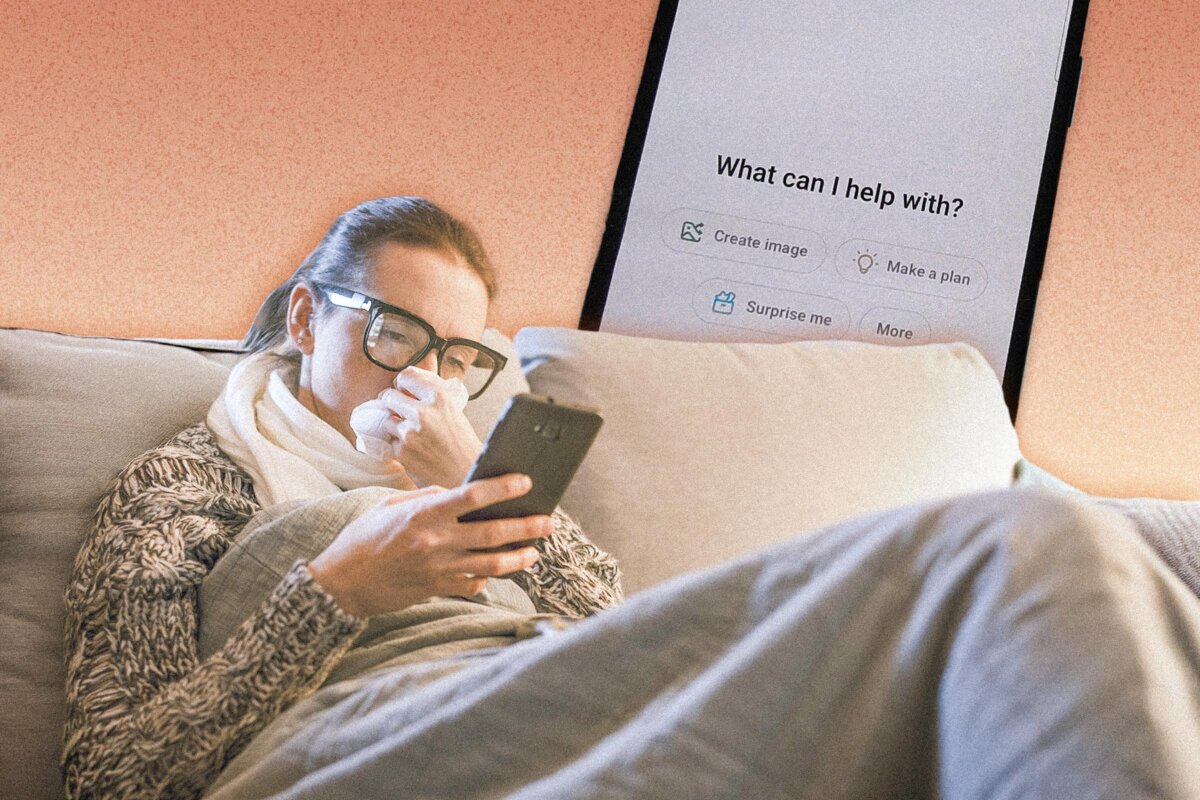
Millions of Americans are already asking ChatGPT to explain their symptoms, decode medical jargon, and help them decide whether they need to see a doctor. Now the company is making it official: ChatGPT Health will let users upload their actual medical records for personalized advice—if they’re willing to trust an artificial intelligence company with their most sensitive data.
The company opened a waitlist this week for the new platform, which allows users to connect medical records and wellness apps such as Apple Health, Function, and MyFitnessPal directly to ChatGPT.
However, giving ChatGPT access to your medical records comes with some risks, including privacy and data concerns. Medical experts also caution that although AI can help users better understand their health information, it should not be treated as a replacement for professional medical advice.
What ChatGPT Health Actually Does
ChatGPT Health operates as a separate platform from the standard ChatGPT interface. Once connected, it can analyze health records, track patterns across wellness data, and provide insights based on a user’s complete medical history.
Any health-related conversations and any connected medical records are stored in a separate, encrypted environment designed specifically for sensitive health data. According to the company, this information is not used to train its AI models and is walled off from the broader ChatGPT system.
To manage data access, ChatGPT Health is partnering with b.well, a network that connects consumers’ health information across providers, insurers, and apps. Users can choose which records to link, review them at any time, and disconnect access whenever they want. Disconnecting means that ChatGPT Health can no longer access the data, but it does not automatically delete the original records from hospitals, doctors, labs, or insurers.
OpenAI is framing the product as a health understanding tool, not a medical provider or a diagnostic service. The company emphasizes that ChatGPT Health is intended to help users interpret information, learn about conditions, and better prepare for conversations with licensed medical professionals—supplementing, not replacing, guidance from trained clinicians.
For people facing high health care costs, long wait times, or limited access to providers, that distinction might feel academic. The promise of instant, personalized health guidance is especially compelling when a doctor’s appointment is expensive and weeks away—and even more so given that ChatGPT Health does not currently require a separate subscription and can be accessed as part of ChatGPT, including on the free tier.
Beyond how the tool is framed and used, users also need to consider privacy and the security of their personal data.
The Privacy Problem: No HIPAA Protection
Because OpenAI is not a health care provider, ChatGPT Health is not bound by the Health Insurance Portability and Accountability Act, also known as HIPAA, the federal law that sets strict rules for how medical information is handled.
Health-related data are sensitive, Cobun Zweifel-Keegan, managing director of the International Association of Privacy Professionals, told The Epoch Times.
“In the event health conditions or treatments are exposed or misused, there can be serious financial, social, or safety risks,” he said. “In some contexts, medical records could even expose people to criminal liability.”
Unlike hospitals, clinics, or insurance providers, many technology companies offering health-related tools do not fall under the same legal obligations designed to protect patient information. Although OpenAI promises encryption and data separation, those protections are based on company policy, not federal mandate.
Privacy experts emphasize that how digital platforms collect and store data plays a major role in determining overall risk. As more people turn to AI-powered tools for health-related guidance, large volumes of personal medical information may be uploaded without users fully understanding how the data are handled behind the scenes.
“In the health context, if a company encourages users to upload a lot of medical information for use by a chatbot, it will be stored in some sort of database, much like any other online service,” Zweifel-Keegan said. “The risks are generally the same as other types of websites or services. The more data that is stored and retained, the more risk of harm from a breach.
“Generally, any large amounts of sensitive data stored in a single place [needs] to be subjected to a high degree of privacy and security safeguards.
“Users should ensure that companies are promising and explaining how these safeguards are in place before trusting any online system with their medical records.”
When AI Gets Medical Advice Wrong
Privacy concerns aside, there’s the question of accuracy. Experts warn that ChatGPT can provide inaccurate, incomplete, or misleading information, which could lead users to misunderstand symptoms or delay seeking proper care.
“The American College of Physicians ACP firmly believes that AI-enabled technologies should complement and not supplant the logic and decision-making of physicians,” Dr. Rebecca Andrews, chair of the board of regents for the American College of Physicians, told The Epoch Times. “This is so important because AI cannot perform a clinical exam, which is one of the most essential components of medical care.”
A chatbot can’t take your blood pressure, feel for abnormalities, or pick up on subtle physical cues that signal something serious. It works with only the information you provide, which may be incomplete, inaccurately described, or both.
Right now, responsibility for harmful advice from ChatGPT sits in a gray area. OpenAI is responsible for how the system is designed and marketed, but it avoids legal liability by clearly stating that ChatGPT isn’t a doctor and shouldn’t replace professional medical care. Because of that, most of the risk still falls on users, who are expected to treat the information like something they would read online and verify it with a qualified health care provider.
The Mental Health Risk
There are also emotional and psychological risks when people turn to AI for mental health support.
“We’ve seen concerning cases where people with depression or anxiety turned to ChatGPT for emotional support, and the interaction blurred into a ‘friend-like’ dynamic,” Andrews said. “Some individuals later died by suicide. The boundary between being ‘helpful’ and unintentionally harmful is not reliably maintained by AI, whereas a trained clinician knows how to respond safely.”
Andrews is referring to the multiple instances in which ChatGPT encouraged people to end their lives, one of the most recent being Zane Shamblin, a 23-year-old student at Texas A&M University.
Without clear safeguards for users in a crisis, the chatbot may not recognize when someone needs immediate help or steer them toward emergency resources. Experts said this risk can be especially dangerous when vulnerable users start treating the AI as a trusted confidant, potentially delaying real-world support.
These incidents have fueled growing concern that AI tools still lack the boundaries and protections needed to safely handle serious mental health situations.
At the same time, ChatGPT stresses that these risks do not negate AI’s potential value when used responsibly and within clearly defined limits. OpenAI’s usage policies state that the company aims for its tools to be “used safely and responsibly … with clear expectations and guardrails.”
The Case for Responsible Use
As concerns grow around the risks of relying too heavily on AI for medical and mental health support, experts emphasize that the technology itself is not inherently harmful. Instead, the challenge lies in how and where these tools are used.
“There are meaningful benefits when ChatGPT is used appropriately,” Andrews said. “[Used safely], ChatGPT Health can be genuinely helpful as a tool to improve your health in between health visits in creative ways you might not have thought of, such as exercise routines and healthy meal plans. But it should never be treated as a replacement for professional medical care or clinical judgment.”
AI will continue to evolve, learning from ongoing research, user feedback, and real-world cases. The challenge is to ensure that users understand exactly what these tools can and can’t do—and for companies to build protections robust enough to handle the full range of risks that arise when sensitive human health data are stored or shared.