



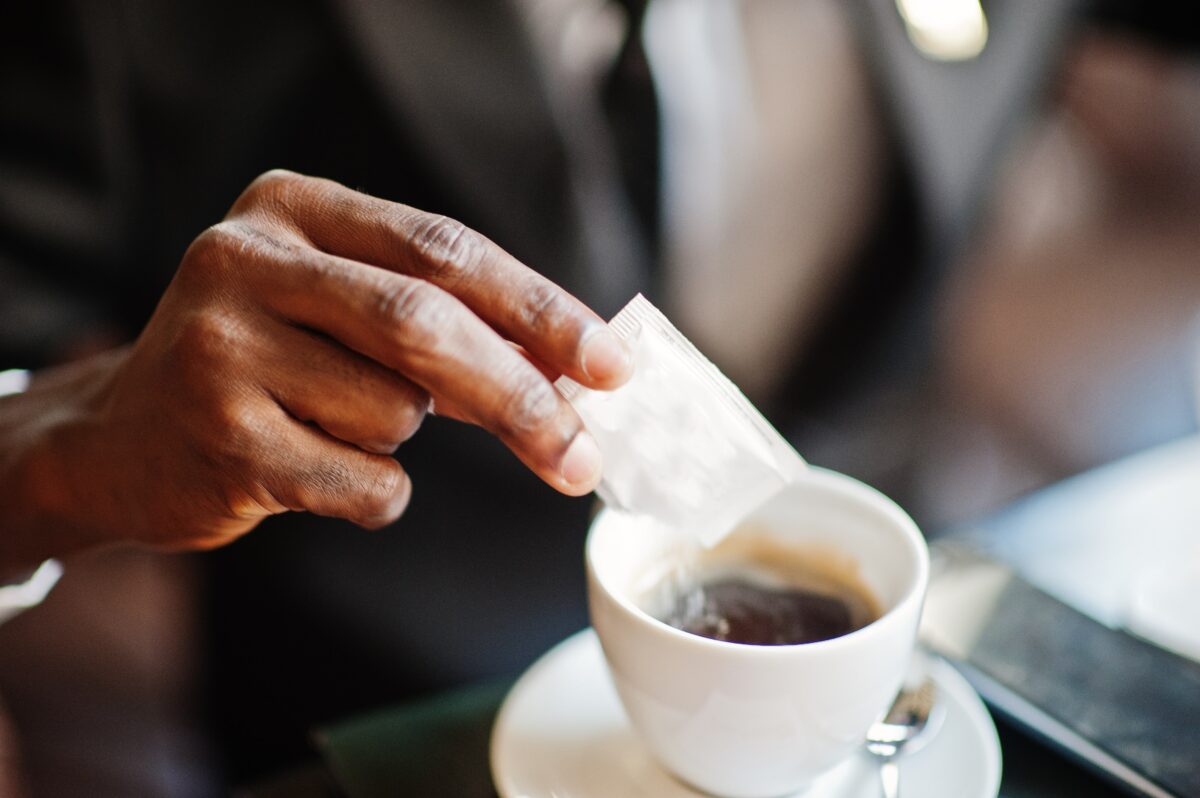
A popular sugar substitute relied on by health-conscious consumers may interfere with life-saving cancer treatment, according to new research.
The study found that cancer patients who included high levels of the artificial sweetener sucralose in their diet had a poorer response to certain cancer-fighting drugs when compared to those who consumed less of the artificial sweetener.
How Sucralose Disrupts Cancer Treatment
The research, recently published in Cancer Discovery, examined 132 patients with advanced melanoma and non-small cell lung cancer, as well as animal studies that revealed the biological mechanism behind the connection.
Using a mouse model of lung and skin cancer, they discovered that sucralose depletes the amino acid arginine by increasing bacteria in the gut that break it down.
The reduction in arginine levels in the blood, tumor fluid, and stool was linked to decreased effectiveness of immune-based cancer treatments—especially immune checkpoint inhibitor immunotherapies such as anti-PD1.
“When arginine levels were depleted due to sucralose-driven shifts in the microbiome, T cells couldn’t function properly,” lead author Abby Overacre, an assistant professor at Pitt and UPMC Hillman Cancer Center, said in a statement. “As a result, immunotherapy wasn’t as effective in mice that were fed sucralose.”
Checkpoint inhibitors don’t kill cancer cells directly—they work by helping cancer-killing T cells to better find and attack the cancer cells—and arginine is essential for T cell function, especially in fighting cancer.
A Simple Solution
The researchers discovered a potential workaround: When mice that were fed sucralose received supplemental arginine or citrulline, which converts to arginine in the body, their response to immunotherapy improved significantly.
“It’s easy to say, ‘stop drinking diet soda,’ but when patients are being treated for cancer, they are already dealing with enough, so asking them to drastically alter their diet may not be realistic,” Overacre said in the statement.
She emphasized a need to “meet patients where they are.”
“That’s why it’s so exciting that arginine supplementation could be a simple approach to counteract the adverse effects of sucralose on immunotherapy,” she said.
According to senior author Dr. Diwakar Davar, an associate professor of medicine at Pitt and a medical oncologist at UPMC Hillman Cancer Center, the study findings also raise the possibility of designing prebiotics—parts of food we can’t digest but can be used by microorganisms—as targeted nutrient supplementation for patients who consume high levels of sucralose.
Considering Diet in Cancer Treatment
“Although these findings are early and based partly on animal models, they highlight the importance of considering how diet might interact with cancer treatment,” Dr. Sudarsan Kollimuttathuillam, an oncologist and hematologist at City of Hope in Orange County, California, who was not involved in the study, told The Epoch Times.
While sucralose is considered safe for general use, emerging research, including the new study, shows it can adversely affect the gut microbiome—a serious consideration when 70 percent to 80 percent of immune cells are present in the gut.
Overacre and team are also interested in exploring how other sugar substitutes, such as aspartame, saccharin, xylitol, and stevia, might affect the immune system and cancer therapy outcomes. Interestingly, while the safety of aspartame has been studied for decades, with conflicting findings, in July 2023, the World Health Organization classified aspartame as possibly carcinogenic to humans.
According to Kollimuttathuillam, sucralose isn’t the only artificial sweetener we should be concerned about.
“Many people opt for diet soda as a ‘healthier’ alternative to regular soda to avoid sugar’s carbohydrates and calories,” he said. “However, diet sodas often contain aspartame, one of several chemically produced, non-nutritive sweeteners.”
It’s important to note that this classification does not mean aspartame causes cancer, he added.
“The term ‘possible carcinogen’ signals a need for more research,” he said. “As the evidence is limited and inconclusive.”
The U.S. Food and Drug Administration has approved aspartame since the early 1980s and set an acceptable daily intake of 50 milligrams per kilogram of body weight—equivalent to about 17 to 18 cans of diet soda per day for an average adult.
What Patients Should Know
“Moderation is key, particularly for people with chronic illnesses or those undergoing cancer treatment,” Kollimuttathuillam said. He noted that while artificial sweeteners offer a way to cut calories and sugar, they’re not the only solution, and may not be the most beneficial long-term strategy for everyone.
Naturally derived alternatives such as stevia or monk fruit may be gentler on the gut microbiome, he said, but emphasized that more research is still needed in those areas, while encouraging people to focus on a diet made up of whole, minimally processed foods and to gradually reduce their overall preference for sweet-tasting foods and beverages.
“Water, unsweetened tea or coffee, and naturally flavored or sparkling waters are all excellent alternatives,” Kollimuttathuillam said.
Overacre and team plan to begin clinical trials to test whether citrulline supplements, which increase arginine levels more effectively than arginine itself, could improve immune response and treatment success.