



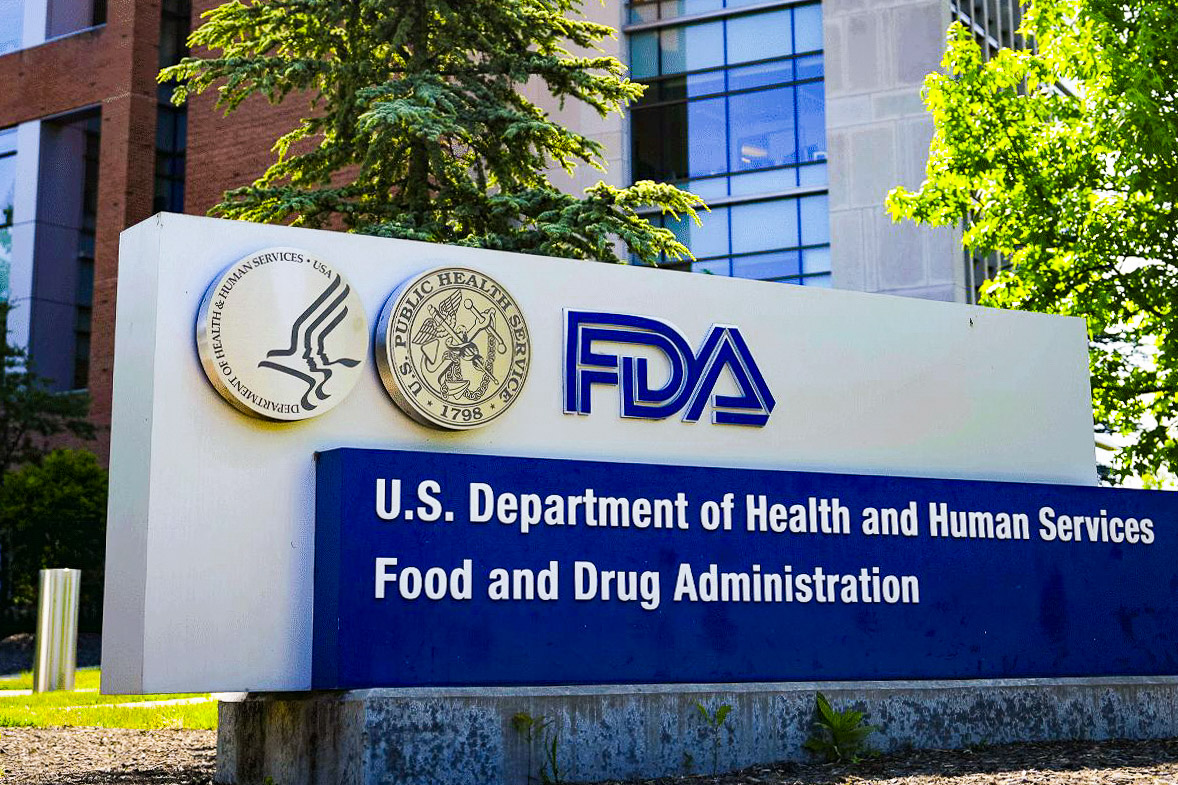
A U.S. Food and Drug Administration (FDA) expert panel on Tuesday voted against recommending midomafetamine (MDMA), commonly known as ecstasy, for the treatment of post-traumatic stress disorder (PTSD), citing concerns over clinical trial data, selection bias, and drug safety.
Although the panel’s recommendations are not binding, the FDA often relies on their guidance and will render a final decision in mid-August on whether the illegal mind-altering drug can be legally used as a medical treatment in the United States. If the FDA signs off, it will be the first approved treatment for PTSD in two decades.
During the meeting, the Psychopharmacologic Drugs Advisory Committee (PDAC) voted on two questions:
- Do the available data show that the drug is effective in patients with post-traumatic stress disorder?
- Do the benefits of midomafetamine with FDA’s proposed risk evaluation and mitigation strategy (REMS) outweigh its risks for the treatment of patients with PTSD?
The panel also addressed four discussion points concerning the drug’s efficacy in treating PTSD, its safety profile, the possibility of patient impairment and associated risks, and potential mitigation strategies to minimize harm. These included the necessity for additional safety monitoring to ensure the safe administration and supervision of MDMA if approved as a treatment for PTSD.
On voting question number one, two members voted in favor of the drug’s data on effectiveness for PTSD, while nine members voted against it. Functional blinding, selection bias, lack of diversity, and the lack of management of expectation bias were significant factors in the vote.
“I do think there is potential for this, but based on selection bias [and] functional unblinding, it just didn’t feel right, and the potential for some misconduct and manipulating the trial results,” said global drug safety advocate Kim Witczak.
On the second voting question, 10 members voted against MDMA’s safety, and one member voted in favor of the drug.
“I absolutely agree we need new and better treatments for PTSD, especially in the somatic treatment space. However, I also note that premature introduction of a treatment can actually stifle development and stifle implementation and lead to premature adoption of treatments that are either not completely known to be safe, not fully effective, or not being used at their optimal efficacy,” said Dr. Paul Holtzheimer, the deputy director of research with the National Center for PTSD when describing why he voted against the drug.
What MDMA Treatment Would Involve
The proposed treatment involves a pill containing MDMA produced by Lykos Therapeutics, formerly known as MAPS (Multidisciplinary Association for Psychedelic Studies) Public Benefit Corporation.
The treatment is designed to be administered in three doses given at least three weeks apart in supervised treatment sessions with a licensed mental health provider over a four-month course of treatment. Each session would coincide with psychological interventions, and patients would be monitored for 8 hours or more, as outlined during the meeting.
The application was originally sponsored by the nonprofit organization Multidisciplinary Association for Psychedelic Studies (MAPS), which has since established a for-profit company to market MDMA should it receive FDA approval. Lykos on Dec. 11, 2023, submitted a New Drug Application to the FDA for MDMA-assisted therapy for PTSD based on data from two Phase 3 clinical trials.
The studies, MAPP1 and MAPP2, were both published in Nature Medicine and evaluated the safety and efficacy of MDMA-assisted therapy in participants with moderate and moderate to severe PTSD.
During the meeting, Lykos Therapeutics presented data from its two late-stage randomized placebo-controlled clinical trials using MDMA in combination with therapy to treat PTSD, along with an exploratory observational study consisting of a six-month follow-up visit.
The first trial, MAPP1, evaluated 90 patients with PTSD who were randomly assigned a single divided dose of 80–180 mg of MDMA or a placebo, followed by three psychotherapy sessions lasting a total of eight hours. Participants could receive an additional dose of MDMA after the first dose.
According to Lykos Therapeutics, 82 percent of patients reported significant improvement, and more than half said they recovered from PTSD. About 30 percent of patients in the placebo group reached remission. The second trial, MAPP2, evaluated 104 patients with similar findings.
FDA Concern Over MDMA Clinical Trial Data
Although the FDA, in its briefing document, acknowledged that trial participants appeared to experience “rapid, clinically meaningful, and durable improvement” of PTSD symptoms, the agency noted several factors that made the data challenging to interpret and complicated the benefit-risk assessment.
One issue raised by the FDA and its advisors during the meeting was the functional unblinding of the clinical trials. First, because MDMA produces “profound alterations” in mood, sensation, suggestibility, and cognition, it is “nearly impossible” to blind the clinical trial, the agency said in its briefing document.
Functional blinding can introduce bias in clinical studies and expectation bias among those who believe they were given the active treatment.
Approximately 90 percent of participants assigned to MDMA and 75 percent of those assigned to the placebo were able to guess their treatment assignment accurately.
There’s also a possibility of expectation bias. This occurs when participants who believed they received active treatment anticipated experiencing clinical benefits, while those receiving a placebo may have felt worse due to disappointment from not experiencing expected treatment effects or a combination of both scenarios.
Moreover, therapists or monitors during sessions could infer a participant’s treatment based on their behavior, making participants and study staff aware of the participant’s treatment arm.
“It’s reasonable to assume that both functional unblinding and expectation bias have influenced the treatment effects observed in MDMA clinical trials to some degree,” the FDA stated.
Dr. Holtzheimer raised concerns about functional blinding during the meeting.
“Functional unblinding clearly occurred. That leads to the strong reality that expectation bias played a part in the outcomes of the study,” he said. “Stating the obvious expectation bias can work in two ways: It can exaggerate the effect of the active treatment. It can also blunt the effect of the placebo treatment.”
Dr. Holtzheimer, speaking specifically about the second clinical trial, said the difference between the active and placebo groups was “statistically significant” by Lycos Therapeutic’s own analyses but relatively small enough that expectation bias could not be discounted and could potentially explain the difference between the true groups. This left him “unconvinced by the acute efficacy of the treatment.”
He was also unmoved by the company’s durability data, which the FDA can consider when the impact of unblinding cannot be quantified.
“I’m also not convinced by the durability data again because of the use of other treatments by a substantial portion of the follow-up group. And then I think the psychological intervention is still, for me, a bit of a black box. It’s not clear exactly what was done in each [therapy] session,” Dr. Holtzheimer said.
“I believe the company, the sponsor, that they assessed this in the trials, however, what’s described is really a relatively vague ill-defined treatment psychosocial intervention that I think it would be hard to standardize across arms, and I’m not convinced was equal across arms which could further contribute to differences and outcomes between groups,” he added.
Ms. Elizabeth Joniak-Grant, a patient representative for the FDA with a doctorate in sociology, expressed concerns over the lack of diversity in the study population, the safety profile, and the manufacturer’s failure to disclose why some participants dropped out of the study. Additionally, she raised concerns over the potential cardiovascular adverse events associated with the drug.
“With COVID, we’ve seen quite a rise in dysautonomia diagnosis and POTS [postural tachycardia syndrome], and I’m wondering how that would come into play with elevated blood pressure and heart rate and tachycardia, so I think that’s something that needs to be looked at more,” she said.
Ms. Joniak-Grant also expressed concern that adverse events were reported in participants that were ongoing for seven days or more, but no data was provided as to whether those side effects ever resolved.
Another issue raised during the meeting was the addictive qualities of MDMA. According to the National Institute on Drug Abuse, it hasn’t been definitely determined when MDMA is addictive, but data from animal and human studies suggest regular MDMA use produces adaptations in neurotransmitter systems that are associated with substance use disorders and related behaviors.
Data from both humans and animals suggest that regular MDMA use produces adaptations in the serotonin and dopamine systems that are associated with substance use disorder and related behaviors, such as increased impulsivity.
Dr. Maryann Amirshahi, a medical toxicologist, asked Lycos about MDMA’s addictive qualities:
“One of the things that you pointed out is that 46 percent of your patients with PTSD have substance use disorder, and 40 percent of them, you said, had also used MDMA illicitly prior to the study. So my question for you is, it doesn’t seem that we evaluated if they went on to use illicit MDMA after the fact and how these therapy sessions by introducing somebody that already has SUD or is at high risk of SUD in multiple sessions using MDMA—why didn’t we follow up to see if there was a subsequent uptick in illicit use?” she asked.
“The reason I say that as a medical toxicologist is that we’re managing more and more severe cases of MDMA overdose, and so I’m less concerned about the safety in the acute setting but more chronically if they go on to abuse MDMA—that drug is much less safe on the street.”
According to the slides presented during the meeting by Lykos Therapeutics, six people used MDMA illicitly prior to the study, and 13 used it after. So seven people who had never used ecstasy before became illicit users after. In the placebo group, six people had used MDMA prior to the study, and six people used after.
What is MDMA?
Methylenedioxymethamphetamine (MDMA), originally synthesized by Merck in 1912, is a synthetic psychedelic known for its dual effects as both a stimulant and hallucinogen. MDMA gained popularity in the 1970s and early 1980s even though it had not undergone formal clinical trials or received FDA approval for use in humans.
Some therapists thought MDMA could enhance the psychotherapeutic process and heighten a patient’s capacity for introspection and intimacy without the adverse reactions associated with lysergic acid diethylamide (LSD). At the same time, MDMA became widely available on the street and gained popularity, particularly among adolescents and young adults at night clubs and raves.
In response to its escalating usage, the Drug Enforcement Administration in 1985 declared an emergency ban on MDMA and placed it on the list of Schedule 1 drugs. These are drugs, substances, or chemicals with no currently accepted medical use and a high potential for abuse. Other examples of Schedule 1 drugs include heroin, LSD, and methaqualone.
How MDMA Works
MDMA works by stimulating the release and inhibiting serotonin reuptake and at least two other neurotransmitters, or chemical messengers, in the brain—dopamine and norepinephrine.
As described in a review in Human Psychopharmacology, the “massive boost” in neurotransmitter activity results in profound sensations of elation, pleasure, heightened activity, and increased body temperature. Additionally, it often encourages individuals to discuss emotionally-charged memories.
While MDMA prompts an excessive release of serotonin, responsible for its mood-enhancing effects, it subsequently leads to a significant depletion of serotonin in the brain. This depletion contributes to the adverse psychological repercussions experienced for several days after MDMA use, with occasional instances of potentially fatal reactions known as “serotonin syndrome.”
Low serotonin may cause poor memory and depression, which could explain why some who use MDMA regularly experience confusion, depression, paranoia, anxiety, and impaired memory.
Potential long-term health effects include arrhythmia, high blood pressure, heart damage, heart disease, decreased cognitive function, difficulty concentrating, aggression, impulsivity, sleep disturbances, and difficulty concentrating.
Public Comments
During the public comment session of the meeting, numerous individuals and organizations expressed concern and support for Lykos Therapeutic’s MDMA drug application, with some saying the manufacturer had “new-age” spiritual motives and others expressing hope for a new potential PTSD treatment.
Brian Dempsey, director of government affairs at the Wounded Warrior Project, spoke positively on the adoption of MDMA-assisted psychotherapy for the treatment of veterans with PTSD. He said the organization is “wholly committed to finding new options for care for veterans who want and need care that they deserve.”
Mr. Michael Abrams, a senior health researcher from the Public Citizen’s Health Research Group, emphasized the “functionally unblinded” nature of the manufacturer’s clinical trials and its ability to influence favorable drug effects.
“The two pivotal randomized clinical trials were functionally unblinded and thus likely biased towards favorable drug effects. Patients and therapists likely knew who received the drug, and anecdotes suggest some therapists abused that knowledge to manipulate patient beliefs,” Mr. Abrams said.
Dr. Jonathan Alpert, chair of the American Psychiatric Association’s research council and chair of the Department of Psychiatry and Behavioral Sciences at the Albert Einstein College of Medicine, stressed the unmet therapeutic needs of roughly 13 million U.S. adults struggling with PTSD. However, he also expressed hesitancy behind the idea of treating with MDMA—consistent with a written statement submitted by the APA to the FDA in advance of the meeting.
Dr. Alpert cited concerns over the clinical trial data’s functional unblinding, the high rate of MDMA use among study participants, the nature of eight-hour intensive psychotherapy sessions and how that could be practically implemented, and the lack of long-term data regarding safety outcomes and relapse data two months post-treatment.
“The APA supports research and therapeutic discovery into psychedelic agents that’s pursued with the same scientific integrity, rigor, and regulatory standards applied to other promising therapies in medicine,” he added.