



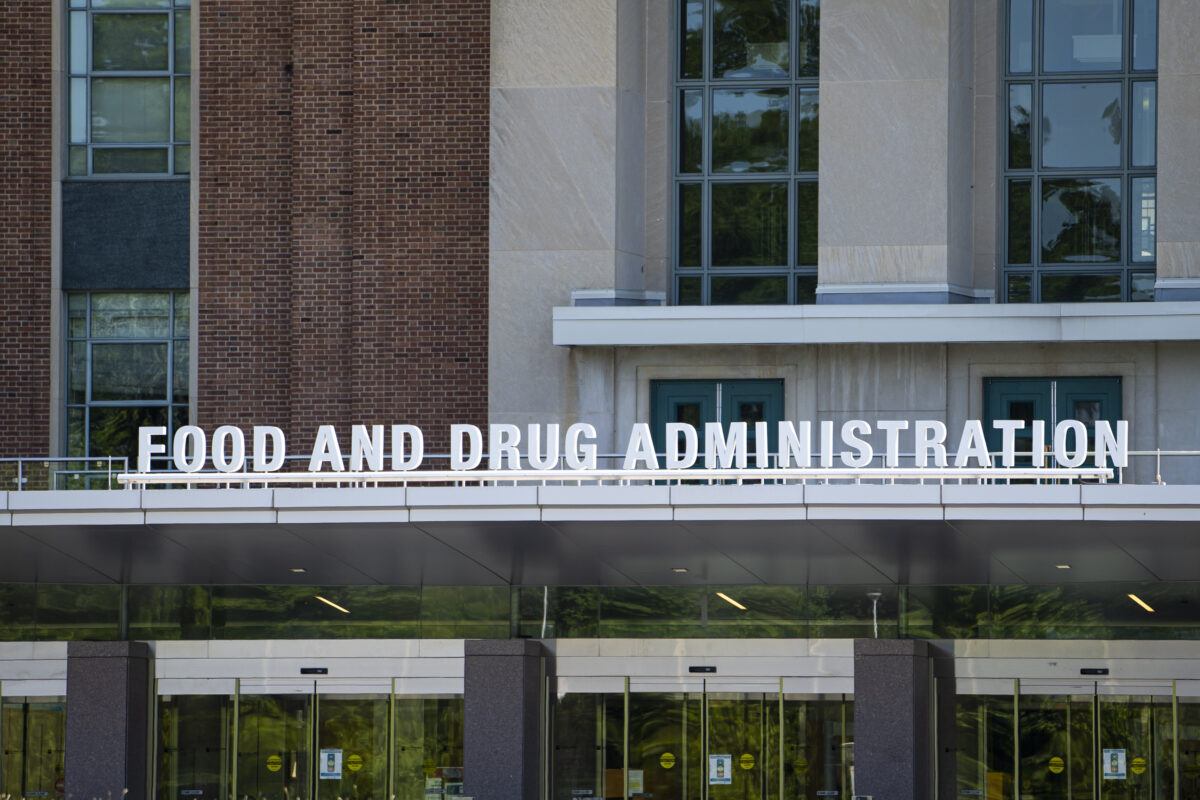
U.S. regulators announced on May 20 that they had tested milk and other dairy products from retail stores in 17 states for the highly pathogenic avian influenza.
The U.S. Food and Drug Administration (FDA) collected 297 samples of milk and other products such as sour cream from grocery stores in 17 states, the agency said in an update. None of the states were identified.
The samples represented products produced at 132 different locations across 38 states, including Arizona, California, Florida, Kansas, and Texas.
“The location of where milk was processed does not indicate where the milk was produced. This is because milk could be produced from cows on a farm or farms a few states away, processed (pasteurized) in a different state, and then be available for purchase in yet another state,” the FDA said in a statement.
FDA officials said earlier this month that some milk samples from retailers tested positive for the influenza, also known as the bird flu. The quantitative real-time polymerase chain reaction (qRT-PCR) tests used can detect remnants of a virus, indicating past infection. The FDA said that follow-up testing identified no live virus in the samples and maintained the nation’s milk supply is safe.
In the update on Monday, the FDA said 1 percent milk was most likely to test positive. Out of 1 percent milk samples, 32.1 percent tested positive, compared with 27.6 percent of 2 percent milk samples, 23.5 percent of whole milk samples, and 11.1 percent of skim milk samples.
Multiple samples of cream, half and half, and sour cream tested positive for the avian influenza, along with a single sample of cottage cheese. No samples of yogurt tested positive.
“As noted previously, qRT-PCR-positive results do not necessarily represent live virus that may be a risk to consumers. Therefore, viability testing by egg inoculation was performed on the qPCR samples that were positive for viral nucleic acid. All of these samples did not detect any viable virus,” the FDA said.
The samples were collected between April 18 and April 22.
While describing milk and dairy products as safe, the FDA also said that it was conducting a study on pasteurization to “further validate pasteurization effectiveness” against bird flu. Preliminary results “are expected in the near future,” according to the agency.
The U.S. Department of Agriculture said on May 16 that testing of ground beef inoculated with a bird flu surrogate showed cooking burgers to at least 145 degrees Fahrenheit killed the virus, although the virus was still detected in burgers cooked to 120 degrees.
The U.S. Centers for Disease Control and Prevention said in its latest update that it is working on enhancing monitoring for the bird flu with the goal of identifying all cases. “More information on this will be forthcoming,” the agency stated.
Authorities first began identifying cases of the bird flu in cattle earlier this year. Government scientists say the cases likely started in late 2023. As of May 20, cases have been confirmed in 51 herds across nine states: Colorado, Idaho, Kansas, Michigan, New Mexico, North Carolina, Ohio, South Dakota, and Texas.
One human case, in Texas, has been confirmed this year.
Infections among other animals have also been detected. The number of cases in cats is up to 10, according to reports to the World Organisation for Animal Health. Two domestic cats became infected recently even though they were not in contact with any birds or cattle with the flu, authorities in Campbell County, South Dakota told the organization.
It wasn’t clear if the cats survived.
Some cats in Texas died after drinking raw milk from infected cows and contracting the bird flu, researchers reported in a recent study. Symptoms included stiff movements and blindness.
Health authorities recommend keeping cats inside when possible and heat-treating or pasteurizing milk before feeding it to animals.