



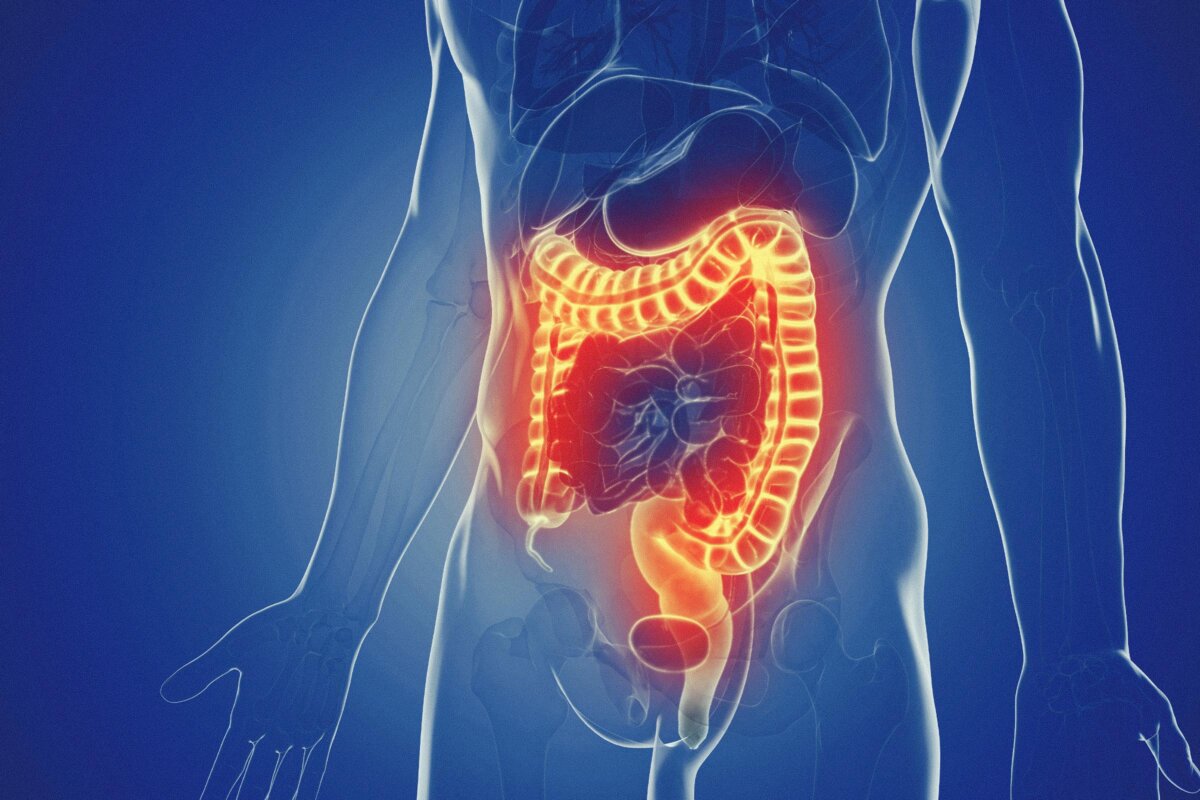
When it comes to chronic diseases such as inflammatory bowel disease (IBD), many people think that the pain stems solely from swelling and inflammation. However, research suggests that there may be more to the story—namely, how fear and emotional reactions may fuel persistent pain.
It turns out that the brain’s response to pain could be just as important as the inflammation itself.
“Pain is a physical sensation which can be very uncomfortable, but the real suffering comes from how you interpret it,” Daren Banarse, a senior psychotherapist with a private practice in central London, who was not involved in the study, told The Epoch Times.
Testing Fear and Pain Connections
The study, published in November 2025 in the journal Pain, suggests that emotional factors—especially fear—may contribute to ongoing abdominal pain in people with IBD, even when the condition is in remission.
Researchers at Ruhr University Bochum’s Center for Medical Psychology and Translational Neuroscience recruited 43 participants—21 with ulcerative colitis and 22 healthy controls—for a fear-conditioning experiment.
Participants viewed symbols on a screen. When one symbol appeared, painful heat was applied to the abdomen, while a second symbol was not paired with pain. This was done to teach the participants to associate the first symbol with pain. Researchers then showed the same symbol without pain to help participants unlearn the fear response.
The next day, participants returned, and this time the same heat was applied without any symbols.
Although patients with IBD were not more afraid of pain than healthy participants on day one, those who developed more fear perceived the pain as significantly more unpleasant and intense on the second day—even though the temperature of the heat stayed the same.
It’s Not About Being More Fearful
Hanna Öhlmann of Ruhr University Bochum’s Center for Medical Psychology and Translational Neuroscience said in the study’s statement that research on other chronic pain conditions, such as irritable bowel syndrome, shows that affected people tend to become more afraid of pain than healthy people.
Together with persistent avoidance behavior, this heightened fear can cause abdominal pain to be perceived as increasingly threatening, which in turn may perpetuate the pain.
What stood out in this research, according to Banarse, is that patients with IBD didn’t develop stronger fears than healthy participants.
Öhlmann said: “So it wasn’t the learning process itself that differed, but rather how the fear was linked to pain perception.”
The findings suggest that repeated inflammation in the gut may alter how the brain processes pain and fear over time, making pain feel more intense even when the initial fear response isn’t stronger.
“They processed the fear-pain connection differently,” Banarse said. “This suggests the issue isn’t about being too fearful, but about how recurring inflammatory episodes have altered the nervous system’s way of processing pain.”
Previous research supports this idea, showing brain changes in regions involved in processing fear and pain among patients with IBD.
What This Means for Treatment
The findings have important implications for treatment, which currently focuses primarily on controlling inflammation.
“Psychological factors—such as stress, persistent avoidance, or pain-related fear—could also play a crucial role,” Öhlmann said. She said that this is why chronic abdominal pain should be recognized as an important characteristic of the disease and treated accordingly.
“As a disorder of the gut, IBD affects the brain-gut axis and can make your whole nervous system hypersensitive,” Banarse said. “This means you become more prone to pain, even during times of low inflammation. Just understanding this can help with your anxiety levels while processing that pain.”
The researchers suggest that psychological therapies such as cognitive behavioral therapy (CBT), which addresses fear and avoidance, should be further investigated. These approaches could also benefit patients with other chronic inflammatory diseases that involve pain, including rheumatoid arthritis and endometriosis.
Future of IBD Treatment Is Multidisciplinary
Banarse said he believes that the future of IBD management should include a multidisciplinary care model, with gastroenterologists working with mental health professionals who specialize in somatic and cognitive behavioral therapies.
“Treating the inflammation and teaching a patient’s nervous system to feel safe in their body are equally vital for lasting pain relief,” he said.
According to Banarse, somatic therapies such as somatic experiencing and sensorimotor psychotherapy may be particularly helpful for IBD because they aim to regulate the nervous system, shifting it from a state of over-sensitization to one of safety and calm.
“They also release visceral bracing—the chronic tension and physical holding around the core and diaphragm that occurs when fear and anxiety are held in the body,” he said.
Methods That May Improve Pain Response
CBT can help people with IBD manage pain by changing how they think about it, Dr. Nona Kocher, a board-certified psychiatrist at Quintessence Psychiatry in Miami, who was not involved in the study, told The Epoch Times.
“It teaches patients to recognize and challenge negative thoughts that make pain feel worse,” she said. CBT can also reduce fear of pain by gradually exposing patients to situations they may otherwise avoid, according to Kocher.
“This helps the brain learn that these situations are not dangerous,” she said, emphasizing that the therapy also teaches relaxation and coping strategies to lower stress and emotional distress.
“Reducing fear and anxiety can make the pain feel less intense and unpleasant,” Kocher said. “Over time, CBT can help break the cycle where fear makes pain worse, improving daily functioning and quality of life.”
Kocher also pointed to specific strategies that may help patients reframe their emotional responses to pain, including:
- Mindfulness practices to ground patients in the present moment, rather than future worries
- Relaxation techniques such as deep breathing or guided imagery to reduce emotional reactivity
- Positive self-talk to counter thoughts that intensify pain perception
“Goal setting can also be helpful,” she said. “It can help patients feel more in control and less overwhelmed.”
Kocher said that tracking progress toward those goals may boost motivation and confidence.
Patients may also benefit from sharing their experiences with others to reduce isolation, according to her.
“Celebrating small victories can help to reinforce positive coping strategies,” Kocher said.