



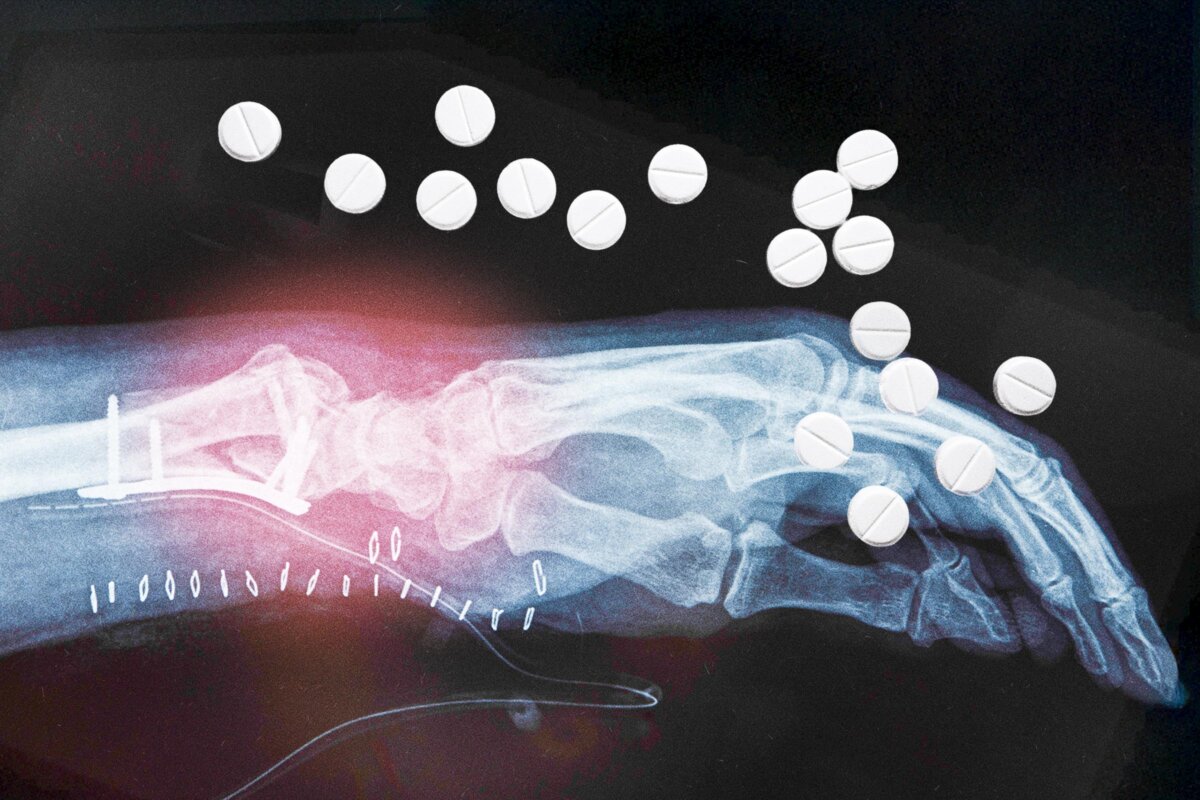
Yana Vinogradova wanted to know what happens to the bones of women who withdraw from hormone replacement therapy or HRT—a common strategy when patients no longer have hot flashes or quit taking the drug for other reasons.
A mathematician and HRT researcher at the University of Nottingham, Vinogradova was inspired to mine primary care data for answers after a friend told her she planned to take HRT. Her friend had no hot flashes or other symptoms but was compelled by the evidence that bones are stronger in postmenopausal women who are on HRT.
Published in The Lancet Healthy Longevity, Vinogradova’s analysis spanning 25 years of UK patient records revealed a hiccup in the HRT and bone strength narrative. HRT used for less than five years puts women at a higher risk of fracture compared with those who have never used the therapy.
“It could be because the bones are confused about what’s going on, and they need to recover from this intervention and rebuild their ability to properly function,” she told The Epoch Times. “It could be the effect of withdrawal.”
Put into context with other consequences of HRT and knowledge about women’s bone health, the new finding may help women more thoughtfully consider treatment options and better protect their bone health from the effects of using hormones.
Risks Go Up, Then Later Reverse
Vinogradova and her team of researchers compared long-term data from 648,747 patients who had fractures with 2,357,125 women with no fractures.
Among the women who took HRT for less than five years, the risk of fracture was an additional 14 in 10,000 women per year for those who took HRT for more than five years, compared with that of people who never used HRT—the risk was an additional five cases.
However, the fracture risk for those on short-term estrogen-progesterone therapy reversed a decade after hormone cessation. Researchers estimated three fewer fractures per 10,000 women per year for those who used the drug for less than five years and 13 fewer fractures per 10,000 women per year for those who took it for five years or longer.
“We must keep in mind this is an observational study, and we don’t know what happened exactly, but we see women who were taking menopausal therapy and stopped, and there are changes in their fracture risks,” Vinogradova said. “Field research is definitely needed to see what’s happening with the bones.”
She noted that the rise in fracture risk for those on short-term therapy can be attenuated if women start and stop HRT at a younger age, during a lower-risk age period. For instance, a woman who starts HRT at 50 and stops at 55 would have less fracture risk than a woman who starts HRT at 60 and stops at 65.
Health Status of Subjects
Researchers found those who refrained from taking HRT were less likely to smoke or drink alcohol, though information about how healthy the study subjects ate and whether they exercised—two factors that influence bone density—was not available.
Also, women who struggled with menopause symptoms tended to have weaker bone health, Vinogradova said, and were also more likely to also struggle with chronic disease, osteoporosis, and take drugs or supplements for bone health than were the women in the control group.
“Obviously, [for] healthy people—their transition through the menopausal period might [have been] easier—so they didn’t need to have therapy,” Vinogradova said.
Though it’s a missing link in her study, other evidence points to exercise as a bone-building strategy that can also help with hot flashes.
Women who exercised had statistically significant gains in bone mass, regardless of baseline bone health, menopausal status, or whether their exercise was supervised or unsupervised, according to a meta-analysis published in Osteoporosis International.
A trial comparing 29 postmenopausal women with night sweats who added a 15-week resistance-training program with a control group of 29 postmenopausal women with night sweats who did not increase their activity, found that those in the program experienced a statistically significant decrease in moderate and severe hot flashes, according to results published in Maturitas.
Knowing Your Bone Density
Besides exercising when they come off HRT, women might also ask their doctors about getting a bone density test or a screening for osteoporosis within the first year, regardless of whether they took HRT for a short period or long-term, Vinogradova said.
While there are several screening methods, the most common is a dual-energy x-ray absorptiometry, or DXA, that measures bone strength at the hip, femoral neck, and lumbar spine with low doses of radiation.
“I would definitely see a doctor and check to see if my bones are okay or if I need to do something about it,” she said.
U.S. Preventive Services Task Force guidelines recommend bone screenings for women 65 and older. Women who are younger than 65, postmenopausal, and have a high risk of fracture should also be screened. Among the risks are a family history of osteoporosis, smoking, and excessive drinking. HRT is not mentioned in the guidelines—however, the use of corticosteroids and insulin are highlighted as increasing osteoporosis.
Whether to Choose HRT
While an increased risk of fractures for women on short-term HRT is something important to note, family physician and integrative practitioner Dr. Cammy Benton told The Epoch Times that the benefits of hormone therapy will likely still outweigh the risks for most women—herself included. She takes an estrogen patch along with oral progesterone.
“I’m willing to take it because I sleep better, I think better, I feel stronger, I feel happier. I will take that fracture risk, and I will wear the estrogen patch until I die,” she said.
Benton noted that she doesn’t prescribe HRT to every perimenopausal patient. She often asks them to try other solutions first, including black cohosh, maca, and acupuncture. She’s had patients who stopped eating sugar and started meditating to eliminate hot flashes.
Every woman is different, Benton said, noting that putting women without menopausal symptoms on HRT can sometimes make them feel worse.
“Some people are just naturally balanced,” she said. “I wouldn’t just put any person on hormone replacement just for anti-aging.”
Vinogradova likened HRT to painkillers, which have adverse side effects but may be necessary for a season.
“Menopausal therapy should be treated in the same way,” she said. “It’s a drug to ease symptoms, and it has side effects. I would rather let the body sort it out. But if a woman’s still suffering from bad menopause, then why does she need to suffer?”
Weighing Other Risks
To help women and doctors make informed decisions, Vinogradova has also published research to contextualize the risks of HRT related to breast cancer, blood clots, and dementia.
The issue is nuanced—with factors like age and type of HRT creating a plethora of results. However, here’s a brief summary of those studies:
- HRT could increase the risk of breast cancer.
- Women on oral HRT had a significantly raised risk of blood clots. Transdermal HRT had no associated risk of blood clots, while estradiol had a lower risk than conjugated equine estrogen in both estrogen-only and combined drugs.
- Women taking estrogen-only therapy for 10 years or more had a decreased risk of developing dementia. Women who used estrogen-progestogen therapy for five years or more had an increased risk of developing Alzheimer’s disease.
“The main message is just look after yourself,” Vinogradova said. “If you can manage to do it without therapy, let the body sort it out and it will do it in a healthiest way. If you have to take the drug, take it. But stop it as soon as you can and check your health because you were exposed to a drug for quite some time.”