



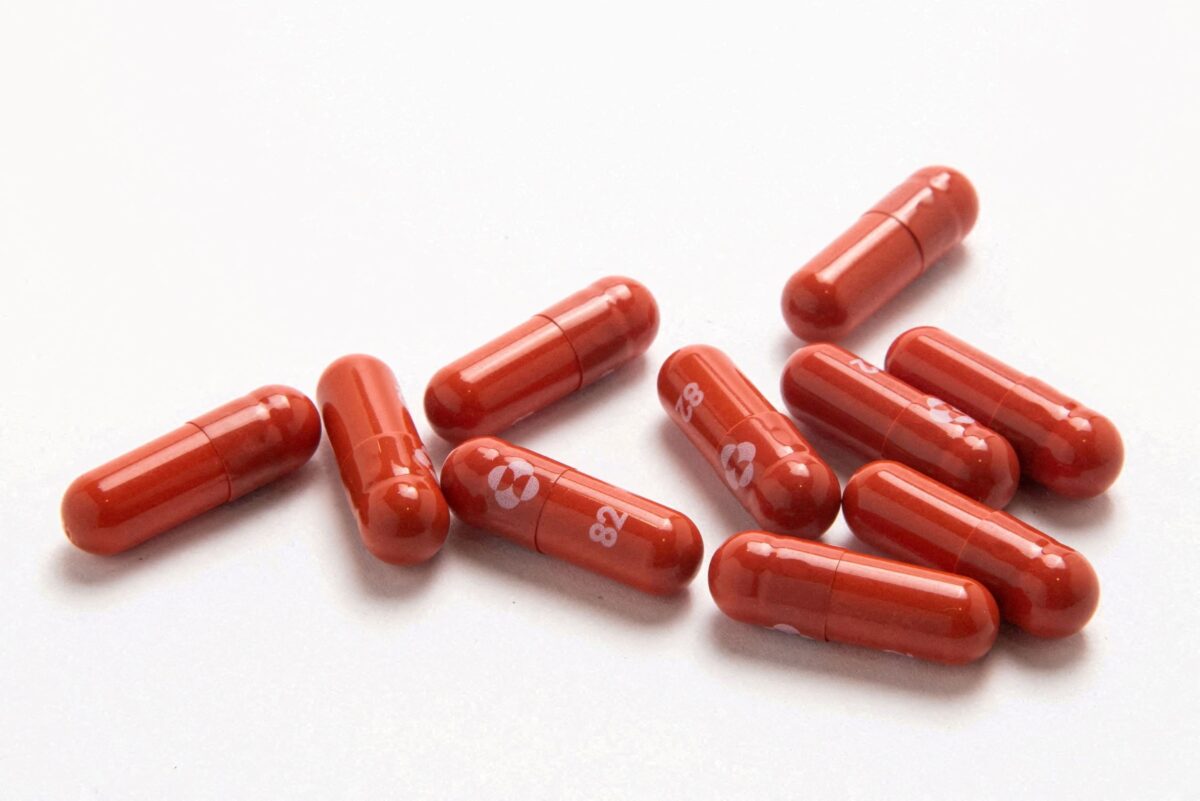
A study conducted by Hong Kong University (HKU) Medical School found that two oral drugs, molnupiravir and ritonavir-boosted nirmatrelvir, could reduce the risk of death in COVID-19 patients if used at the early stage of hospital admission. Molnupiravir reduced the risk of all-cause death by 52 percent, while a 66 percent reduction was observed with patients taking nirmatrelvir-ritonavir.
The results were published online in The Lancet Infectious Diseases on Aug. 24.
Led by Assistant Professor Carlos King-ho Wong of the HKU Department of Pharmacology and Pharmacy, the team studied the efficacy of oral antiviral drugs against the omicron BA.2 subvariant.
Although there has been much research on the use of antivirals to treat COVID-19, the researchers said “this is the first real-world study to explore the inpatient use of oral antivirals during a pandemic wave dominated by the SARS-CoV-2 omicron variant.”
Data were collected from hospitalized patients in Hong Kong with a confirmed diagnosis of COVID-19 infection between Feb. 26 and April 26, 2022. The study included 1,856 molnupiravir recipients with 1,856 matched controls, and 890 nirmatrelvir-ritonavir recipients with 890 matched controls.
The study selected patients who were admitted to the hospital no more than 3 days after COVID-19 diagnosis, or had a confirmed diagnosis within 3 days of admission. Patients who were admitted to the hospital more than 5 days after symptom onset, were younger than 18 years, or required supplemental oxygen on admission, were excluded from the study.
On day seven after hospital admission, the proportion of molnupiravir recipients who had died was 43 out of 1,856 (2.3 percent), whereas in the control group 98 patients (5.3 percent) had passed away. The nirmatrelvir-ritonavir recipients had a mortality rate of 1.3 percent, in comparison to the control group’s 3.6 percent, with 12 deaths out of 890 in recipients and 32 deaths in the control group. This difference persisted up to day 28: 140 deaths among molnupiravir recipients (7.5 percent) versus 276 deaths in the control group (14.9 percent); and 31 deaths among nirmatrelvir-ritonavir recipients (3.5 percent) versus 83 deaths in the control group (9.3 percent).
On day 28, 84.4 percent of molnupiravir recipients (1,566) were discharged alive, versus 1,398 (75.3 percent) in the control group. Of the nirmatrelvir-ritonavir recipients, 89.6 percent (797) were discharged alive versus 734 patients in the control group (82.5 percent).
“In this retrospective cohort of patients with COVID-19 not requiring supplemental oxygen on admission, initiation of molnupiravir or nirmatrelvir-ritonavir was associated with significantly lower risks of all-cause mortality and disease progression, and with reaching a low viral burden faster than their respective matched controls. Oral antiviral use was also associated with a reduced need for oxygen therapy,” the research paper concluded.
The study stressed the importance of early treatment with the antivirals: “Early initiation of oral antivirals within 2 days of admission was associated with significantly lower risks of all-cause mortality and disease progression, and with reaching a low viral burden faster than their respective matched controls.”
Because the study period took place during the fifth wave of the BA.2 outbreak, it could not analyze the effectiveness of the two oral treatments against later strains of the virus, although animal studies have indicated their efficacy.
The report supports current treatment guidelines that prioritize the use of antivirals “in those at risk of progression to severe disease—namely, older people with multiple pre-existing comorbidities and who had not been fully vaccinated.”
Results of a similar study by the same research team were published in The Lancet on Oct. 8. That study looked at the effectiveness of the two antivirals in non-hospitalized patients with Omicron BA.2.2. It had similar, but slightly less promising results, with molnupiravir reducing all-cause deaths by 24 percent, and the nirmatrelvir plus ritonavir reducing death by 66 percent.