


During a visit to Duke Huan of Qi, Bian Que—a household Chinese physician living during the Warring States period (around 407 to 310 B.C.)—examined him and warned, “You have an illness in your skin.” The duke dismissed the concern, scoffing, “I’m not sick—this charlatan just wants my money.”
Five days later, Bian Que returned and said: “The illness has entered your blood vessels. If left untreated, the consequences will be serious.” The annoyed duke ignored him again.
Another five days passed. Bian Que warned, “The illness has now reached your intestines. The situation is critical.” Still, the duke paid no attention.
Five days later, upon seeing the duke again, Bian Que turned and walked away. When asked why, he replied, “The illness has entered your bone marrow—it cannot be cured.”
Five days after that, Duke Huan fell gravely ill. By then, Bian Que had already left the state of Qi. The duke soon died.
As documented in the “Records of the Grand Historian,” Bian Que possessed the extraordinary ability to see through the body, detecting issues in the organs before symptoms manifested.
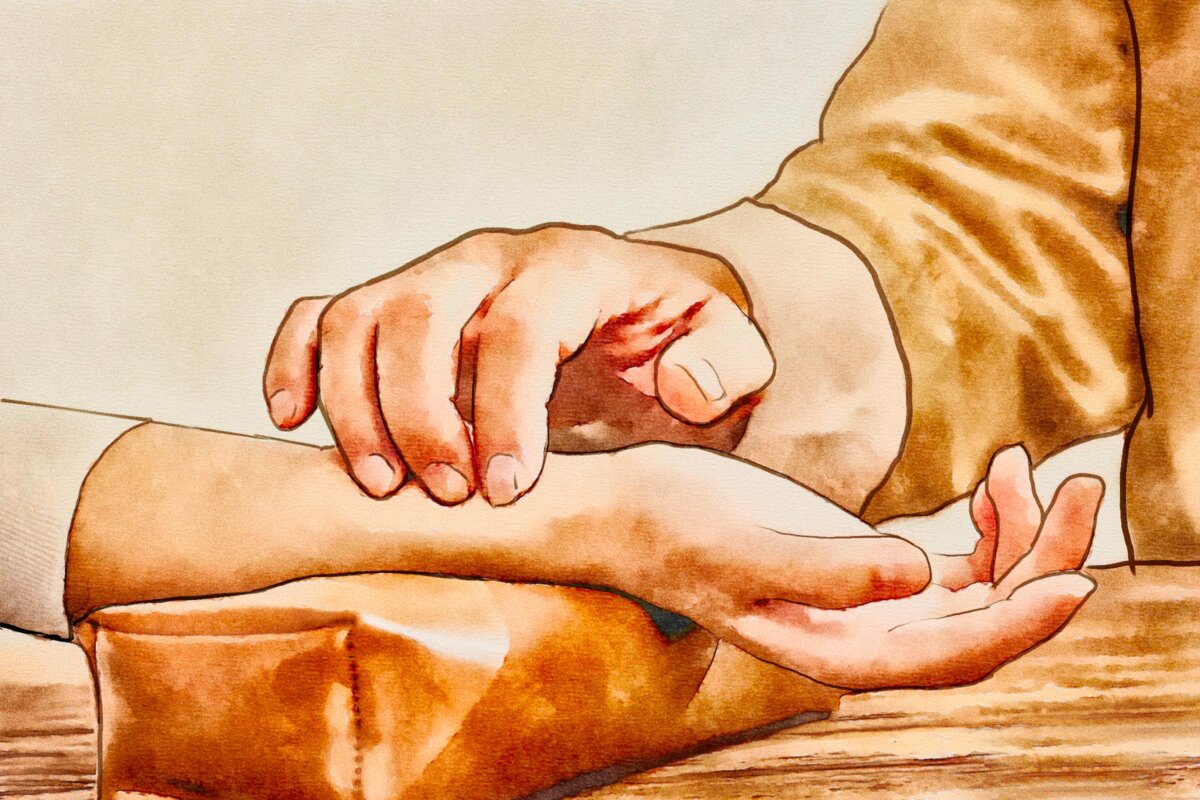
While later practitioners may not share such supernatural insight, traditional Chinese medicine (TCM) has developed sophisticated diagnostic methods—such as observation, listening, questioning, and pulse-taking—to identify a patient’s constitution and early signs of disease.
At the heart of TCM lies the “Huangdi Neijing,” also known as “The Yellow Emperor’s Inner Classic,” a foundational text that has guided Chinese medicine for centuries. It champions the idea that “prevention is preferable to cure.”
Predicting Disease With the 5 Elements
What makes the most exceptional physician? Is it the ability to cure severe diseases or to save a patient teetering on the brink of death?
The most adept TCM practitioners excel at early detection of illness, treating associated meridians, or energy pathways, and organs to halt the progression of disease.
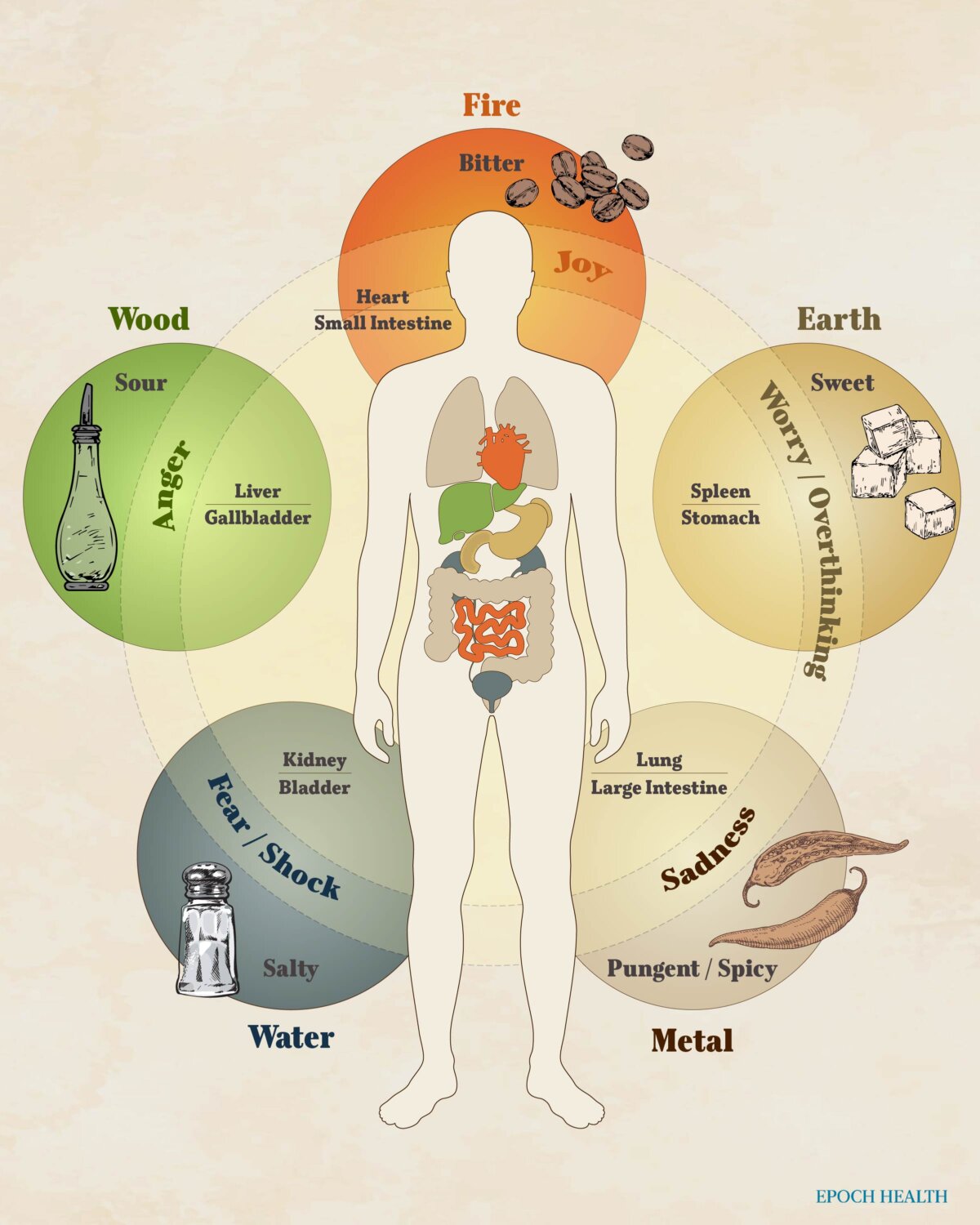
In TCM, the body is viewed as a microcosm, intricately linked with nature, where organs interact dynamically. The five elements—wood, fire, earth, metal, and water—correspond to the liver, heart, spleen, lungs, and kidneys, respectively, guiding practitioners in diagnosing and preventing imbalances across these interconnected systems.
The Emotions and Their Organs
Each of the five principal organs governs a specific emotion. The liver corresponds to anger, the heart to joy, the spleen to overthinking or worry, the lungs to grief, and the kidneys to fear. Excessive emotions directly impact their corresponding organs.
The liver, notably sensitive to emotional fluctuations, is particularly vulnerable, with recent studies linking psychological distress to an elevated risk of liver disease mortality.
Harmony Through Generation and Control
The five elements have a relationship of mutual generation and mutual restraint. “Mutual generation” refers to the cyclical process where each of the five elements nourishes or promotes the growth of the next in a specific sequence. Wood fuels fire, fire enriches earth, earth produces metal, metal yields water, and water nourishes wood, creating a continuous loop.
Conversely, the “control” cycle ensures balance through restraint: wood stabilizes earth, earth contains water, water douses fire, fire melts metal, and metal cuts wood, maintaining equilibrium.
The emotions associated with the five organs follow the cycles of generation and restraint of the five elements. Joy subdues grief, grief tempers anger, anger overcomes overthinking, overthinking mitigates fear, and fear restrains joy, creating a delicate balance.
Healing Grief With Laughter
A striking example of emotional “control” comes from Zhu Danxi, one of the most celebrated physicians of the Yuan Dynasty.
He once treated a young man devastated by the sudden death of his wife. The grief overwhelmed him, and his health began to decline. In TCM, excessive sorrow harms the lungs, making the body more vulnerable to illness.
Instead of prescribing herbs, Zhu Danxi employed wit. He leaned in seriously and said: “Ah, I see the problem—you’re pregnant. In a few days, you’ll give birth!”
Startled, the man blinked and then broke into laughter. “The great Zhu Danxi thinks a man can be pregnant?” he exclaimed. For the first time in days, laughter filled the room. The absurdity of the diagnosis lifted the young man’s gloom. Over the next several days, he continued to laugh heartily at the joke, and as his spirits rose, his strength returned. In time, his melancholy dissolved entirely.
Zhu Danxi skillfully harnessed the cycle of control among the five elements to regulate emotions, using joy to counteract grief. By sparking laughter in a moment of sorrow, he healed the patient without prescribing any medicine.
The Unhealed: Victims of Their Excess
No physician, however skilled, can help those who live recklessly, driven by unbridled desires and devoid of self-discipline.
The wisest physicians prioritize guidance over medicine, teaching patients to cultivate virtuous habits. In his “Essential Prescriptions Worth a Thousand Gold for Emergencies,” Tang Dynasty physician Sun Simiao wrote, “If virtue and conduct are not cultivated, even miraculous elixirs cannot extend life.” Conversely, he noted, “By perfecting virtue daily, blessings arrive unbidden, and longevity follows naturally—this is the essence of nurturing health.”
Modern science supports this ancient wisdom. Research shows that cultivating positive traits—such as gratitude, compassion, and self-discipline—promotes healthier lifestyles, emotional stability, better sleep, increased physical activity, and stronger social bonds, all of which enhance overall health.
A July 2024 study published in JAMA Psychiatry, involving nearly 50,000 older American women with an average age of 79, found that higher levels of gratitude were associated with a 9 percent reduction in mortality risk and a 15 percent decrease in cardiovascular deaths, highlighting the profound connection between emotional well-being and physical vitality.
Yet, for those consumed by desires, in turn rendering their bodies unhealthy and lacking self-reflection, Sun observed: “The sages crafted medicines to aid those who stray in their conduct. Yet, fools cling to illness for years, never adopting a single virtuous practice, remaining entangled in disease until death without a trace of regret.”
Views expressed in this article are the opinions of the author and do not necessarily reflect the views of The Epoch Times. Epoch Health welcomes professional discussion and friendly debate. To submit an opinion piece, please follow these guidelines and submit through our form here.