



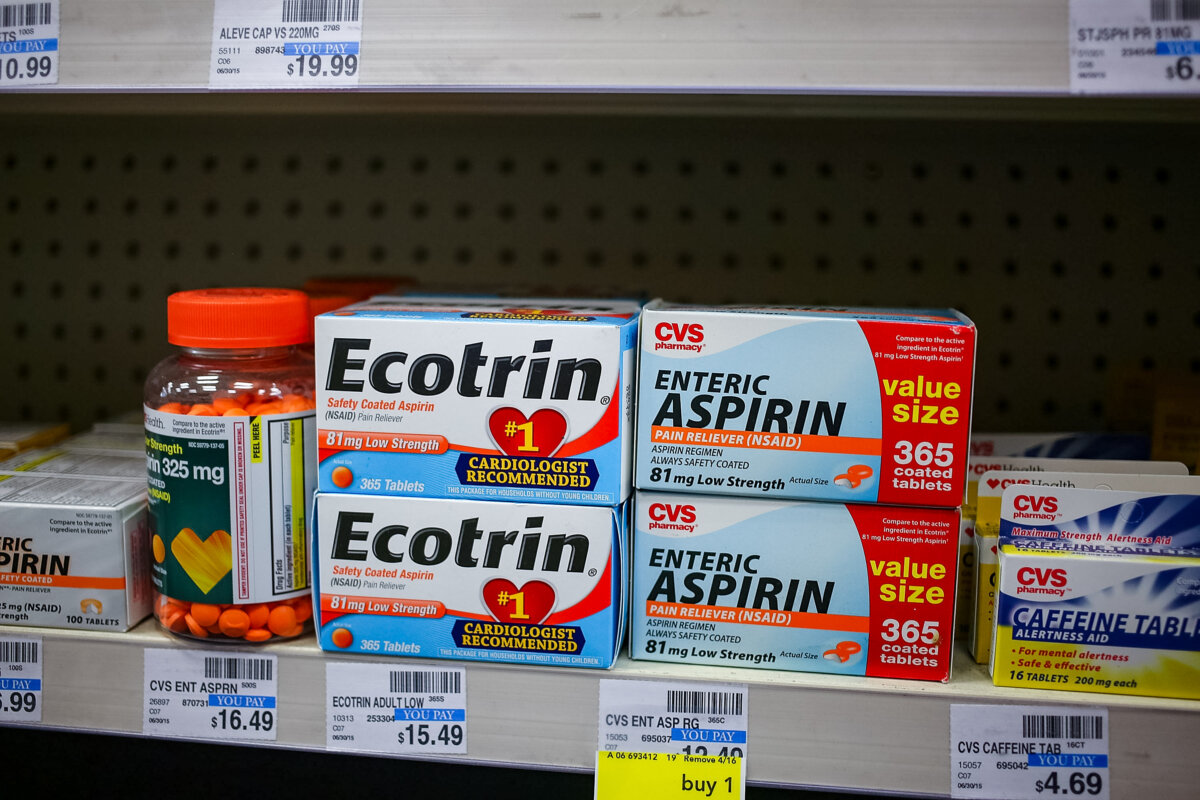
Around one in six older Americans are still taking aspirin on a daily basis for preventing heart attack or stroke, despite updated guidelines saying that the practice is no longer warranted for older adults, according to a recent survey.
The results were published in the Journal of the American College of Cardiology earlier this month, surveying more than 2,500 adults aged 50 to 80.
Among U.S. adults between those ages, about 25.3 percent reported using aspirin on a daily basis, while 14.5 percent of respondents said they took aspirin to prevent primary cardiovascular disease. Cardiovascular disease encompasses a number of conditions, with heart attack and stroke being the most common ones.
The researchers also found that “nearly one-fourth of these patients started aspirin without a health care provider’s recommendation,” while a news release issued by the researchers added that they found around 8 percent of daily aspirin takers have not discussed their use with any health care provider.
“For some patients without a history of cardiovascular disease, the benefits of taking aspirin for primary prevention may be offset by an increased risk of bleeding, especially as patients get older,” Jordan K. Schaefer, a University of Michigan researcher involved, said in a statement. “It is even more concerning when patients are taking aspirin without consulting their physician. A provider can’t help a patient understand the risks and benefits of aspirin if they are left in the dark.”
Over the past decade or so, guidelines for who should take a daily aspirin for cardiovascular purposes have been revised after research found that there is a higher internal bleeding risk associated with using the medication.
In 2019, the American College of Cardiology and the American Heart Association changed their guidelines on daily aspirin usage, stating that it should be taken only infrequently because older adults could be at an increased risk of developing internal bleeding. However, daily aspirin is still recommended for people who have a high risk of a heart attack or stroke.
An independent panel of health officials called the U.S. Preventive Services Task Force issued a similar recommendation in 2022, coming years after it recommended daily aspirin usage to combat cardiovascular disease.
In the recent survey, about 80 percent of people who responded said they believe aspirin helps with general health. However, about 68 percent agreed that it increases the risk of internal bleeding, it found.
Health officials have said that aspirin irritates the lining of the stomach, triggering internal bleeding, ulcers, and gastrointestinal problems. Because it’s a blood thinner, aspirin also can be dangerous for people who are at a high risk of bleeding, according to officials.
Older adults without heart disease shouldn’t take daily low-dose aspirin to prevent a first heart attack or stroke, the Preventive Services Task Force has said. Bleeding risks for adults in their 60s and older who haven’t had a heart attack or stroke outweigh any potential benefits from aspirin, it has said.
But people who have a personal history of heart attack or stroke have been told to take a low-dose daily aspirin, typically about 81 milligrams, under the revised guidelines.
Earlier this year, a survey released by the University of Pennsylvania’s Annenberg Public Policy Center discovered that 48 percent of American adults believe that the benefits of taking one low-dose aspirin per day outweigh the risks. Roughly 39 percent of those surveyed said they weren’t sure, while 13 percent said that the “risks are now thought to prevail over the benefits” under the new guidelines, according to the poll.