



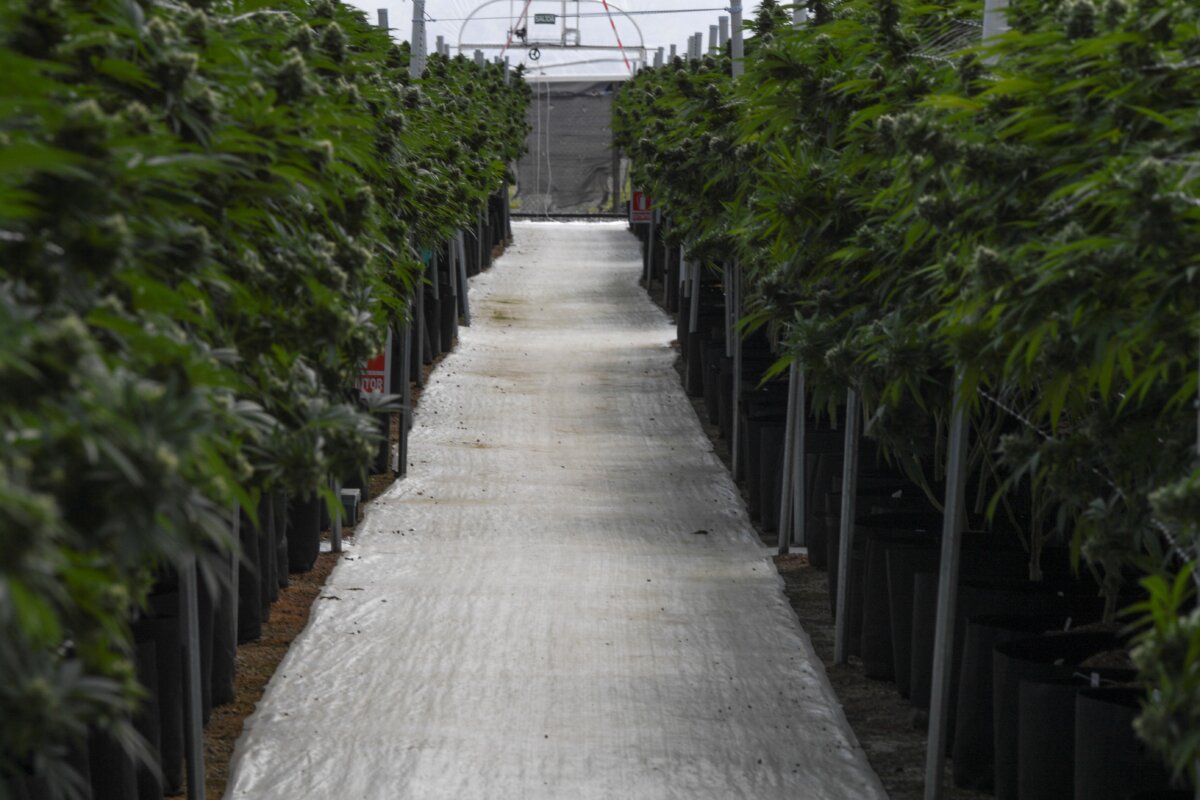
A Massachusetts woman who developed and later died from asthma while working at a marijuana processing facility was the first known work-related asthma death in the nation’s cannabis workforce, a new report from federal health and labor officials said.
In the report, published Friday in a weekly journal of the U.S. Centers for Disease Control and Prevention (CDC), a team of researchers from the U.S. Department of Labor identified cannabis dust as the allergen that caused the fatal asthma attack.
The victim, described as a 27-year-old woman, started working at an indoor cannabis cultivation and processing facility in May 2021. Two months later, according to the report, she experienced an onset of nausea, loss of taste and smell, earache, and cough. Her employer asked her to test if she had COVID-19, and the test results were negative.
The woman had no history of asthma, but, according to her mother, “she developed work-related runny nose, cough, and shortness of breath after 3-4 months of employment,” the report noted.
The woman initially worked in areas where the cannabis was ground, but in October 2021, she was moved to “flower production,” which involves grinding cannabis flowers for 15 minutes three times per day and preparing pre-rolled cannabis.
“These activities resulted in increased dust exposure,” the federal researchers said. Although the workplace had a vacuum to collect dust from the grinder, that vacuum had no high-efficiency particulate air (HEPA) filter, allowing “visible dust” to escape.
The woman did wear an N95 mask and protective gloves while working, but as her symptoms worsened, her employers moved her workstation out of the grinding room in an attempt to reduce exposure.
However, on Nov. 9, 2021, the worker had an asthma attack and was taken to the emergency room. She recovered, and doctors prescribed her an albuterol nebulizer. Later investigation suggests that her nebulizer was used almost 200 times over the next two months.
On Jan. 4, 2022, the woman told a co-worker that her shortness of breath was getting worse. Later that day, she began sneezing and suffered severe shortness of breath on the job despite repeated albuterol inhaler use. The woman went into cardiopulmonary arrest and never regained consciousness. She died three days later.
“It is essential to evaluate workers with new-onset or worsening asthma for relation to work exposures and to recognize work in cannabis production as potentially causative,” said the researchers, led by Dr. Virginia Weaver.
Unfortunately, new-onset asthma is not unique to the Massachusetts cannabis facility, Dr. Weaver’s team noted.
“In a study of employees at an indoor Washington [State] cannabis production facility, 13 of 31 employees had symptoms suggestive of asthma,” the report’s authors wrote.
Another study conducted in the state of Washington, where adult recreational use of marijuana has been legalized since 2012, identified seven cases of workers experiencing “work-exacerbated” asthma at cannabis processing plants, and symptoms became so bad that three of those workers had to quit their jobs.
In one case, a worker experienced symptomatic asthma at a cannabis facility and quit the industry for two years. When he resumed work at a different cannabis facility, his asthma symptoms once again emerged.
“Providers and public health professionals would benefit from additional research into prevalence and risk factors for cannabis-related occupational allergies,” the researcher said. “Development and implementation of strategies to protect workers are critical in this rapidly expanding industry.”
The recreational or adult use of cannabis has so far been legalized in the District of Columbia and 24 states, including Delaware, Minnesota, and Ohio, where voters approved ballot measures that legalize recreational marijuana in their states in this month’s general election.
Meanwhile, the medical use of cannabis has been legalized in 40 states and the District of Columbia. The latest addition to this group is Kentucky, where Gov. Andy Beshear, a Democrat, signed into law a legalization bill this March in what he called an effort to reduce people’s reliance on addictive opioids.