




The past three years have generated millions of case vignettes of patients with COVID-19 respiratory illness. The most dramatic cases include critically ill inpatients with severe hypoxemia despite maximum respiratory support.
By far, the most notable cases of survival have occurred with the administration of ivermectin. Former NIH researcher David Scheim, PhD, early in the pandemic proposed that SARS-CoV-2 Spike protein was acting like a grappling hook pulling together circulating red blood cells into long chains and clumps in a process called hemagglutination. This explained why the red blood cells could not carry oxygen normally and was congruent with the finding of micro blood clots in the lungs. Recently, Boschi et al have provided additional support for this mechanism.[i] In a spectacular publication, Stone et al, describes the prompt improvement of oxygenation in patients with ivermectin.[ii]
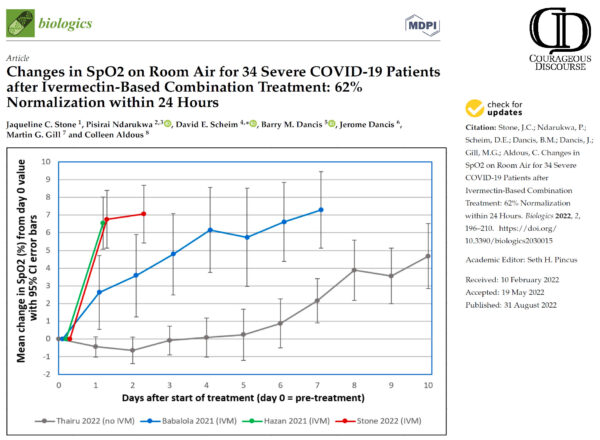
The published oxygenation curves from multiple studies clearly show this physiological effect of ivermectin occurs so rapidly, it must be explained by a direct anti-Spike protein effect of ivermectin. An anonymous video of a critically ill man demonstrates the very effect that Scheim, Stone, Hazan, and Babalola have described in the Figure.[iii] So for the next critically ill patient with COVID-19, if the opportunity presents itself, push for the administration of ivermectin. This is the only published therapy for COVID-19 that improves oxygen saturation while the patient mounts a recovery. As in this man, it may be the critical factor for a turnaround and a chance to walk out of the hospital.
Reposted from the author’s Substack
Views expressed in this article are the opinions of the author and do not necessarily reflect the views of The Epoch Times. Epoch Health welcomes professional discussion and friendly debate. To submit an opinion piece, please follow these guidelines and submit through our form here.