



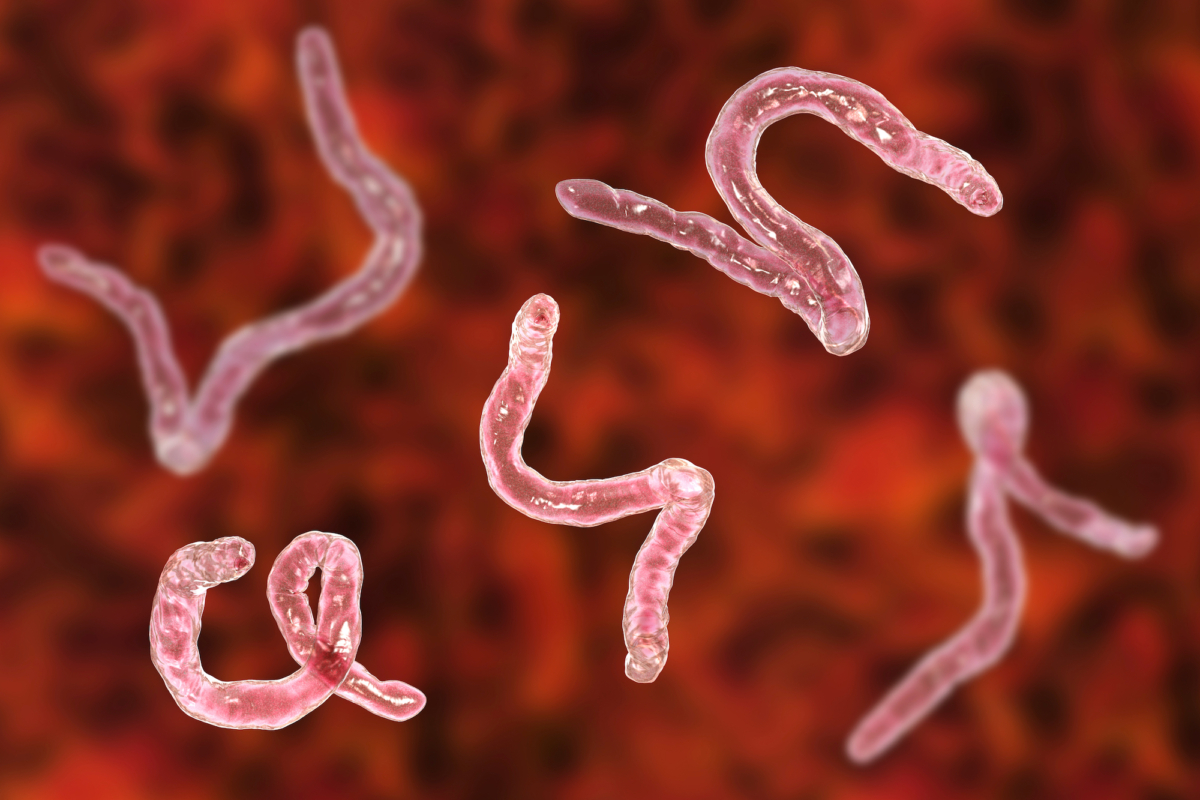
Could parasitic worms hold the key to mitigating COVID-19 severity? That’s the intriguing question emerging from new research by scientists at the National Institute of Allergy and Infectious Diseases (NIAID).
During the pandemic, public health experts noticed an unexpected trend. “Countries throughout Africa and Asia were reporting fewer cases of severe infections, such as hospitalizations or death, much less than the rest of the world,” postdoctoral research fellow and study coauthor Kerry Hilligan said in a press statement. She highlighted the correlation between these regions and the endemic presence of hookworm infections.
Intrigued, NIAID researchers decided to investigate further. They followed up on a small hospital study in Ethiopia that found COVID-19 patients co-infected with parasitic helminth worms had a significantly lower risk of severe symptoms.
“This research is a great first step in understanding how COVID severity can be modulated or dampened in some cases,” Dr. Thomas Gut, director of the Post-COVID Recovery Center at Northwell Staten Island University Hospital in New York, told The Epoch Times.
He noted that he would never advise deliberately infecting a patient with another type of infection, which comes with its own set of risks. However, “the results shown do offer an opportunity for further research into how inappropriate immune responses can be controlled better,” he added.
Worm Infection Boosts Lung Immunity
The idea that parasitic worms like helminths influence our immune response to infections by other pathogens is not new. Previous research shows that infection helminth can stimulate both the innate immune system (our first-line response) and our adaptive immune response carried out by antibodies that “learn” which new disease to attack.
In the new study, researchers infected mice with the N. brasiliensis worm to serve as a proxy for human hookworm infection before exposing them to SARS-CoV-2. The larvae migrated to the lungs, where they primed immune cells. Worm-infected mice were more likely to survive lethal COVID-19 doses than uninfected mice—60 percent versus 20 percent survival.
The lung worms prime macrophages to quickly recruit immunity cells that control SARS-CoV-2, said Oyebola O. Oyesola, a postdoctoral fellow at the National Institutes of Health and study coauthor, in a press statement.
Later experiments found lung-localized worms, not gut-limited ones, provided COVID-19 protection.
Further investigation found that seven days after infection with COVID-19, only the worm-exposed mice had much higher levels of an adaptive immune cell (CD8 T cells) that destroys infected cells.
The importance of this T cell in fighting COVID-19 infection was confirmed when scientists found depleting CD8 reversed the worms’ protective effects.
“What’s more, this effect seems to be long-lasting, with the macrophages retaining this very strong ability to recruit and activate CD8 T cells long after the hookworm has been cleared from the body,” according to Ms. Hilligan.
Looking forward, the research team wants to understand the cell signals involved and create the benefit without needing the worms.
However, not everyone agrees with this approach.
Dr. Jacob Teitelbaum, a board-certified internist who treats long-COVID patients and a nationally known expert in the fields of chronic fatigue syndrome, fibromyalgia, sleep, and pain, disagrees with intentional worm exposure given potential downsides. “We have a number of tools I would personally use well before I’d consider infestation of the Western world with these worms,” he said.
Dr. Teitelbaum advocates nutritional supplements—like zinc, vitamin D, and elderberry—to reduce COVID-19 severity. He also recommends the diabetic medication metformin, which is considered a possible COVID-19 treatment because it may act against proteins involved in virus replication, has shown antiviral effects in lab tests, and possesses anti-inflammatory and anti-clotting properties. “[It] clearly decreases the risk of long COVID [by] 50 percent while also helping the acute infection,” he said.
Evidence For—and Against—Parasites
While the NIAID research finds that these parasites can help boost the immune system against infection, other evidence indicates they could impair the body’s ability to fight SARS-CoV-2.
Intestinal parasites live in the gut, feeding on nutrients. Though generally considered a nuisance, some research has shown they may positively impact immune function.
A 2022 review published in Therapeutic Advances in Gastroenterology found that nonbacterial gut organisms like helminths may offer benefits by influencing immune development and microbiome diversity.
For instance, one study reviewed showed an intestinal hookworm improved gluten tolerance in patients with celiac disease.
On the other hand, there are concerns that intestinal parasites could hinder the body’s ability to fight off disease.
Helminth parasites may increase cancer risk through low-grade chronic inflammation, secretion of procarcinogenic factors, and suppression of immune surveillance against tumors.
Overall, evidence on how worms influence immunity is mixed. With COVID-19 still new, more research on factors affecting disease outcomes is needed.
Prioritize Overall Health to Reduce Disease Risk: Expert
More research is needed to determine if intestinal parasites help or harm COVID-19 responses. Any person with a “significant health history” and preexisting conditions has an increased risk of experiencing severe COVID-19 illness if they’re infected, Dr. Gut said.
The priority should be maintaining overall health through diet, exercise, hygiene, and preventive guidelines. Also, consult a doctor about parasite concerns for proper diagnosis and care.
“Given the low COVID mortality, especially in younger people, and the medical downsides to these worms, especially after they complete the lung cycle, I would recommend against getting the worms,” Dr. Teitelbaum said.