



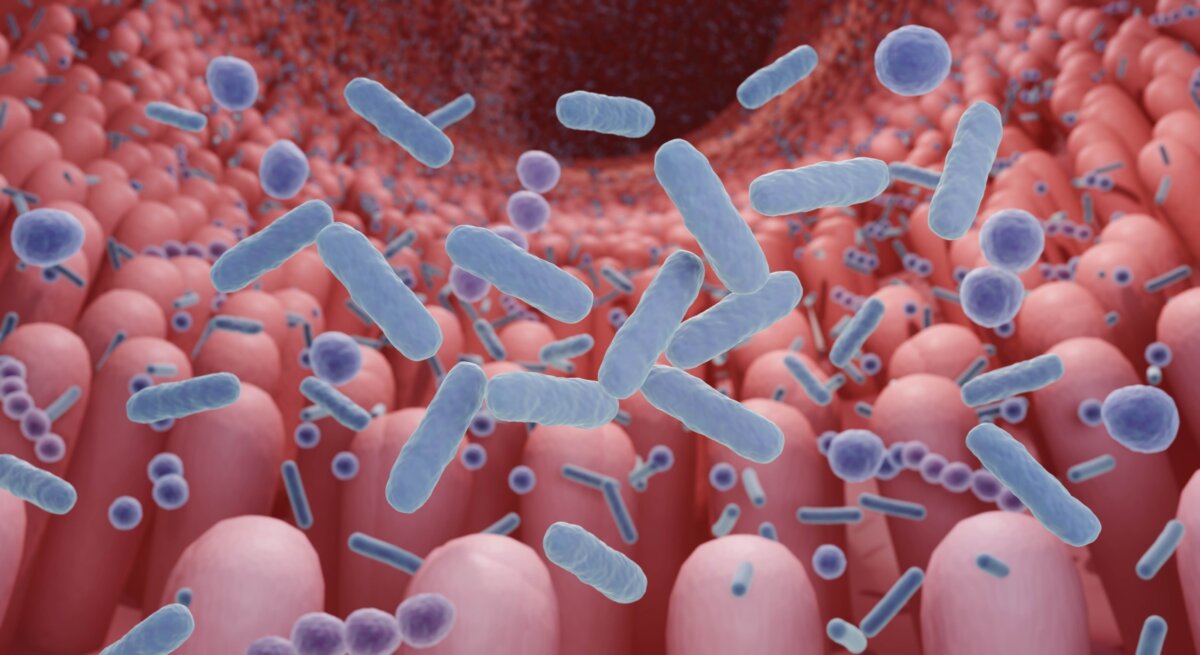
Exposure to a persistent organic pollutant (POP), or “forever chemical,” early in life may damage the human gut microbiome and lead to metabolic disorders later in life, according to a new study.
Published Aug. 14 in the journal Environmental Health Perspectives, the study was performed in mice but has implications for humans who have been exposed to forever chemicals, which includes everyone in industrialized nations.
“POPs are pervasive in the environment and nearly every living organism has been exposed,” said study author Andrew Patterson, a professor of molecular toxicology, biochemistry, and molecular biology at Penn State University, in a university press release.
Patterson and other researchers at Penn State University investigated the health effects of the POP 2,3,7,8-tetrachlorodibenzofuran (TCDF), which is “a byproduct of waste incineration, metal production, and fossil-fuel and wood combustion,” according to the university.
POPS Are Forever
POPs are chemicals used in “agriculture, disease control, manufacturing, or industrial processes,” according to the United States Environmental Protection Agency. Examples include polychlorinated biphenyls (PCBs), used in building materials and electrical equipment, among other applications, and the insecticide dichlorodiphenyltrichloroethane (DDT), which though banned in the United States is still in use in some parts of the world.
Other POPS include dioxins, which are byproducts of industrial processes and combustion, and some polyfluoroalkyl substances (PFASs), which are used in cookware, clothing, cosmetics, food packaging, medical devices, cleaning products, and other items many people use daily.
“The negative health effects of these chemicals are well documented and include birth defects and cancer. Our study is the first to suggest that early-life exposure to a certain POP, called TCDF, also disrupts the gut microbiome and is associated with metabolic disorders later in life,” said Patterson in the press release.
“POPs affect not only humans but also wildlife,” Patterson told The Epoch Times. His research team chose to use TCDF as a model for their study, but Patterson noted, “We are exposed to numerous different POPs as mixtures, typically from our diet,” mainly from high-fat meat, dairy products, and some fish.
TCDF, unlike other POPs, has a short half-life, he explained, so it is more conducive to research with mice. “We can treat mice, wait for TCDF to clear the mouse entirely in a week or so, and then study the later-life health effects,” Patterson told The Epoch Times. Also, POPs such as TCDF are poorly metabolized, so the researchers could assume the effects they observed in the mice were mostly from TCDF and not a metabolite, Patterson said.
Study Details
Building on previous studies in mice that determined that five-day exposure to dietary TCDF “rapidly altered the gut microbiota and disrupted host metabolism,” the Penn State researchers fed young mice pellets containing 0.46 micrograms of TCDF for five days, then analyzed their gut microbiomes and overall health immediately and three months later, looking for markers of metabolic disease.
The mice that were exposed to TCDF exhibited disruption in their gut microbiome community and function, and also showed later signs of metabolic disease, the researchers found.
“We found that early life exposure to TCDF permanently disrupted the gut microbiomes,” said Yuan Tian, study lead author and associate research professor at Penn State, in the press release. “We also found that these mice had higher body weight and glucose intolerance at age four months [equivalent to young adulthood in humans].”
Furthermore, mice that received intestinal microbiome transplants from the mice with TCDF-disrupted microbiomes also went on to develop metabolic disorders. “These results suggest that early-life TCDF exposure may be causing the disturbances in gut microbiome function and health outcomes later in life, even well after the TCDF has been eliminated from the body,” Tian said.
There was some good news from the study: When the researchers administered a probiotic (Akkermansia muciniphila) to the TCDF-treated mice, their gut microbiomes returned to normal. “It may be possible that with more research we could one day restore a person’s microbiome to its optimal state through supplementation with pre- and probiotics,” Patterson said.
In Men as in Mice?
It would be premature to assume that POP exposure in the early life of humans results in the same effects the researchers observed in mice, Patterson told The Epoch Times. “However,” he said, “if we look at the effects of early life exposure to antibiotics and their associated health effects in some individuals later in life, it seems reasonable to conclude that the same effects might hold true for other toxic chemicals like POPs.
“We need a lot more research to understand how this plays out in humans.”
Patterson has been involved with work on new technologies to allow for better sampling of the human gastrointestinal tract in order to more accurately assess the gut microbiome.