



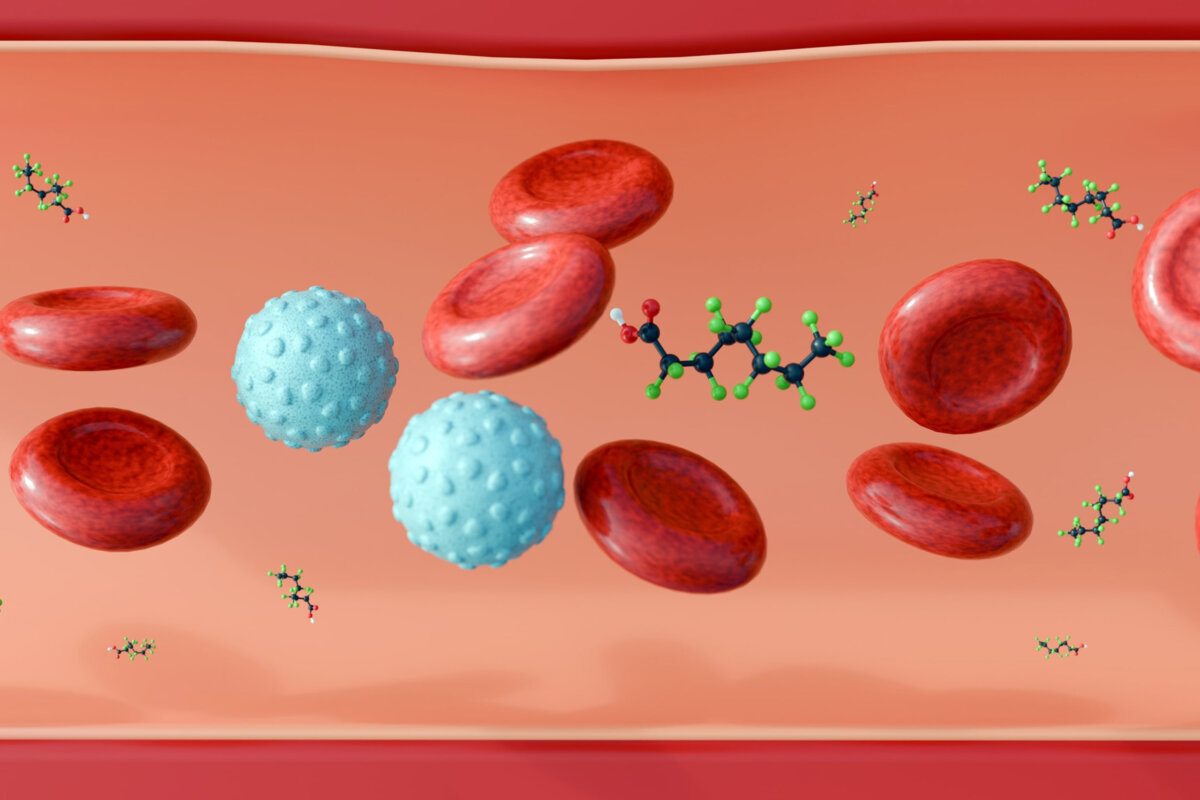
Children whose mothers were exposed to certain synthetic chemicals during pregnancy are more likely to have higher blood pressure as teenagers, recent research finds.
Often called “forever chemicals” because they do not break down easily and can accumulate in the environment and in people’s bodies over time, experts say these compounds are widespread, with nearly everyone exposed through food, water, and many household products.
Researchers found that higher levels of certain per- and polyfluoroalkyl substances (PFAS) chemicals in mothers’ blood after delivery were linked to increased blood pressure in their children during adolescence. As levels of three specific PFAS chemicals doubled, teenagers’ blood pressure percentile also increased by 1 to 3 percentiles.
“High blood pressure in teens is more common than most people realize,” Akshaya Srikanth Bhagavathula, an associate professor of epidemiology at North Dakota State University and not involved in the study, told The Epoch Times. “About 1 in 7 teens in the United States now has elevated or high blood pressure.”
He warned that rates have been rising over the past two decades. “This rise reflects not just lifestyle, but also stress, environmental exposures, and broader social factors.”
Boys and Black Children Face Higher Risks
The research, published in the Journal of the American Heart Association, focused on PFAS used in products like nonstick cookware, stain-resistant fabrics, food packaging, and personal care items and revealed significant disparities in who is most affected.
The researchers found that when levels of perfluorodecanoic acid, perfluorononanoic acid, and perfluoroundecanoic acid doubled, systolic blood pressure increased by 1.4 to 2.8 percentiles, while diastolic blood pressure rose by 1.2 to 2.5 percentiles among 13- to 18-year-olds.
Boys and children born to non-Hispanic black mothers showed a 6 percent to 8 percent increased risk of elevated blood pressure as chemical levels doubled. The effects in boys became apparent only after age 13, while girls showed no similar pattern.
Previous studies have shown that boys could be more sensitive to environmental pollutants due to slower removal rates of toxins from the body and higher rates of buildup.
The latest research was conducted within the Boston Birth Cohort, tracking 1,094 children over an average of 12 years and analyzing more than 13,000 blood pressure readings taken during routine pediatric visits from July 2001 to February 2024.
The team found evidence suggesting PFAS may adversely affect blood pressure by disturbing signaling pathways, inducing oxidative stress, altering lipid and glucose metabolism, and enhancing retention of water and sodium.
Bhagavathula said that high blood pressure in adolescence is an early warning sign of damage to the thin layer of cells lining blood vessels. “It puts extra strain on the heart and blood vessels at a young age, increasing the risk for heart disease, stroke, and kidney problems later in life.” He cautioned that elevated blood pressure during adolescence often persists into adulthood.
“Our study shows that prenatal PFAS exposure is associated with higher blood pressure later in childhood, especially during adolescence,” lead author Zeyu Li, a graduate student researcher at Johns Hopkins Bloomberg School of Public Health, said in a press statement. The findings suggest that these forever chemicals may cause long-lasting and potentially harmful effects that do not appear until years after birth.
Widespread Exposure, Policy Action Needed
It’s also well known that PFAS chemicals can interfere with hormones and disrupt normal development during adolescence.
Dr. Justin Zachariah, an associate professor of pediatric cardiology at Baylor College of Medicine and not involved in the study, stated that shelf-stable processed, packaged foods are more likely to have PFAS exposure than well-rinsed fresh foods. He urged adults to filter water, replace household items like cookware and clothing, and called for clearer product labeling to inform consumers.
Researchers emphasized that reducing exposure during pregnancy is crucial.
“Reducing PFAS exposure—especially during pregnancy and in children—requires policy-level action to limit and phase out PFAS in consumer products and industrial uses, and to strengthen monitoring and regulation of PFAS in water systems,” senior author Mingyu Zhang, an assistant professor at Beth Israel Deaconess Medical Center and Harvard Medical School, said in a press statement.
However, individual actions may not be enough.
“The stronger effects in boys and children born to black mothers highlight how environmental risks often fall hardest on already vulnerable groups,” Bhagavathula said. “We need better policies to reduce PFAS exposure during pregnancy, and prospective evaluation is important. This is not something families can fix on their own.”
The research had some limitations, including measuring PFAS exposure from a single blood sample taken shortly after delivery and recording fewer blood pressure measurements during adolescence compared to earlier childhood.
Despite these constraints, Bhagavathula called this a “strong and timely” study that adds important evidence linking prenatal PFAS exposure to elevated blood pressure in teenage years, particularly highlighting the disproportionate effect on vulnerable populations.