



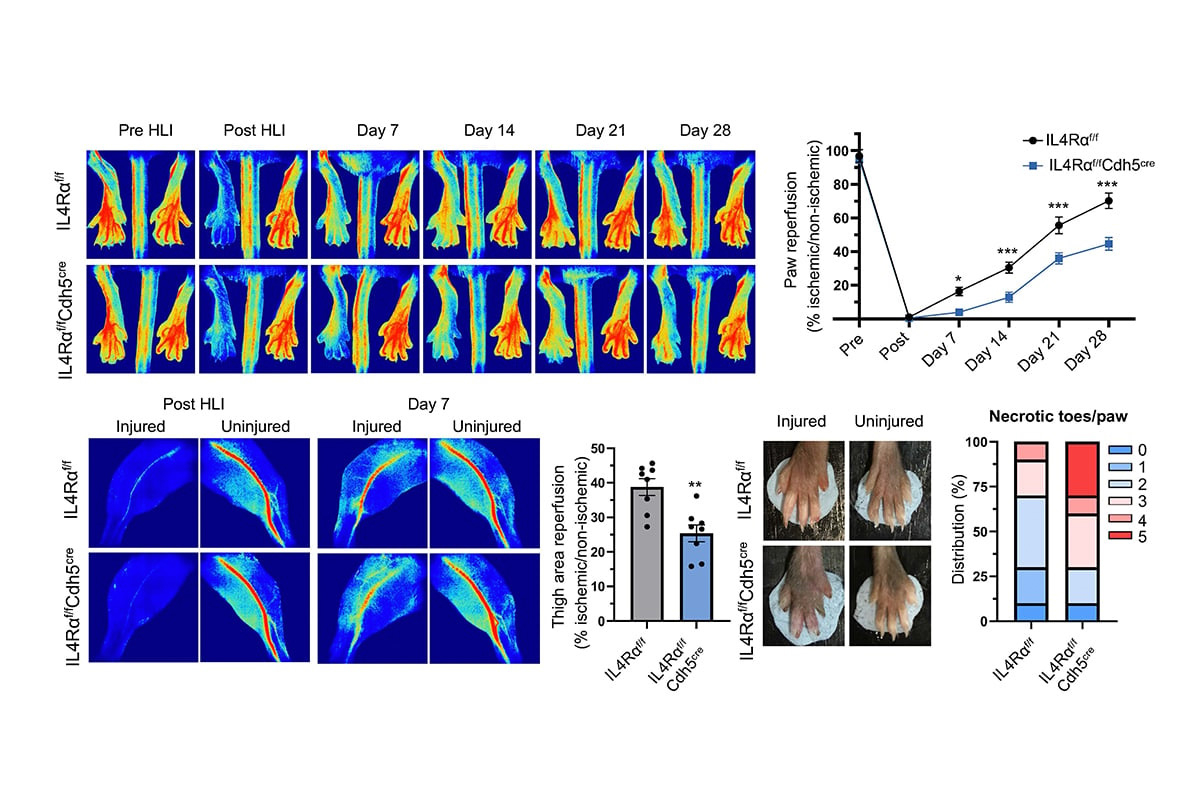
A study conducted at the Chinese University of Hong Kong (CUHK) revealed that certain cytokines known as IL-4 and IL-13 can activate blood vessel growth in locations where blood can’t flow. This discovery holds promise for offering new treatment directions for peripheral artery disease (PAD) and diabetes-related blood circulation problems.
PAD is a common condition involving the blockage or narrowing of blood vessels from the heart to the limbs. When individuals suffer from PAD and diabetes simultaneously, they can experience various complications, including vascular and nerve damage. Vascular damage and poor blood flow can hinder the delivery of oxygen and nutrients to the legs, leading to non-healing wounds. In severe cases, there will be tissue necrosis, necessitating amputation to prevent further complications.
Previous research has found that cytokines called IL-4 and IL-13 can alter macrophages to promote the repair of damaged tissues. A team led by Jack Wong Wing-tak from the Chinese University of Hong Kong (CUHK)’s School of Life Sciences discovered that IL-4 and IL-13 cytokines, when present in ischemic leg tissues (areas with reduced blood supply), directly stimulate non-immune cells known as endothelial cells. This stimulation leads to new blood vessel growth, migration, and formation, improving blood flow and facilitating tissue regeneration in the human body.
The team also found that damaged tissues in diabetic patients are challenging to heal, potentially because they have lower levels of IL-4 and IL-13 cytokines. By treating mice with diabetes using IL-4 and IL-13 cytokines, blood flow to the damaged blood vessels was restored, and tissue regeneration within the body was promoted. Professor Wong noted that this research provides further insights into how the body repairs damaged tissues and opens new avenues for treating peripheral artery disease and related conditions.
The research team looks forward to collaborating with health care institutions to conduct clinical trials, assessing the efficacy and safety of IL-4 and IL-13 as therapeutic agents. They also plan to explore integrating these findings into existing treatment approaches to enhance care for patients with PAD and diabetes. The research findings have been published in the international scientific journal Cell Reports.