



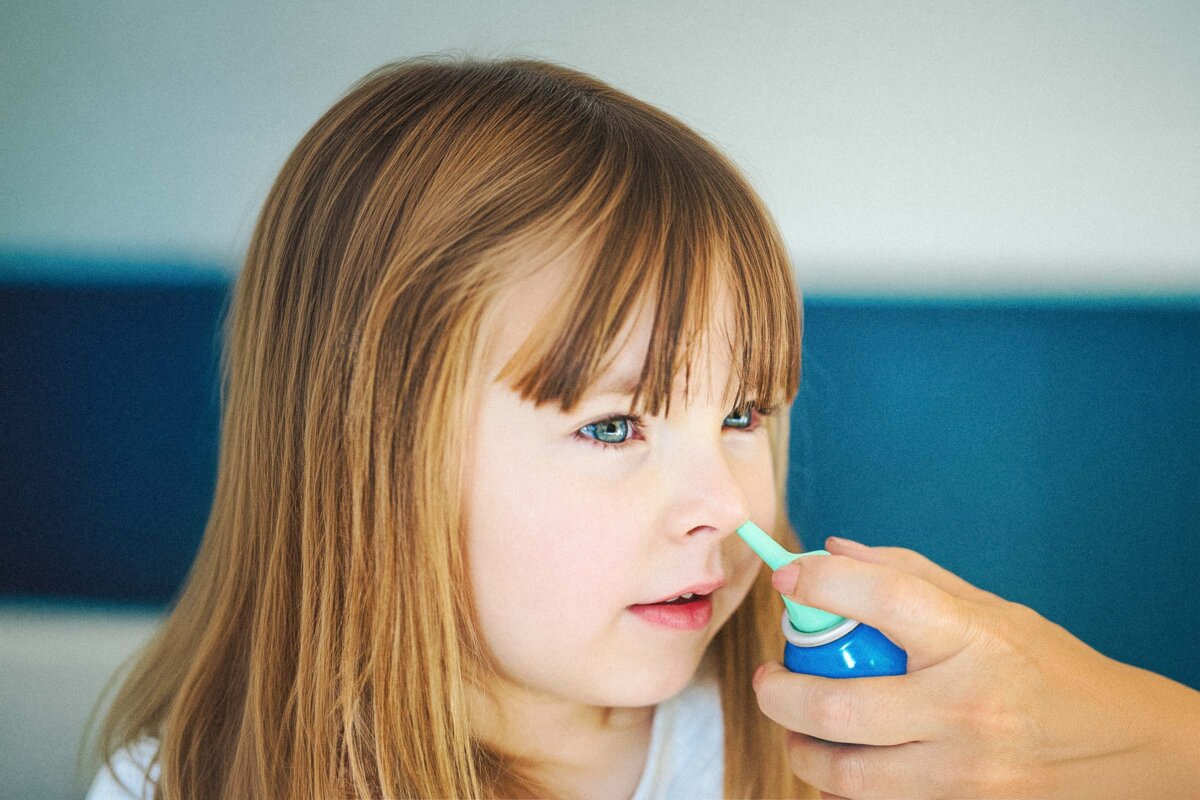
A $5 bottle of saline nasal spray from the drugstore works just as well as a prescription steroid spray for easing sleep-disordered breathing in children—and may help some kids avoid tonsil surgery altogether, a recent study suggests.
The findings add to growing evidence that saline sprays, long dismissed as basic or placebo-like, can clear nasal congestion, wash away allergens and viruses, and reduce inflammation enough to improve sleep, breathing, and comfort.
The January study, published in JAMA Pediatrics, involved 150 Australian children aged 3 to 12 with obstructive sleep-disordered breathing symptoms. All children received a daily dose of intranasal saline for six weeks. After that initial treatment, almost 30 percent of the children no longer had symptoms.
For the remaining children who still had problems, researchers split them into two groups: One continued with saline spray, and the other switched to mometasone furoate, a prescription steroid spray. Both groups used their assigned treatment for another six weeks.
About 36 percent in both groups improved—meaning that saline spray worked just as well as the steroid spray.
The researchers suggested that intranasal saline is an effective short-term first-line treatment for children with obstructive sleep-disordered breathing and may reduce the need for further treatment, including surgery. They recommend that doctors try a three-month course of saline before sending children to a specialist.
An Important Distinction
However, experts caution against overstating the findings.
“This is an interesting paper, and while it has good findings, I think people can walk away with the wrong impression,” Dr. Brandon Kamrava, an otolaryngologist and facial plastic and reconstructive surgeon at Kamrava Aesthetics, who was not involved in the study, told The Epoch Times.
The children in the study had obstructive sleep-disordered breathing symptoms—snoring, mouth breathing, or disrupted sleep—but no formal diagnosis of obstructive sleep apnea, which requires a sleep study to confirm. Therefore, Kamrava noted that he would not extend the benefits of saline nasal sprays to the treatment of obstructive sleep apnea.
Sleep-disordered breathing encompasses a broad range of conditions, from simple snoring to obstructive sleep apnea (when airways become blocked during sleep) to central sleep apnea (when the brain fails to signal the muscles to breathe) and sleep-related hypoventilation (shallow breathing that can cause low blood oxygen levels).
In children, treatment for confirmed obstructive sleep apnea typically involves surgical removal of tonsils and adenoids. Surgery carries risks, including post-operative bleeding and a painful recovery.
What About Adults?
The Australian study shows that saline can help children with sleep-related breathing problems or obstructive sleep apnea-like symptoms. However, saline nasal spray by itself does not effectively treat sleep apnea in adults.
“Nasal saline sprays can aid in reducing nasal congestion in adults with sleep apnea but will likely not resolve the sleep apnea,” Dr. Ryan Salvador, an ENT surgeon at Sinus & Snoring Specialists in Austin, Texas, told The Epoch Times.
However, because saline spray can reduce nasal swelling and mucus, it may help with congestion and make other treatments for obstructive sleep apnea easier to tolerate, Salvador said.
“In our care experience, [saline nasal spray can help] but often indirectly,” Tanner Gish, director of operations and certified dementia practitioner at Loving Homecare, who manages daily care for older adults with sleep apnea, told The Epoch Times. “The biggest battle we fight with adult sleep apnea is [continuous positive airway pressure] CPAP compliance. Many seniors stop using their machines because the air pressure dries out their nasal passages, causing cracking or bleeding.”
Gish said daily saline spray is a critical “compliance tool” that keeps the tissues moist enough to tolerate the CPAP mask all night.
“Without the saline, the treatment often fails,” he said.
Depending on severity, treatments for adult obstructive sleep apnea include oral appliances, CPAP devices, surgical procedures such as the INSPIRE nerve stimulator implant, or tirzepatide (Zepbound), a weight-loss drug approved by the Food and Drug Administration in 2024 to treat moderate-to-severe obstructive sleep apnea in adults with obesity.
How to Use Saline Safely
Nasal irrigation methods include prepackaged sprays, nasal gel, and a neti pot—a teapot-shaped device that can be filled with a saline solution. While higher-volume rinse methods can be more effective at flushing the nasal passages, they require proper technique and hygiene.
“We typically recommend pressurized canned saline mist,” Gish said. “It is easier to manipulate, remains sterile (unlike a squeeze bottle that can draw bacteria back in), and requires less cleanup.”
The most critical safety concern is water quality. Tap water isn’t safe for nasal rinses because it can contain bacteria and protozoa—microscopic single-celled organisms—including amoebas that can survive in the nasal passages and cause potentially serious, sometimes fatal infections, according to the Food and Drug Administration.
Safe options include:
- distilled or sterile water purchased in stores.
- water boiled for three to five minutes and then cooled.
- water filtered through a device designed to remove infectious organisms.
Devices must also be cleaned properly.
“We often see mold growth in reusable bottles that haven’t been washed properly, which creates a cycle of sinus infections,” Gish said. “Daily use is safe, but dirty equipment is dangerous.”
People should not share nasal sprays with others. Research shows that once opened and used, commercial saline spray containers can become contaminated with microorganisms.
The Power of Saline
Using a saline nasal spray regularly may also provide other health benefits.
A 2024 study found that using a saline spray when coming down with a respiratory illness can shorten the illness by about two days. Other research suggests that saline nasal irrigation may reduce SARS-CoV-2 viral load in the nasal passages, potentially lowering transmission risk and illness severity.
For people with allergies, saline rinses can wash out allergens and relieve nasal congestion. They can also help people with acute and chronic sinusitis by thinning infected mucus and promoting drainage, and they can benefit people with nosebleeds by moisturizing the nasal passages.