



Vision has its retinal map, and hearing has its cochlear one. Smell, scientists long believed, had nothing comparable—just receptors scattered randomly across nasal tissue, with no logic to explain how we detect the world’s more than 1 trillion odors. New research now shows that smell has been hiding its order all along.
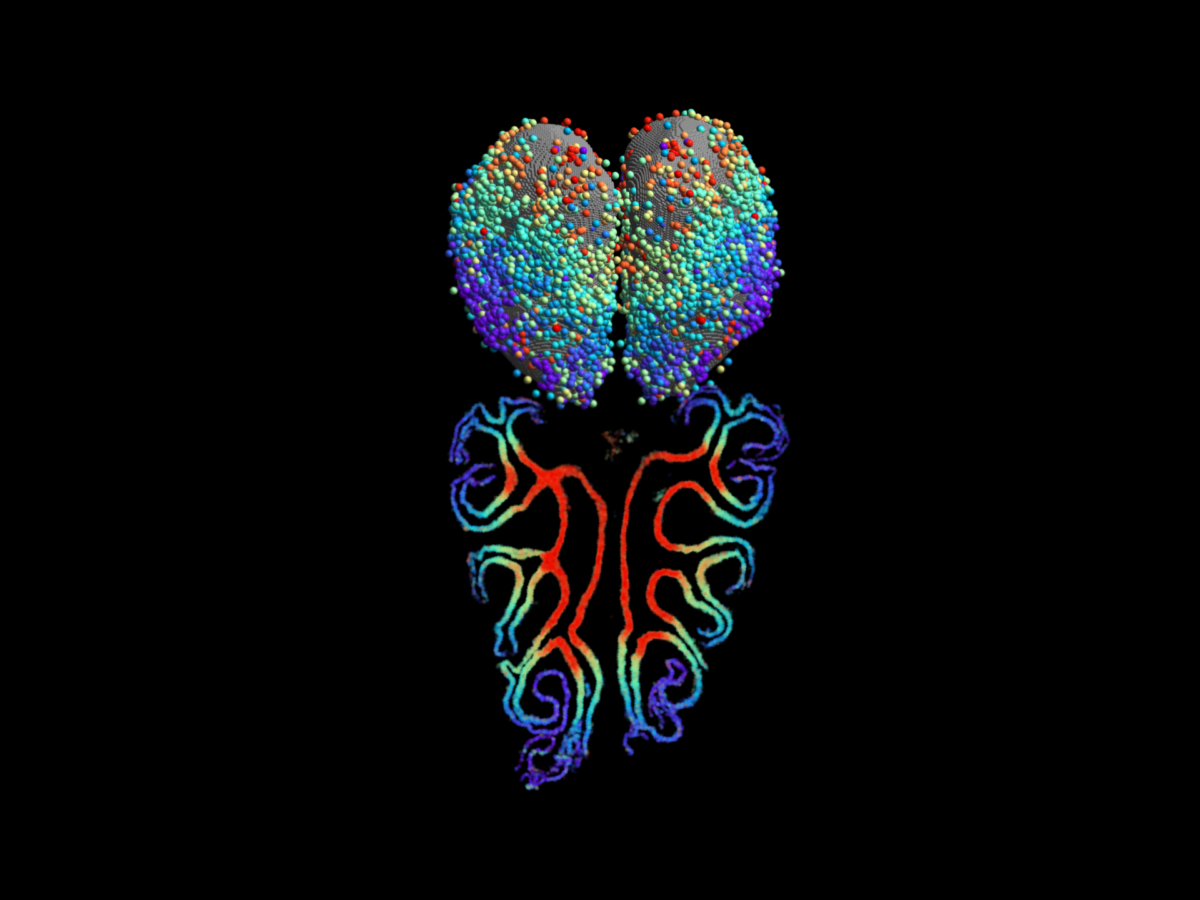
Two studies published in Cell reveal that smell is far more organized than anyone suspected. Dr. Sandeep Robert Datta and colleagues at Harvard Medical School created the first detailed map of approximately 1,100 odor receptors in a mouse’s nose. In a companion study, Catherine Dulac’s lab at the university produced a similar map and traced how those receptors connect to the brain.
“[For the first time] we have a complete map of how odor is represented in both the nose and the brain, similar to what exists for vision and hearing,” Dulac, a neuroscientist, told The Epoch Times in an email.
For people who lose their sense of smell—after COVID-19, a head injury, or simply with age—that hidden order matters. Losing the sense of smell is more than an inconvenience—food becomes bland, and everyday warning smells such as smoke, gas, or spoiled milk become harder to detect. Yet restoring the sense of smell has proven stubbornly difficult, and the new findings begin to explain why.
A Hidden Geography Inside the Nose
The findings reveal that the sense of smell is far more beautifully organized than anyone realized, challenging a long-standing idea that the system was mostly disordered.
Each type of smell receptor, which detects a unique subset of odor molecules, resides in the olfactory epithelium, the tissue high inside the nose that detects odors. Scientists first began identifying smell receptor types in 1991, but the receptors seemed to be arranged in broad zones.
“It was thought that each odor receptor was scattered about the nose, willy-nilly,” with no obvious pattern to explain how the system worked, Datta, a professor of neurobiology at Harvard Medical School and senior author of the first study, told The Epoch Times in an email.
To build the maps, researchers analyzed roughly 5 million nerve cells from hundreds of mice, using tools that reveal which receptors individual neurons express and exactly where they sit within the nose.
The researchers found that cells are clustered into distinct horizontal stripes, like bands running from the top to the bottom of the nose, based on the type of smell receptor they express. This pattern was consistent across hundreds of mice, creating a shared odor map.
The second study extended the map into the brain by mapping where certain genes were translated into different smell receptors in tissue from the mouse’s nose and the brain region where odor information is sent. The brain chart resembled the one in the nose, suggesting a coordinated system that links the nose directly to the brain.
How the Map Forms
Datta’s team also investigated how the smell map forms in the nose. Its work points to retinoic acid, a molecule that helps guide growth throughout the body, as a key organizing signal.
As smell-sensing neurons develop, they are exposed to different levels of retinoic acid, which helps guide growth throughout the body during development. In the olfactory tissue, retinoic acid forms gradients across the nose, and those local chemical differences appear to influence which odor receptor a neuron ultimately expresses.
When researchers experimentally disrupted retinoic acid signaling, the receptor map itself shifted. Regions of receptor expression moved up or down within the tissue, suggesting that the chemical gradients help establish the nose’s spatial organization.
The findings suggest that smell develops according to a set of biological instructions that guide neurons into the correct places and connect them into a functioning sensory network.
Why It Matters For Restoring Smell
Smell disorders affect millions of people, and treatment options remain limited. The new findings help explain why restoring the sense of smell can be so difficult: Replacing neurons alone may not be enough to recreate the system’s precise spatial organization. New cells may need to reconnect in the correct positions.
“Understanding the nature of the map is critical if we are to build tools to repair the nose,” Datta said.
Stem cell therapies, for example, would need to distribute new cells throughout the entire olfactory tissue—not just replace them in patches—to properly rebuild the map.
However, important gaps remain. Human smell receptors have not yet been mapped in the same way, so it is not known whether people share the same organization seen in mice.
The human system may follow similar organizing principles, but researchers still need to confirm how closely the mouse findings apply, Dr. Bradley Goldstein, a sinus specialist at Duke University School of Medicine who was not involved in the studies, told The Epoch Times in an email.
“We do not yet have direct proof of this organization in humans,” he said, “but it is likely that similar strategies are used, and understanding those cues is a key advance.”
Researchers are beginning to study human tissue to see how closely the mouse map reflects human smell biology—an early step toward understanding how a sense so essential, and so fragile, can one day be restored.