



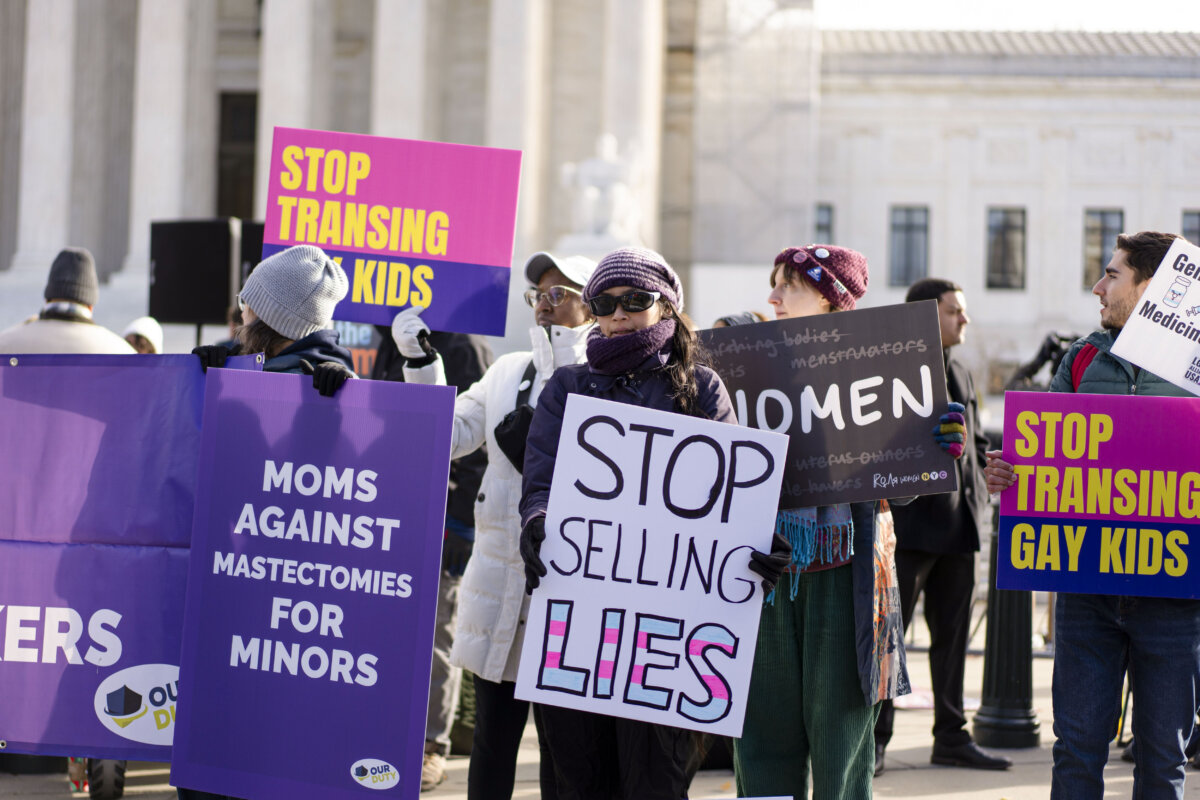
A second top medical group has shifted its stance on breast removal and other gender transition surgeries for minors.
“The evidence for gender-affirming surgical intervention in minors is insufficient for us to make a definitive statement,” the American Medical Association told news outlets in a statement.
The association added that “in the absence of clear evidence,” it agrees with the American Society of Plastic Surgeons that surgical interventions in minors should be generally deferred to adulthood.
The American Society of Plastic Surgeons announced on Feb. 3 that it recommends surgeons not carry out “gender-related surgeries,” such as the removal of breasts or genitals, until a patient is at least 19.
The society, which represents more than 11,000 plastic surgeons across multiple countries, including the United States and Canada, said there is not sufficient evidence to weigh the risks and benefits of carrying out such surgeries on children.
The society had said in 2019 that states should not restrict the surgeries for children experiencing the belief that they are a gender different from their birth sex, although it said in 2024 that there was uncertainty on the topic and that it was reviewing available evidence.
The U.S. Department of Health and Human Services said in a report in 2025 that there is little evidence supporting surgical intervention for minors who hold that belief, known as gender dysphoria. The plastic surgeon society cited that report, among other sources, to explain its shift.
The American Medical Association, which has more than 271,000 members, had previously supported surgery for people with gender dysphoria, including children. In 2021, it said that “for gender diverse individuals, standards of care and accepted medically necessary services that affirm gender or treat gender dysphoria may include mental health counseling, non-medical social transition, gender-affirming hormone therapy, and/or gender-affirming surgeries.”
In 2024, the group said that it would work to “oppose laws and policies that criminalize, prohibit or otherwise impede the provision of evidence-based, gender-affirming care, including laws and policies that penalize parents and guardians who support minors seeking and/or receiving gender-affirming care.”
The association did not respond to a request for comment on what spurred the change in its position.
It told outlets that it still backs other “evidence-based treatment” for gender dysphoria.
Nonsurgical medications include puberty blockers and cross-sex hormones.
The American Academy of Pediatrics, which represents pediatricians, said in a statement provided to media outlets that it is maintaining its support for surgical intervention for some children.
“The AAP continues to hold to the principle that patients, their families and their physicians—not politicians—should be the ones to make decisions together about what care is best for them,” Dr. Andrew Racine, the organization’s president, said.
The World Professional Association for Transgender Health creates standards around gender-related surgery that have been used by certain countries. It has said minors can undergo surgeries if they have “demonstrated the capacity to make a fully informed decision,” among other criteria.
The association said in a statement this week that “there is no definitive age or one-size-fits-all approach for every patient, which is why they are built on case-by-case assessments, involve experts on adolescent development, and are designed to support thoughtful and ethical shared decision-making in a multidisciplinary field.”