



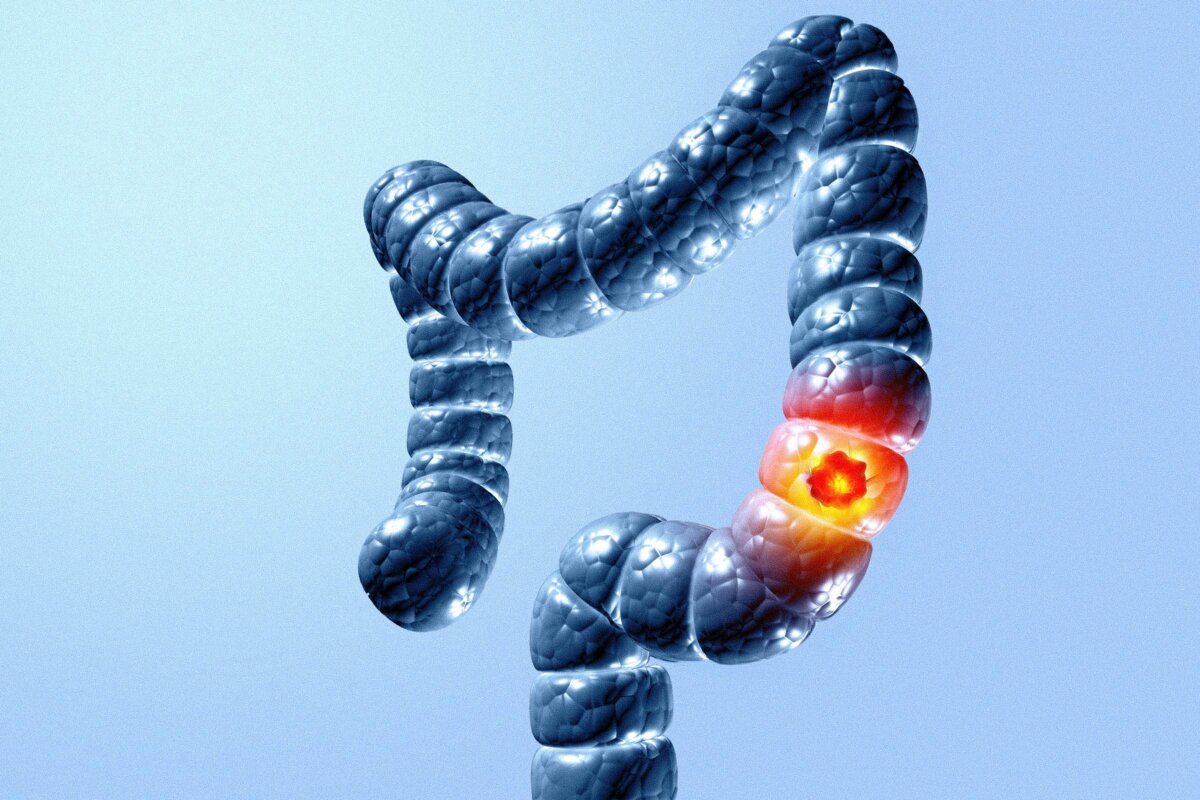
Colorectal cancer has overtaken lung, breast, and all other cancers to become the leading cause of cancer death in Americans younger than 50, a reversal from three decades ago, when it ranked fifth, according to a recent research letter.
Since 2005, the death rate from colorectal cancer in those younger than 50 has increased by 1.1 percent per year, even as the number of overall cancer deaths in Americans younger than 50 has dropped by 44 percent. Authors of a research letter published in JAMA found that the disease claimed the top spot in 2023, after analyzing national death records from 1990 through 2023.
The most important takeaway is that this is not just more diagnoses—“it’s more deaths,” Dr. Jason Korenblit, gastroenterologist and digestive health expert at JustAnswer, who was not involved in the study, told The Epoch Times. This is harder to explain away by screening or detection bias, he said.
A Devastating Reversal
The shift represents a departure from expectations.
Colorectal cancer rates were predicted to decline because of improved screening and detection methods. Until recently, only 30 percent of eligible people were screened with a colonoscopy; improved screening should have meant more diagnoses but fewer deaths, as cases were caught earlier.
“But the unexpected findings over the last few years [are these] increased incidence in this younger population,” Dr. Fabio Cominelli, director of the NIH Cleveland Digestive Diseases Research Core Center at Case Western Reserve University, told The Epoch Times. “That was something unexpected and not predicted by the data and everything else.”
The problem is compounded by the fact that no routine screening is recommended for people younger than 45. Someone who develops colon cancer at 30 without a family history would never receive preventive screening, Cominelli said.
“Therefore, the screening procedure does not affect [increased rates in] this younger patient population,” he said.
Christine Molmenti, co-director of the Northwell Early-Onset Cancer Program and cancer epidemiologist at Northwell Health, called it a “devastating trend” affecting young people just as they’re starting their lives, as they’re graduating college, beginning careers, and starting families.
She said that historically, this has been a disease found in older adults; most people with the disease are diagnosed after the age of 55.
“We are now seeing more than 20 percent of cases from young adults under 55,” she said.
About three in four patients younger than 50 who are diagnosed with colon cancer already have advanced disease, making treatment more difficult and less effective, according to the study findings.
“The causes are not fully known, and the authors stress the need for ongoing research to identify what’s driving early-onset CRC,” Korenblit said.
Lifestyle Does Not Fully Explain Cancer Rise
“Colorectal cancer is often considered a ‘lifestyle disease’ due to its association with a Western dietary pattern,” Molmenti said. “This pattern is highly concentrated in ultra-processed foods.”
Her team has found that people younger than 50 who had colorectal polyps return after removal showed higher smoking rates, greater intake of red meat and total fat, more sedentary behavior, and diets with more inflammatory properties.
A recent study also observed a 45 percent increase in early-onset colorectal cancer precursors among women younger than 50 who consumed the highest level of processed foods. Likewise, heavy drinking has been linked with a 91 percent increased risk of colorectal cancer.
However, many young people now being diagnosed with colorectal cancer were following healthy lifestyles.
Other research suggests that lifestyle factors do not fully explain the rise in colorectal cancer among young adults.
According to Dr. Robin Mendelsohn, a gastroenterologist at Memorial Sloan Kettering Cancer Center (MSK), the center has been closely monitoring cases of early-onset colorectal and gastrointestinal cancers.
Their data, which include more than 4,000 young patients, reveal a surprising trend—many of these people are less likely to be obese, and they also tend to have fewer traditional risk factors such as tobacco use.
“The working hypothesis is that there is an environmental exposure—or multiple exposures—that people born starting in the 1950s came in contact with,” Dr. Andrea Cercek, gastrointestinal oncologist and co-director of The Center for Young Onset Colorectal and Gastrointestinal Cancer at MSK, stated. “It’s possible that the exposures began in the 1960s or ’70s and have been continuously present since then.”
Other factors beyond obesity may be contributing to the increase in colorectal cancer among younger populations, prompting a need for further research and revised screening strategies.
Other Cancers Show Improvement
While the rate of colorectal cancer deaths has risen, the rates of other major cancers affecting young Americans have declined.
The researchers examined the five leading causes of cancer death in people younger than 50: brain cancer, breast cancer, colon and rectal cancer, lung and bronchus cancer, and leukemia. They used national death records tracking causes of death across all 50 states and the District of Columbia, calculating death rates adjusted for population changes.
Deaths from lung and bronchus cancer have decreased by an average of 5.7 percent annually from 2014 to 2023. Breast cancer and leukemia deaths also decreased during this period, potentially because of improvements in detection and treatment. Deaths from brain cancer have shown a very slight decline since 2007, with an average annual decrease of 0.3 percent.
Warning Signs
Limited awareness among patients and even some health care providers contributes to late diagnoses, according to Molmenti.
“Many patients’ symptoms are dismissed, especially with women,” she said.
Many symptoms overlap with “benign” conditions such as hemorrhoids, irritable bowel syndrome, and infectious diarrhea, according to Korenblit.
“Young adults don’t really have a unique symptom that screams cancer, although certain patterns should raise concern,” Korenblit said.
He pointed to several red flags that should prompt urgent evaluation:
- Blood in the stool or bleeding that keeps coming back
- Persistent abdominal pain
- A lasting change in bowel habits, such as new constipation, diarrhea, or alternating patterns
- Unexplained iron-deficiency anemia, fatigue, or shortness of breath
- Unintentional weight loss
- Symptoms that persist, worsen, or don’t respond to usual treatment
Dr. Pradnya Mitroo, gastroenterologist and president and CEO of Fresno Digestive Health, told The Epoch Times that by 2018, before the recommended screening age dropped from 50 to 45, there was already a “significant increase” in both colon cancer and advanced pre-cancerous polyps in patients younger than 50 undergoing colonoscopy for other reasons.
“This has only increased over the years, and now it is estimated that colon cancer will be the most common cancer in Americans between the ages of 20 and 49 by the year 2030,” she said.