


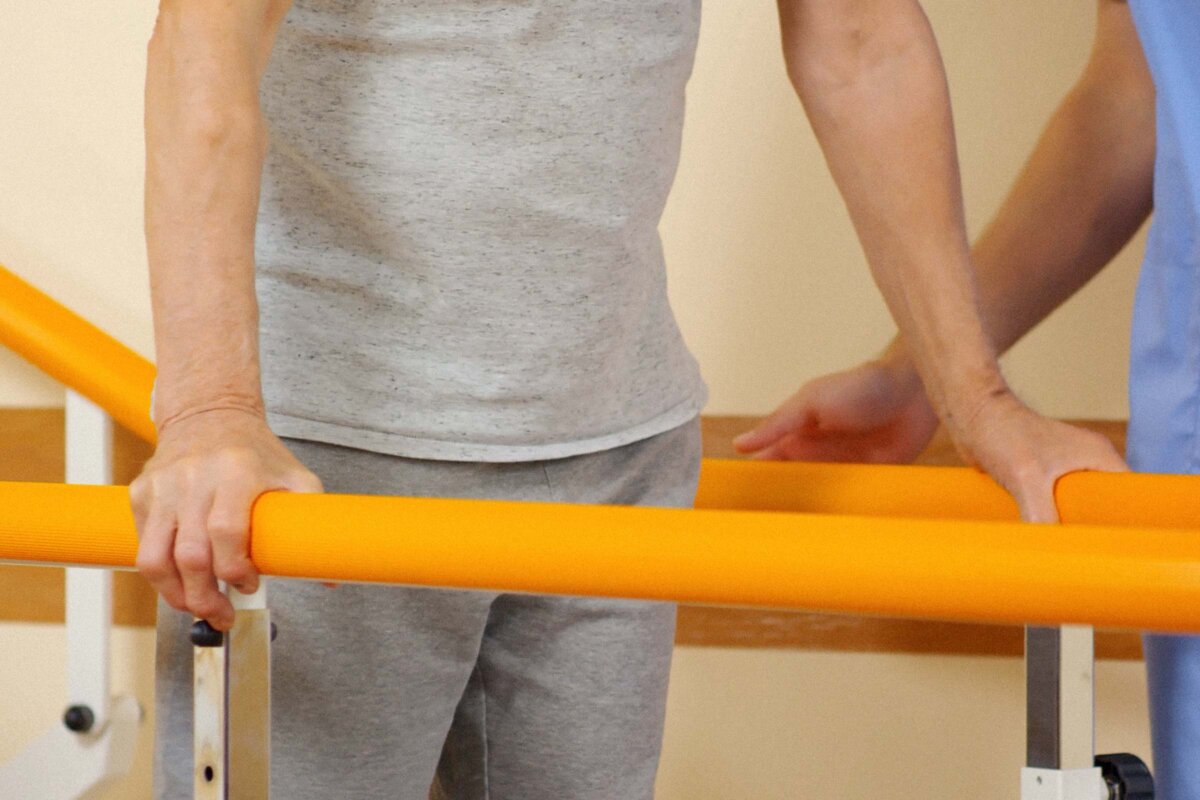
A week after a stroke left his left arm and leg partially paralyzed, a 44-year-old man surprised the doctor making rounds. He was already in the hospital corridor, walking with a cane and practicing his steps.
He did not want his wife to face a long-term caregiving burden, he said. Seeing how much she was doing for him distressed him, and he was determined to regain as much independence as possible.
Fourteen days after the stroke, he came to my clinic for scalp acupuncture. He still needed a cane and could raise his left arm only about 45 degrees. Following the first session, he could lift it much higher and open a door himself. After the second, he walked without the cane. Over approximately 20 sessions, his walking approached normal.
These were the changes I observed during his treatment. What also stayed with me was his commitment to practicing with his affected arm and leg. His love for his family gave him a reason to keep trying.
His experience prompted a question I have often considered in clinical practice: How can we help patients participate more fully in their own recovery?
The Will to Recover
The patient’s determination to recover for the sake of his family left a deep impression on me.
From a psychological perspective, this sense of purpose and altruistic motivation may provide an important source of strength that helps a person continue with rehabilitation.
A 2020 meta-analysis found that older adults with a stronger sense of purpose in life had a lower risk of subsequent decline in physical function. This does not mean, of course, that willpower alone can heal the body. Medical treatment and the body’s self-healing capacity are not opposing forces; rather, they work together.
Medical care helps the body through the acute stage of illness, while its innate healing capacity gradually takes effect through rehabilitation, sleep, nutrition, and changes in daily habits.
In my view, physical repair involves three levels: physical substance, energy, and information. “Physical substance” includes body tissues, nutrients, medications, and food.
“Energy” may be understood in terms of qi (vital energy) and blood, the meridians (pathways through which energy flows in the body), and the body’s overall functional state. “Information” includes a person’s beliefs, emotions, state of mind, and the external messages received each day.
Of these three, I believe information is the most easily overlooked.
When a person is continually surrounded by fear, anxiety, and self-defeating thoughts, the body may remain in a prolonged state of tension. By contrast, relaxation, focused attention, and consistent practice can provide the body with steadier and clearer signals, allowing it to move gradually toward a state more conducive to repair.
Based on my clinical observations, three factors are particularly important in supporting the body’s self-healing capacity: relaxation, focus, and consistency.
1. Relaxation: Make Room for Practice
When it comes to rehabilitation, many patients’ first instinct is to exert more effort. Over time, however, I’ve come to realize that the first step in self-repair is not always to push harder. Sometimes, it is simply to relax the body and mind.
Previously, I shared a set of eye-care exercises intended to support eye health through self-massage and relaxation.
One woman with advanced cataracts—so severe that her pupils appeared white—practiced the exercises regularly. At a follow-up eye examination about six months later, the ophthalmologist was surprised to find that her cataracts had improved markedly. She ultimately did not require surgery.
This experience left me wondering why the same method appeared to produce clear results for some people but not for others.
My later impression was that people who approached the exercises in a more relaxed state often experienced more noticeable improvement.
When the body remains tense and anxious for long periods, it can become trapped in that state. According to TCM, this may contribute to internal heat or “deficiency fire.”
From the perspective of conventional medicine, chronic stress may disrupt endocrine regulation, promote inflammation, and contribute to an imbalance in the autonomic nervous system.
A 2020 systematic review of randomized clinical trials found that psychosocial interventions may improve immune function, suggesting that a person’s mental and emotional state can affect the environment in which physical recovery takes place.
When performing rehabilitation exercises, there is therefore no need to keep telling yourself, “I must get better,” nor should you repeatedly worry, “What if I never improve?” The former thought can create additional tension through excessive expectations, while the latter may gradually undermine confidence.
A more appropriate approach is to relax the body and mind and direct attention toward the movement being performed and the sensations arising in the body.
3 Simple Steps to Relax Your Body
-
Pause and take several slow breaths.
-
Bring your attention back to your body and notice, from head to toe, where you are holding tension.
-
Spend a little more time on the tense areas. As you breathe out, allow the muscles, joints, and fascia to release gradually.
From a TCM perspective, qi and blood can circulate more freely when the body is relaxed.
The same principle applies to the eye-care exercises. Focus on each movement, gradually releasing tension in the areas around the eyes, brow bones, temples, head, and neck.
Concentrating on one task at a time may also provide the brain and body with clearer, more consistent input.
2. Focus: Give Each Movement a Clear Goal
During rehabilitation, a person may worry about whether recovery is possible or whether they will be left with lasting effects.
These concerns are understandable. However, when attention is repeatedly pulled away by anxiety, the movement-related signals reaching the brain may become less clear.
The stroke patient described earlier recovered well not only because he was determined to recover, but also because he translated that desire into daily action.
Whenever he was awake, he repeatedly tried to use the affected side of his body. If his hand was difficult to control, he used that hand to pick things up. If walking was difficult, he continued practicing his steps.
His experience showed me that the desire to recover must be translated into clear, repetitive, and concrete action.
The purpose of focused practice is to perform one movement at a time—for example, lifting a cup, taking a step forward, or reaching for an object—so that the brain receives clear, consistent input about the specific function being practiced.
Conventional medicine often uses the concept of neuroplasticity to explain the brain’s capacity to recover.
In practice, neurological recovery typically occurs gradually through continued rehabilitation and repeated practice, which help the brain establish or strengthen neural connections.
3. Consistency: Keep Returning to Small Steps
I once treated a woman in her 50s who had Parkinson’s disease. When she first came to the clinic, she walked slowly, her gaze appeared dull, and she needed someone to support her.
She lived far away, so each visit was difficult. At first, she had to take a taxi. Later, due to high transportation costs, she began taking the train by herself to a station along the route, where her older sister would meet her and accompany her to the clinic.
She received treatment three times a week. After about one month, she could walk independently, although she still moved very slowly. After six months of treatment, I called her over one day, and she was able to jog toward me. Her walking had also become much smoother.
Her experience deepened my understanding that a physician may nudge a patient in the right direction, but the patient is ultimately the one who must do the work of recovery.
She did not give up because the journey was long or moving was difficult. Nor did she stop simply because progress was slow. Whether it was raining or the sun was blazing, she kept returning to the clinic and following through with treatment, one visit and one step at a time.
I often remind patients not to assume that having an incurable condition means meaningful improvement is impossible. Medicine can tell us about the general characteristics and expected course of a disease, but this does not mean every person’s condition or response will be identical.
If someone begins by deciding, “I will never get any better,” that belief may itself become an obstacle to recovery.
Although Parkinson’s disease currently has no cure, a 2019 double-blind, randomized controlled trial published in The Lancet Neurology found that people with mild Parkinson’s disease experienced symptom improvement after completing home-based aerobic exercise three times a week for six months.
This finding illustrates the importance of long-term, regular physical activity for people with Parkinson’s disease.
Helping the Body Return to a State of Repair
Relaxation, focus, and consistency may appear to be three separate practices, but they all point in the same direction: helping the body gradually move away from tension and anxiety and toward a more stable state.
-
Relaxation prevents the body from remaining trapped in a persistent stress response.
-
Focus helps the brain receive clear signals from the body again.
-
Consistency allows the effects of these adjustments to accumulate over time.
The body’s self-healing capacity is not activated by forcing oneself forward through willpower alone. Rather, after receiving necessary medical treatment, a person must continue to adjust daily habits and participate in rehabilitation so that the body’s repair processes can gradually take effect.
How Families Can Help
The most important role of family caregivers is not to continually urge the patient to “stay strong,” but to help the person feel supported.
When people become ill, they commonly experience fear, anxiety, helplessness, and sometimes irritability or reluctance to cooperate. If family members understand the suffering behind these reactions and respond with steadiness and empathy, patients are less likely to become trapped in thoughts such as, “I am useless,” or “I am a burden to my family.”
Caregivers do not always need to offer advice, nor should they rush to criticize. They can begin by listening without interrupting, then help break the patient’s larger goals into smaller steps—for example, standing for a few seconds longer, taking a few more steps, or holding a cup independently. When the patient succeeds, praise the specific effort involved.
When the patient’s condition allows, family members should also avoid doing everything on the patient’s behalf. Instead, they should allow patients to continue doing whatever they can manage independently, helping them remain active participants in their own recovery.
At the same time, caregivers must also look after themselves. A caregiver who is chronically exhausted will find it difficult to provide steady, sustained support. Family members do not need to become perfect caregivers. They also need time to rest, ask for help, and regain their own strength.
Hope can take many forms: greater independence, better comfort, renewed connection, or the confidence to attempt another small step. Medical treatment and daily care provide the foundation; relaxation, focus, and consistency can help patients engage with that care.
About five months after the stroke, I happened to see my patient on the street. He was riding a bicycle and waved at me with a smile.
I thought back to his first steps in the hospital corridor. His wish to care for his family had given those steps meaning. Day after day, he had turned that wish into action.
Views expressed in this article are the opinions of the author and do not necessarily reflect the views of The Epoch Times. Epoch Health welcomes professional discussion and friendly debate. To submit an opinion piece, please follow these guidelines and submit through our form here.