



American travelers heading to China face new health risks as the U.S. Centers for Disease Control and Prevention has issued a travel advisory this month warning of a rapidly spreading mosquito-borne virus outbreak that has infected more than 7,000 people in Guangdong province since June.
Chinese health officials confirmed that the surge in cases represents one of the largest chikungunya outbreaks in the region’s recent history.
The rare chikungunya outbreak in China has raised public health concerns about the virus globally. What is chikungunya, and what are its risks for U.S. citizens?
What Is Chikungunya?
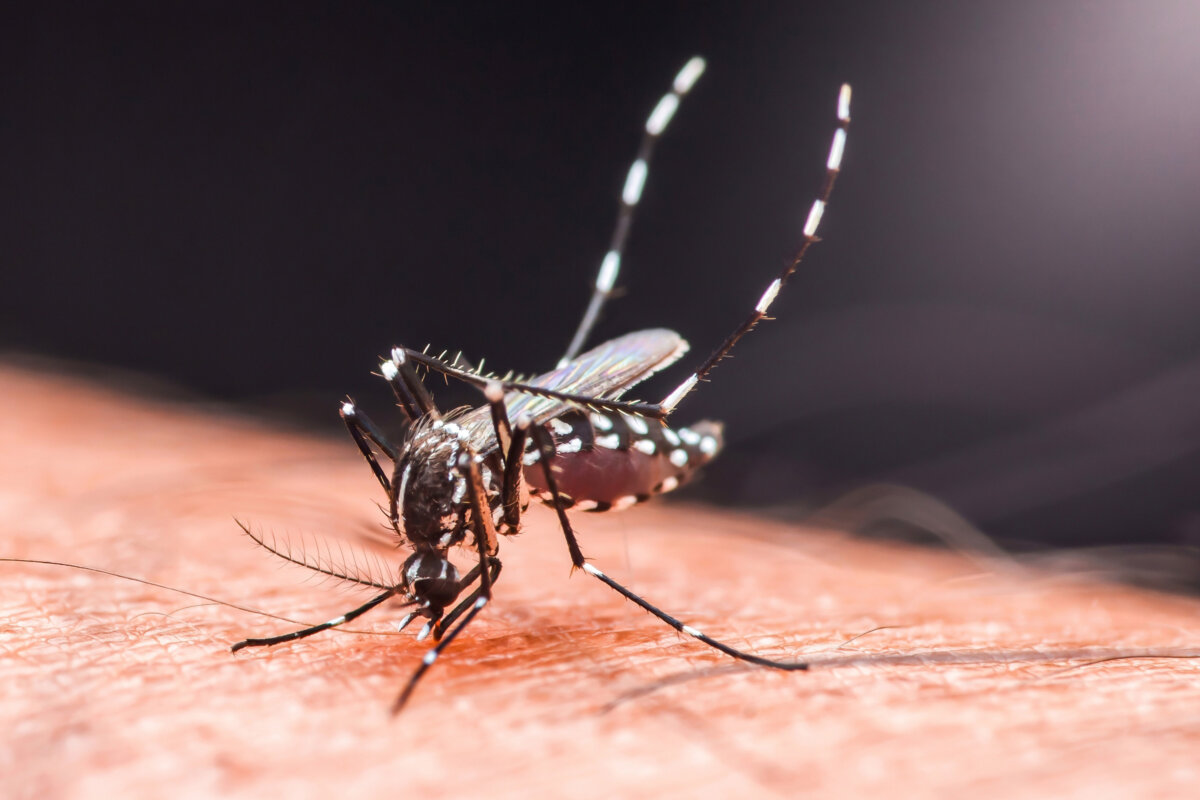
Chikungunya fever is caused by a virus transmitted by infected female mosquitoes of the Aedes aegypti and Aedes albopictus species, which can also transmit dengue and Zika viruses. The unusual name “chikungunya” means “bends you up” or “stooped walk” because the infection causes severe joint and muscle pain.
The virus does not spread from person to person—rather, mosquitoes become carriers after biting an infected person and can then transmit the virus to others through subsequent bites.
While the disease rarely causes severe health problems or death, the symptoms are unpleasant and include sudden high fever, headache, fatigue, rash, nausea, and red eyes.
Symptoms often appear within two to seven days after being bitten by an infected mosquito. Although most people get better within a couple of weeks, others have longer-lasting problems. Around 25 percent to 40 percent of people who get infected may develop chronic conditions such as joint and muscle pain.
People 50 years or older are at a greater risk of developing chronic conditions from chikungunya. Women are at a higher risk than men.
First identified in the United Republic of Tanzania in 1952, chikungunya has spread rapidly since 2004. Today, approximately one-third of the world’s population lives in areas where the illness is endemic, including parts of the Americas, Africa, Asia, Europe, and various island regions. This year alone, approximately 240,000 chikungunya cases and 90 deaths have been reported globally across Central America, South America, Africa, the Indian Ocean region, and Asia.
Risk Assessment for US Travelers
Despite the outbreak’s scope, U.S. health experts say the risk of domestic transmission remains low. Dr. Sharon Nachman, chief of the Division of Pediatric Infectious Disease at Stony Brook Children’s Hospital in New York, said that chikungunya infection requires specific conditions.
“You have to have enough time outside for the right type of mosquitoes who are also infected with the virus to find and bite you,” she told The Epoch Times. While imported cases occur when travelers return from affected areas, establishing local transmission cycles would require sustained mosquito populations carrying the virus.
“Theoretically, a mosquito from a chikungunya country could fly into the open hatch of a plane loading up in China or South America and survive the freezing temperatures to land at JFK airport in New York, then bite someone and transmit infection to them,” Nachman said. “But then that’s the end of the cycle because you won’t get enough people with enough mosquitoes flying in that we’re going to develop a pool of mosquitoes who are infected.”
“So, is it likely that we will have it in the immediate future? No.”
Treatment and Prevention
There is currently no treatment for the disease. The Centers for Disease Control and Prevention (CDC) recommends rest, fluids, and over-the-counter pain medicines to relieve symptoms. Those infected are likely protected against future infections.
However, research from India, where chikungunya is endemic, has suggested that some herbs have shown antiviral effects within laboratory studies, including holy basil. Turmeric and green tea are considered to be home remedies for the virus.
For travelers concerned about mosquito bites, Nachman recommends using DEET-based repellents, which have proven long-term effectiveness against mosquitoes. “A lot of the other beautiful-smelling products really haven’t stood the test of time to say they are active against mosquito bites,” she said.
The CDC’s travel advisory said that while the immediate risk to U.S. residents remains low, travelers to affected areas should take enhanced precautions, including vaccination when appropriate, use of effective insect repellents, and protective clothing to minimize exposure to infected mosquitoes.
Two chikungunya vaccines have received regulatory approval in several countries, including the United States. A live-attenuated vaccine was licensed in November 2023 for use in adults aged 18 years or older, and a virus-like particle vaccine was licensed in February 2025 for adolescents and adults aged 12 years or older.
“At present time there is no evidence to suggest that the strain circulating in China has a stronger resistance to the vaccines available,” Dr. Christopher Calandrella, chair of emergency medicine at Northwell Long Island Jewish Forest Hills in Queens, New York, told The Epoch Times.
Those at risk for more severe illness include newborns infected around the time of birth, adults aged 65 years or older, and people living with conditions such as high blood pressure, diabetes, or heart disease.
“Increased travel during the summer months usually leads to an uptick in the number of confirmed cases as tourists are often unaware of the outbreak and fail to take precautions such as vaccination and adequate protection from mosquito bites,” Calandrella said.