



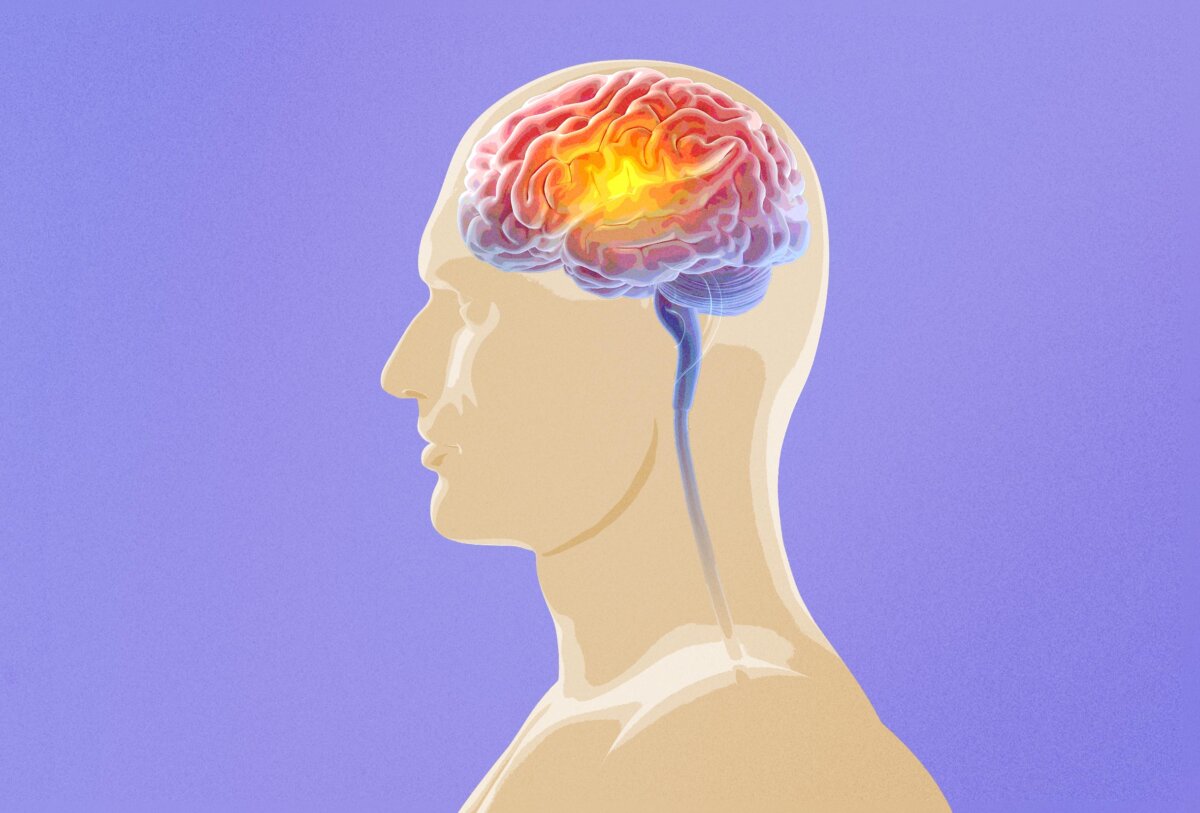
Some people reach their 80s with memories sharper than those of many 50-year-olds. Scientists now think that they know why: Their brains never stopped growing new cells.
Scientists studying a rare group of older people known as superagers—those aged 80 and older whose memories rival those of people 30 years younger—have found that their brains produce new neurons at twice the rate of typical older adults.
“For most of the last century, the prevailing belief was that brain cells only die as you age—you were born with what you had, and that was that,” Jordan Weiss, professor at the Optimal Aging Institute at NYU Grossman School of Medicine, and not involved with the study, told The Epoch Times.
This research, he said, adds to a growing body of evidence that the story is “more hopeful than that.”
Brain Continues to Grow in Adulthood
Neurons, or brain cells, support nearly every human function, from moving a finger to processing complex memories. In the late 20th century, scientists first discovered that new neurons can grow in the brain’s hippocampus—the memory center—throughout adulthood, a process called adult neurogenesis. Initially observed in rodents, scientists later confirmed neurogenesis in primates, linking it to healthier aging brains and better memory.
The new findings, published in Nature, confirm that neurogenesis also occurs in adult humans.
To investigate, researchers from the University of Illinois–Chicago (UIC), Northwestern University, and the University of Washington examined donated brain samples from five groups: healthy young adults, healthy older adults, superagers aged 80 and older with exceptional memory, individuals with mild or early dementia, and those with Alzheimer’s disease.
Scientists looked for three stages of developing neurons: stem cells that can turn into neurons, neuroblasts (adolescent stem cells), and immature neurons just shy of becoming fully functional, all of which are signs that the brain is growing new neurons.
Although healthy adults continue to produce new neurons in the hippocampus, superagers generated twice as many as typical older adults.
Brains from people in the earliest stages of cognitive decline showed very little growth, while those with Alzheimer’s created almost no new neurons. The new neurons had different biological signatures depending on the brain’s cognitive health.
New growth is often a sign of improved memory and flexibility. The brain is highly plastic and able to reorganize both its structure and neural connections depending on new experiences, and it can also help with injury recovery.
Unique Gene Signature
“According to what we observed, they [superagers] have a unique gene signature that allows them to cope with the aging signature,” Orly Lazarov, a professor at UIC’s College of Medicine, told The Epoch Times.
She said she believes that the capacity for exceptional neurogenesis is encoded in the genes of superagers.
When researchers compared the genetic and epigenetic profiles of neurons in superagers, they found a “very distinct” profile compared with all the other groups they examined. This is due to their capability to generate signaling pathways that either increase neuron survival and/or production, Lazarov said, “which allows more neurogenesis and more immature neurons in their brains.”
Modern medicine has increased life expectancy, co-lead author Dr. Jalees Rehman, a professor at UIC, said in a statement.
“We need to ensure that this overall increased life expectancy goes along with a high quality of life, including cognitive health,” he said.
Understanding the molecular details of neurogenesis could lead to targeted treatments to help preserve memory and mental function as people age, Rehman added. The team now plans to explore how lifestyle factors such as diet, exercise, and inflammation might work with neurogenesis to influence aging.
What You Can Do
Although superagers appear to have a genetic advantage, experts say lifestyle can still shape the brain’s cellular environment.
“From a brain biology standpoint, lifestyle can shape the environment those cells [neurons] live in through blood flow, inflammation, stress hormones, and sleep quality,” Dr. Rab Nawaz Khan, a specialist doctor in general, stroke, and rehabilitation medicine at the Aneurin Bevan University Health Board in Wales, and not involved in the study, told The Epoch Times.
Khan and other experts consistently point to aerobic exercise as the most important modifiable factor.
“Exercise causes increased cerebral blood flow and oxygenation via increased concentrations of brain-derived neurotrophic factor,” Dr. Rajesh Burela, a neurology resident physician, told The Epoch Times.
He recommends at least 30 minutes of heart rate-elevating activity—speed walking, boxing, or swimming—on a regular basis.
On diet, Burela points to polyphenols from blueberries, curcumin, and resveratrol, as well as polyunsaturated fatty acids, particularly omega-3 fatty acids.
“In terms of specific diets, in neurology, we generally recommend the Mediterranean diet,” he said.
No single nutrient is a silver bullet, Khan said. Rather, what matters more is a long-term dietary pattern that reduces metabolic strain, he said, “meaning better blood pressure, blood sugar, and less chronic inflammation.”
Weiss said that cognitive and social engagement “round out the picture.”
“Isolation and loneliness are huge drivers of cognitive decline in the elderly,” he said.
Learning new skills, navigating complex social environments, and staying intellectually stimulated all appear to support not only neuronal production, but also survival and integration, which can help preserve our cognitive faculties as we age, he said.