



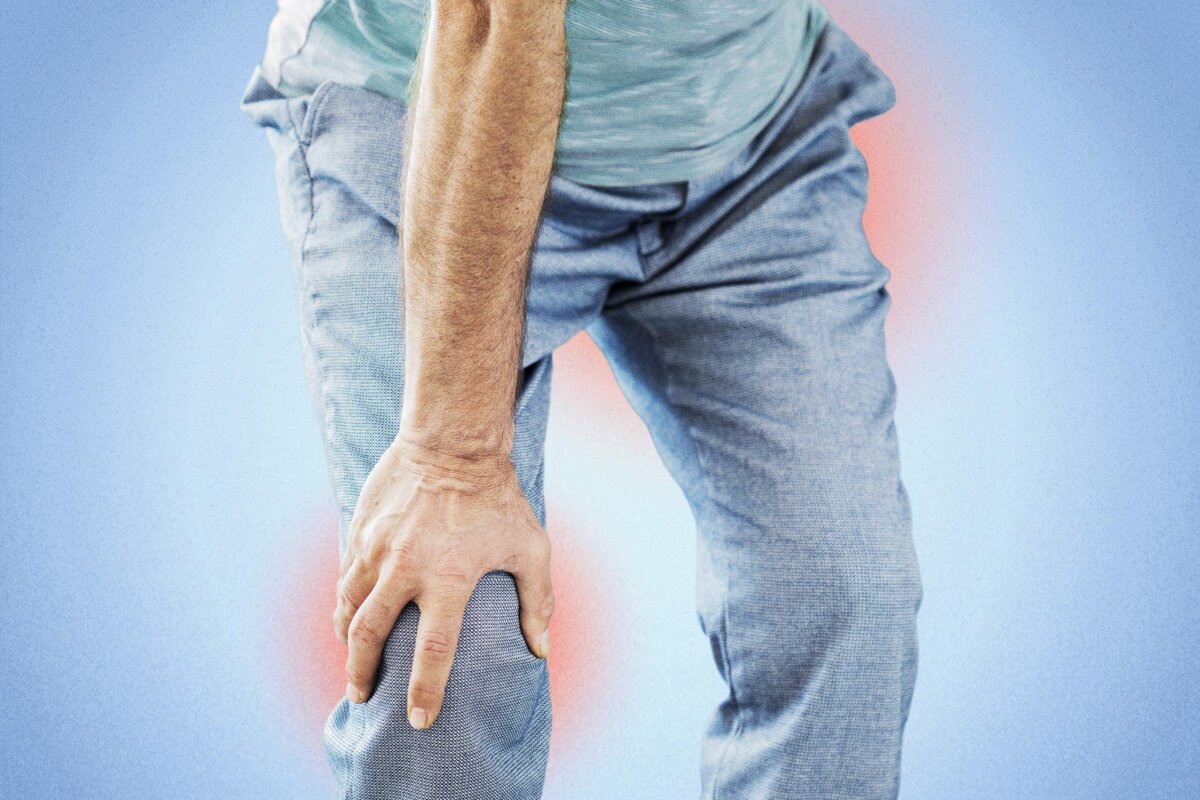
That nagging ache in your knee? The stretching isn’t helping, the new shoes aren’t doing much—and now your back’s acting up, too. Here’s the twist: The culprit might not be any of those joints—it could be your hip. And most people have no idea.
Smita Rao, a physical therapist and clinician-scientist, has seen it again and again: A patient walks in with a referral for knee or back pain, only to discover that the hip is the sneaky culprit.
In fact, nearly three out of four Americans miss this connection, according to a recent national survey by The Ohio State University Wexner Medical Center. Among more than 1,000 adults surveyed, 72 percent didn’t realize knee pain could stem from the hip. Nearly as many weren’t aware that hip problems could cause groin pain (69 percent) or thigh pain (66 percent).
“It’s almost never a one-joint problem. Our bodies work as a chain of joints, and the hip plays a huge role—even if it’s not the first place someone feels pain,” Rao, who directs the doctoral program in physical therapy at New York University, told The Epoch Times.
Why Hip Pain Is So Often Misread
Rao often hears patients describe dull aches in the outer thigh, sharp groin twinges, or pressure on the sit bone after long periods of sitting. At first, these may not seem like hip problems at all. However, in many cases, they are.
Because the hip connects to the pelvis, spine, and major muscle groups, pain from the hip often shows up somewhere else—a phenomenon called referred pain. Common spots include the front of the thigh, groin, lower back, or knee.
“All three major muscles that stabilize the knee originate in the pelvis,” Gene Aiello, a chiropractic physician in private practice, who sees this pattern often, told The Epoch Times. “At least five or six new patients a week come in with knee pain, but the source turns out to be the hip.”
The muscles in the hips also support the spine, especially the glutes and deep rotators. When they are weak or misfiring, the lower back often picks up the slack, leading to excess strain or injury.
And when the hip is irritated or misaligned because of arthritis, injury, or weakness, it disrupts pelvic function and sets off a chain reaction. For instance, tight hip flexors—the muscles that crease when you sit—pull the pelvis forward, while weak glutes and hamstrings can’t counterbalance. Over time, this misalignment adds stress to nearby joints, especially the lower back and knees.
Modern habits—especially prolonged sitting—only make things worse, Rao said.
“It causes the pelvis to tilt forward and compresses the hip joint,” she added. “I tell my students it’s like turning a one-bedroom into a studio—everything gets cramped. Our job in physical therapy is to clear that space, to bring it back to a one-bedroom.”
Because symptoms show up in such varied locations, hip dysfunction is often mistaken for other problems. It’s sometimes diagnosed as lumbar disc issues or muscle strain, which can delay the right care.
5 Signs It Could Be the Hip
People often don’t notice hip dysfunction until it interferes with how they move, Rao said—getting into a car, putting on shoes, or trying to sit cross-legged. These everyday motions involve bending, standing, or shifting weight, which are all powered by the hips.
Yet many people delay treatment. In the Ohio State survey, 40 percent said they try to “push through” unexplained pain, while 52 percent turn to over-the-counter medications rather than seeking evaluation.
According to Rao and Aiello, here are five signs your hip may be the hidden source of pain:
- Aching in the Knee or Groin After Walking or Sitting Too Long: Pain that shows up after long walks or car rides may point to instability or compression in the hip joint.
- Pain When Bending Over to Put On Shoes: This position compresses the front of the hip, a common trigger for early arthritis or impingement—a pinching of the hip joint.
- Pain When Getting Out of a Car or Rising From a Chair: These transitions recruit multiple hip and pelvic muscles. When the joint is weak or restricted, pain often surfaces elsewhere.
- Pain That Worsens at Night or When Lying on 1 Side: Inflammation can increase pressure in resting positions and disrupt sleep, a sign of deeper joint involvement.
- Lack of Results From Other Treatments: If approaches aimed at your knee or back haven’t helped, it may be time to assess the hip.
Treating the Real Problem
People tend to recognize obvious signs—such as clicking or catching in the hip—but ignore subtler symptoms, such as stiffness after sitting or pain while bending over.
Untreated hip issues can speed up cartilage loss, worsen arthritis, and strain nearby structures such as the labrum, the ring of cartilage that helps stabilize the joint. Over time, this can reduce mobility and lead to more invasive procedures such as joint replacement.
“We often get 30 to 45 minutes to evaluate how everything’s working together, not just where it hurts,” Rao said. “Part of that process is figuring out if this symptom is related to something else I’m seeing in the body.”
A thorough assessment may include movement testing, hands-on evaluation, and imaging such as X-rays or MRI to look for arthritis, tears, or compression within the joints.
For some patients, it may mean considering a hip replacement if the damage is too advanced for other treatment.
“Although hip replacement surgery may sound daunting, it’s actually one of the easiest procedures to recover from,” said Dr. Matthew Beal, a physician and associate professor of orthopedic surgery at Ohio State College of Medicine. “Getting up and walking after the surgery can serve as ample physical therapy for most patients.”
Keeping Your Hips Healthy
Even if you’re not in pain, there’s plenty you can do to prevent problems or slow early dysfunction. While some people are naturally more prone to impingement because of anatomy, most risk factors can be improved with better posture, flexibility, strength, and daily movement habits, Rao said.
“The key is building stability and mobility at the same time,” Aiello said.
A regular walking routine, he noted, is a solid foundation.
If your hips feel tight in the front—like that “one-bedroom turned into a studio,” Rao said, start by creating more space. Simple, consistent movement can help restore balance and ease strain.
Both experts offered key tips to begin keeping your hips strong and pain-free.
Do Daily Pelvic Tilts
Stand or lie down with feet hip-width apart and knees slightly soft. Gently tuck your tailbone under by engaging your lower abs and glutes, flattening your lower back. This subtle move resets pelvic alignment and helps open space at the front of the hip, especially if you sit a lot.
Stretch Your Hip Flexors
To counteract the shortening that happens from prolonged sitting, try a half-kneeling lunge or a standing hip flexor stretch. Keep your torso upright and gently shift your weight forward until you feel a stretch in the front of the hip.
Strengthen Your Glutes and Abductors
Do exercises such as glute bridges, side leg lifts, or clamshells a few times a week.
These moves help stabilize the pelvis and reduce strain on the hips and knees, especially during walking or standing.
Take Regular Movement Breaks
Every hour or so, stand up and move.
Try simple motions such as hula-hooping your hips, walking around the room, or holding a Warrior II pose to re-engage the hip and core muscles that get sleepy when you sit too long.
“This is about befriending your body,” Rao said. “If something feels off, don’t ignore it. Reach out to someone with a movement background who can help you get to the root.”