



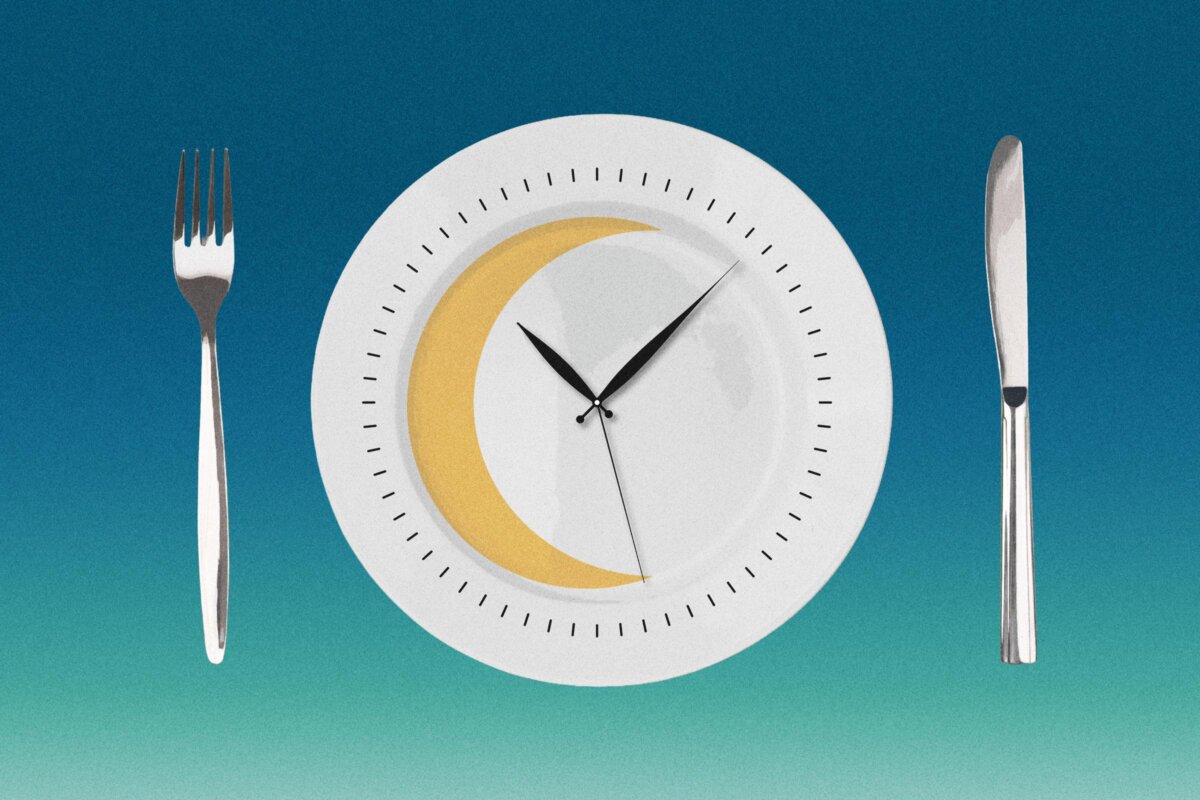
If you’re struggling to lose weight, it might not be about eating less, it could be about eating earlier—and dimming the lights.
No food three hours before bed and dimming lights in the evening may improve heart health, a new study conducted in at-risk older adults found.
“The key takeaway is that a simple, sustainable change in meal timing without restrictive dieting or calorie counting has the potential to meaningfully improve cardiovascular and metabolic health in middle-aged and older adults,” Dr. Daniela Grimaldi, research associate professor of neurology in the division of sleep medicine at Northwestern University Feinberg School of Medicine and the study’s first author, told The Epoch Times.
Crucially, participants didn’t change what they ate or the amount of calories they had.
“When we eat relative to sleep may be just as important as what or how much we eat,” Grimaldi said.
What the Study Found
The trial, published in February in the journal Arteriosclerosis, Thrombosis, and Vascular Biology, involved 39 overweight or obese adults aged 36 to 75. One group extended their overnight fast to between 13 and 16 hours—roughly two to three hours longer than their usual routine. Both groups dimmed their lights three hours before bed.
The intervention group showed the most significant improvements, including better daytime blood sugar control and a more natural day-night pattern of heart activity.
Adherence was nearly 90 percent, suggesting that the approach is practical enough for people to actually stick to.
Why Timing Matters
The science comes down to the body’s internal clock. During sleep, the body naturally lowers its energy use, reduces blood sugar consumption, and calms the nervous system. Eating too close to bedtime—particularly in the two to three hours before sleep, when melatonin levels begin to rise—can disrupt these processes and impair how the body handles food, leading to weight gain, insulin problems, and difficulty controlling blood sugar.
Supporting this idea, research has shown that eating food late relative to a fixed bedtime, as opposed to eating earlier, is linked to weight gain, insulin resistance, and poorer glucose control—likely because it disrupts the normal autonomic and metabolic functions associated with sleep.
Researchers noted that the two to three hours before bedtime represent a “physiologically critical” period for metabolism as melatonin levels begin rising. They pointed to evidence indicating that eating during periods of elevated melatonin negatively affects metabolic function.
Grimaldi said extending an overnight fast by about three hours and finishing your last meal at least three hours before bedtime can help lower blood pressure and heart rate during sleep and improve how your blood pressure naturally dips at night, along with heart rate.
Because sleep schedules vary from person to person, the researchers designed the intervention around each participant’s individual sleep timing rather than a fixed clock hour, which may help explain both the strong adherence and the meaningful results.
Grimaldi noted that the study was limited in its ability to draw definitive conclusions about sex differences because the majority of participants were women. However, they did not observe any obvious patterns, “suggesting differential responses between men and women” in their analyses adjusted for sex.
Timed Eating Is Not for Everyone
Not eating during sleep and restricting food hours before bed to increase fasting time overnight is a creative way to extend the total fasting time, while reducing the time we are tempted to eat, Hope Barkoukis, chair of the nutrition department for Case Western Reserve University in Cleveland, who was not involved in the study, told The Epoch Times.
She emphasized that the longer a person abstains from eating, the greater the potential benefit, pointing to research showing that an extended fasting window improves blood sugar control, decreases blood pressure, and reduces overall inflammation.
However, Barkoukis said that fasting may not be healthy for everyone.
“I always recommend consulting with your family physician; but anyone who is pregnant, nursing, undergoing treatments for cancer, [or] immune-compromised—all risky—should not be focused on fasting as a dietary pattern, regardless of the amount of total time,” she said.
“[The] key is to focus on an overall dietary pattern which emphasizes whole foods, as unprocessed as possible, [and] very nutrient dense. This means that per calorie, the food has a good amount of nutrients in it; vitamins, minerals, proteins, complex carbs, [and] healthy fats such as omega 3s.”
She also encourages the use of a wide variety of lean animal proteins, plant proteins, deeply colored vegetables, whole fruits, whole-grain breads and carbohydrates, and dietary fiber.