

Bjorn Rieder wasn’t raised in a religious home or around religious influences, and the last thing he expected was to become religious himself.
In fact, Rieder spent much of his younger life viewing faith with skepticism. He says he even studied religious philosophy at university mainly to argue against religion.
“I sort of came in with this negative bias of trying to prove religions wrong,” he told The Epoch Times. “But then after taking religious philosophy, I realized that there were very, very good arguments for it.”
Rieder, 38, is part of a younger generation showing some signs of greater religious engagement than older age groups, prompting questions about whether Canada’s long-term trend toward secularism may be changing. A 2025 survey by Angus Reid and Cardus suggests that a higher proportion of Canadians under 44 consider themselves “religiously committed” than those over 44.
Trend
Rieder had long been interested in mythology, spirituality, and religion, including through his introduction to the subjects in the Waldorf education system. But his life took an unexpected turn toward faith after he entered a year-long addiction recovery program in January 2025.
As he watched others go through recovery, Rieder began noticing what he saw as a recurring theme among those who were thriving: faith and spirituality.
At the same time, he noticed several public figures he respected embracing Christianity. Falling in love with a Christian woman was, as he put it, “the final straw.”
The relationship didn’t last, but Rieder’s conversion did. He was baptized in April 2026 and began attending an Anglican cathedral near his home.
“I like the organ, I like the Eucharist, I like the robes, I like the incense. I just like the traditional liturgy,” he said. “I didn’t think I would like that.”
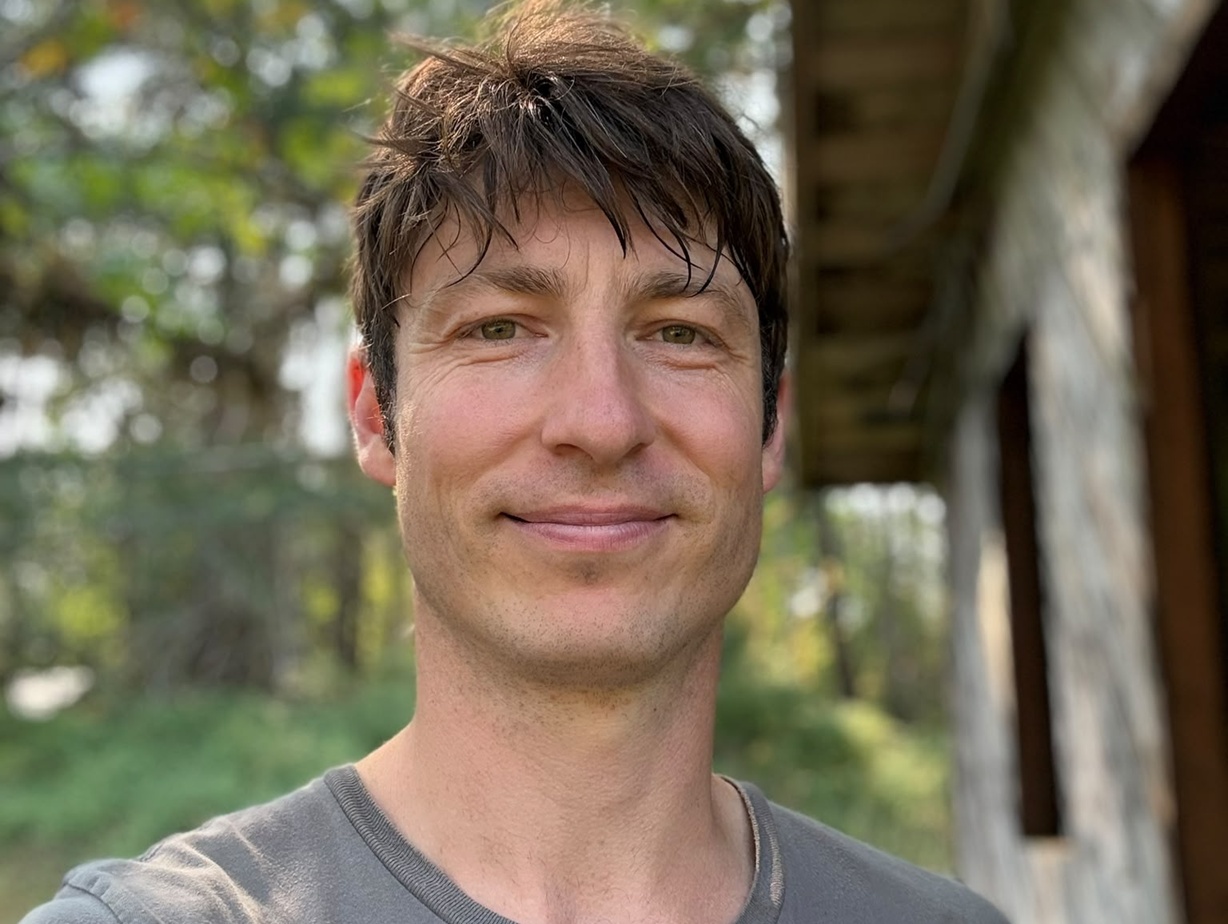 Bjorn Rieder says he grew interested in religion after seeing its positive impact on people’s lives. (Courtesy of Bjorn Rieder)
Older polls reflect the more familiar generational pattern. Pew Research Center’s 2018 international religion survey found that 30 percent of Canadians aged 40 and older prayed daily, compared with 16 percent of those under 40.
Ray Pennings, executive vice president and co-founder of Cardus, cautioned that newer polling is not decisive enough to indicate a broad religious revival among younger generations. But he said the numbers suggest younger Canadians may be moving differently from older generations.
“There are definitely more young people who are attending places of worship and taking faith, considering faith seriously at this time,” he told The Epoch Times.
David Haskell, a social scientist and associate professor at Wilfrid Laurier University, said he has noticed an increase in young men showing interest in more traditional forms of Christianity, including some who were not raised in religious homes.
An April 2026 poll by Gallup suggests that while there is a higher proportion of both U.S. men and women aged 18–29 who have a religious affiliation compared to the mid-2010s, the proportion is higher among men (63 percent) than women (60 percent).
“Just in the last two years, especially after COVID, I have had many young men coming up to me who had not been raised in any faith and saying that they have embraced conservative Christianity,” Haskell told The Epoch Times.
“I don’t think that we’re seeing a massive revival here, and none of the data say we are either,” he said, adding that he does see “a noticeable increase among young men who are gravitating to traditional conservative Christianity.”
Haskell said the interest differs from previous periods of renewed religiosity, such as in the 1980s and 1990s, which he described as more emotionally centred. Younger people today, he said, are often looking for “faiths that are rigorous, that are very intellectual.”
Haskell pointed particularly to Reformed Protestantism, conservative Catholicism, and Eastern Orthodoxy as traditions attracting increasing numbers of young men due to their established doctrine and emphasis on personal discipline.
Young men in particular are attracted to a message that urges them to “stand strong, speak the truth boldly,” he said.
This interpretation overlaps with aspects of Rieder’s own experience. Rieder said he shares concerns expressed by figures he admires, including Canadian psychologist and academic Jordan Peterson, about postmodernism and a lack of meaning in contemporary life.
Although Rieder said roughly 70 percent of his church’s congregation consists of older adults, he has several younger male friends who’ve expressed an interest in religion. He was also baptized alongside a 25-year-old man who, like him, had not been raised in a religious home.
For Rieder, religion is less about making life easier than giving him a more demanding framework for living.
“I feel like it’s voluntarily adopting a more difficult set of problems,” he said, before reconsidering: “a more worthwhile set of problems.”
Haskell echoed this. “It is absolutely the case that men are actually looking for a framework that will allow them to be more disciplined, to work harder,” he said.
Searching for Truth
Johnathan Ross arrived at religion by a different route than Rieder, but through a similar search for truth.

Ross, 33, grew up in Sharon, Ont., north of Toronto, in a culturally Catholic family where religion was not an important part of daily life.
As a teenager and into his 20s, he began exploring a wide range of religions and spiritual traditions, and eventually joined the Church of Jesus Christ of Latter-day Saints.
“I thought, you know what? The best way to learn about a religion is to experience it, so why not learn about it,” Ross told The Epoch Times.
He spent roughly a year studying the faith before being baptized into the church in Ontario in 2019.
“I just ended up going to church one day, and then I felt strongly that this is where I belonged, and stayed there,” he said.
For Ross, the search for religion has largely been a search for meaning and purpose.
“If there was no God, then there’s no purpose to us. There needs to be a purpose to everything,” he said.
Ross said being part of a church has also given him a sense of community that often felt lacking.
“I just feel like I am a better person because of the church. That I am a lot happier because of my beliefs,” he said.
Returning to Community
While much of the attention around renewed interest in religion has focused on young men, Pennings said the gender picture is more complicated.
“Actually, the number of young men and young women who are seeking out faith are relatively similar,” he said.
“What we have is more young women who were born and raised in faith communities leaving, so that nets out to make it look like more men are coming, but actually, the numbers that are coming seem to be relatively similar.”
For Donna McCullough, a return to faith was about a growing desire for structure, community, and a better life for her family.
McCullough, 44, was born and raised in Oregon and moved to B.C. in 2022. She grew up attending church and enjoyed it, but stopped practising religion after high school and remained non-religious for roughly 15 years.
That all changed after she had her son.
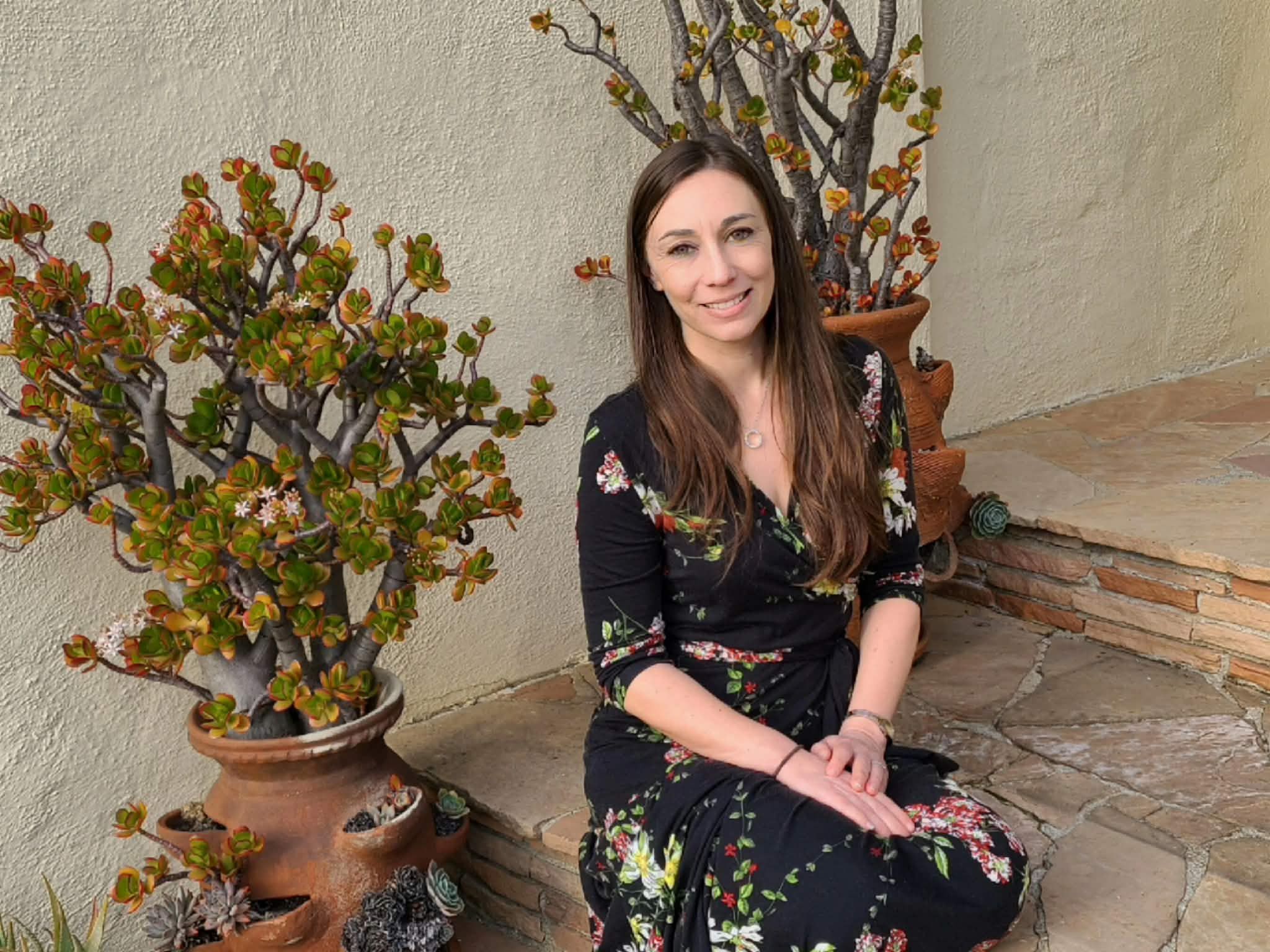 Donna McCullough said that coming back to church was about finding peace and community. (Courtesy of Donna McCullough)
“I was at the point where I was really craving that peace again,” McCullough said.
She said she became more determined through discussions with her future husband, who actively attended church.
“It was the structure, it was the community, it was that presence that you feel when you can congregate with other people who are there,” she said. “I was really craving that, and I wanted that influence in my life. I wanted that influence in my son’s life.”
McCullough said the desire for community is growing stronger as it becomes a smaller part of people’s daily lives.
“We’re finally in the age where we are inundated so much with non-human contact all the time,” she said, adding that many yearn “for something that is long-lasting and deep and real.”
Rieder, Ross, and McCullough all arrived at faith in unique ways.
“We need to feel included and loved and part of something bigger than us,” McCullough said.
Pennings said that beneath the different reasons people give for exploring faith, he sees a deeper search taking place.
“They’re looking for the transcendent,” he said. “They’re looking for the mystery. They’re looking for purpose.”
 Friends Read Free
Copy
Facebook
Tweet
Friends Read Free
Copy
Facebook
Tweet