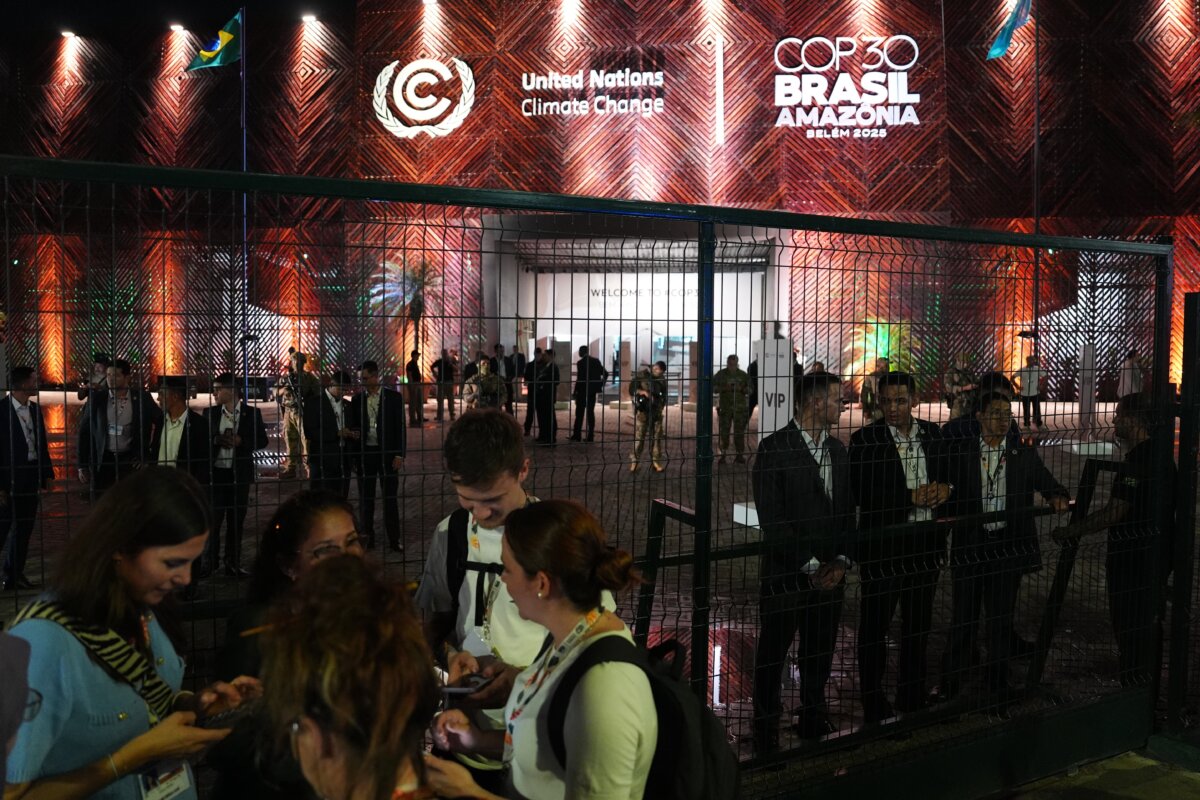

Dozens of indigenous protesters forced their way into the United Nations compound hosting the COP30 climate summit in Brazil on Tuesday, clashing with security guards at the entrance.
The protesters demanded better protection against deforestation and carried flags with slogans calling for land rights or signs saying, “Our land is not for sale.”
Thousands of delegates and leaders from countries around the world are attending this year’s climate summit, which opened Monday in the Amazon city of Belem.
“We can’t eat money,” said Nato, an Indigenous leader from the Tupinamba community, who uses one name. “We want our lands free from agribusiness, oil exploration, illegal miners, and illegal loggers.”
Brazilian President Luiz Inácio Lula da Silva has championed Indigenous communities as key players in this year’s summit, which opened Monday following preliminary events.
The U.N. is responsible for security within the compound, with guards allowing delegates to exit the venue once the protesters were removed.
Security guards used tables to barricade the entrance after pushing the protesters back and confiscating several long sticks, according to witness accounts.
“Earlier this evening, a group of protesters breached security barriers at the main entrance to the COP, causing minor injuries to two security staff, and minor damage to the venue,” a spokesperson said in a statement.
“Brazilian and U.N. security personnel took protective actions to secure the venue, following all established security protocols. Brazilian and U.N. authorities are investigating the incident. The venue is fully secured, and COP negotiations continue.”
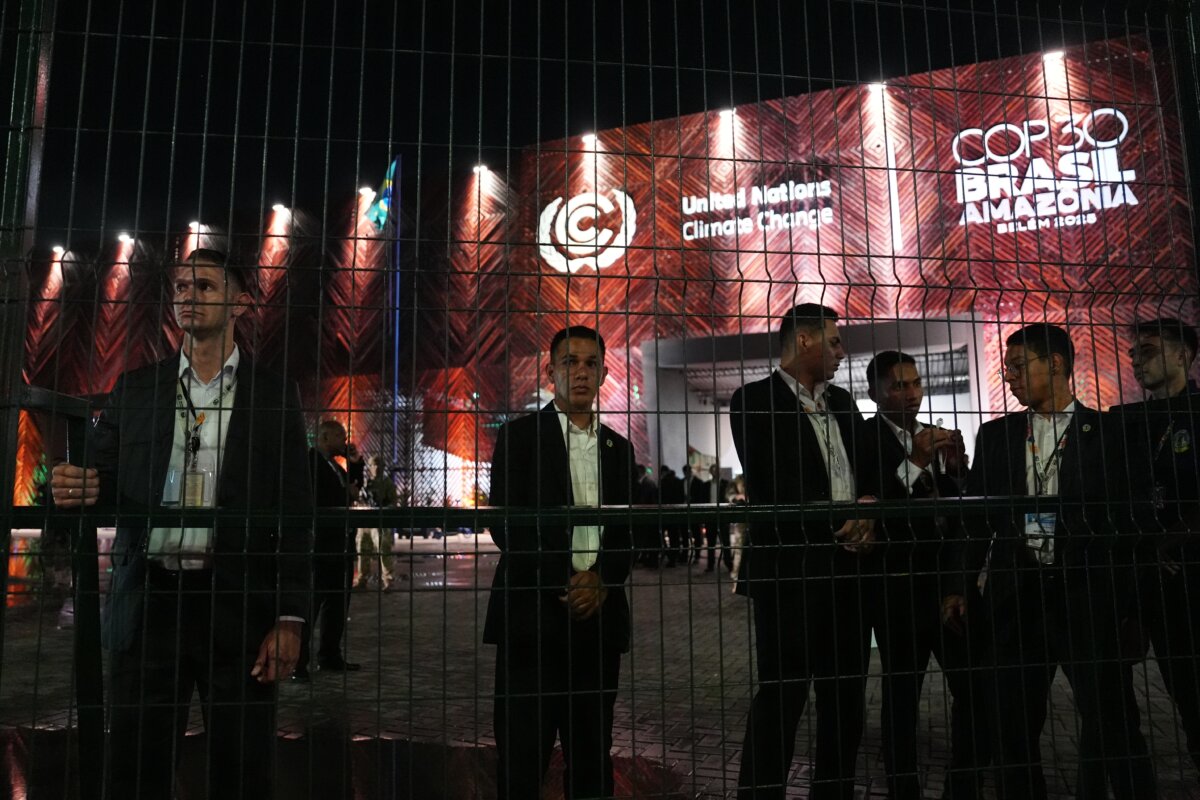
The protesters who made it into the building were part of a group of hundreds who marched to the venue.
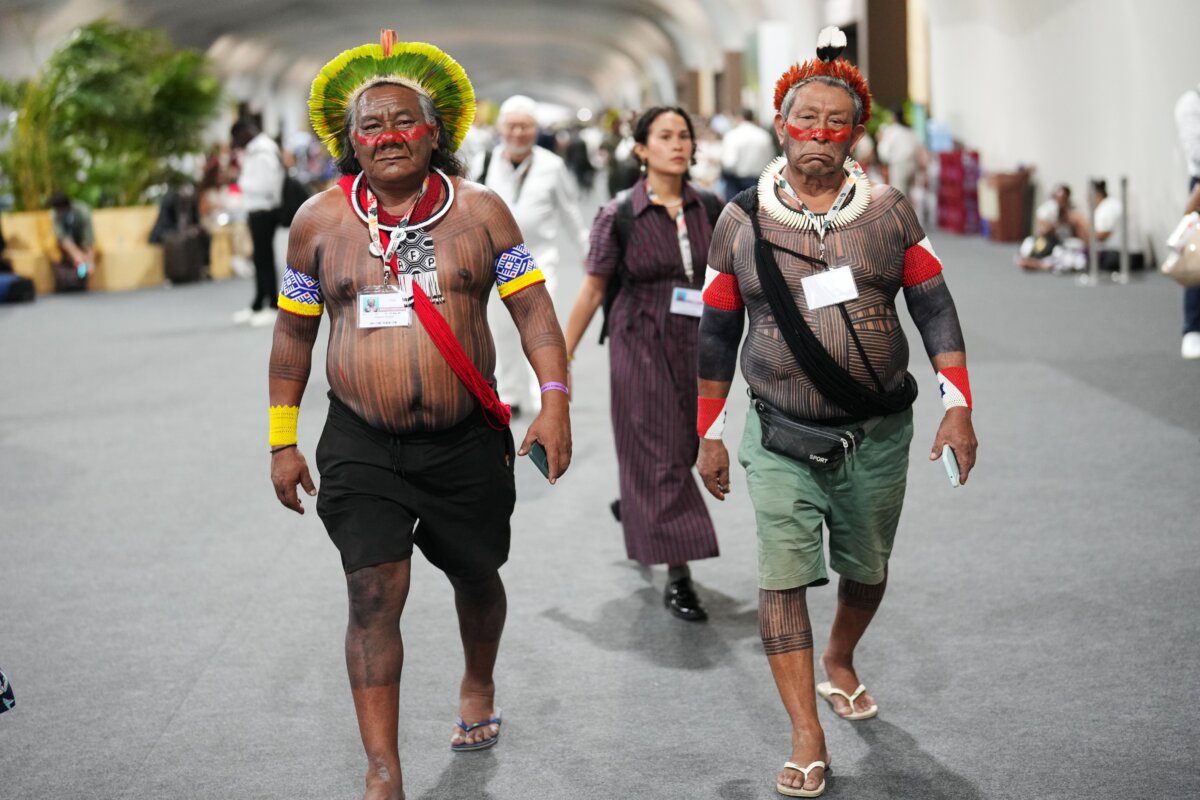
Agustin Ocaña, mobilization coordinator for youth with the Global Youth Coalition, told The Associated Press he was outside as two groups of people—some with yellow shirts and some in the garb of Indigenous communities—walked towards the venue, mostly dancing and chanting at first.
Ocaña said some of the people were chanting “They cannot decide for us without us,” referring to tensions over the participation of Indigenous people in the conference.
‘A Whole New City’
Ocaña said some Indigenous communities have been frustrated watching resources pour into building “a whole new city” for the summit when many people are in need of education and health elsewhere, and feel that funds could be directed towards protecting forests elsewhere.
“They were not doing this because they were bad people. They’re desperate trying to protect their land, the river,” Ocaña said.
A boat carrying around 60 Indigenous leaders landed in Belem a day before the summit opened, after making a weeks-long voyage from a glacier in the Andes to Brazil’s tropical coast.
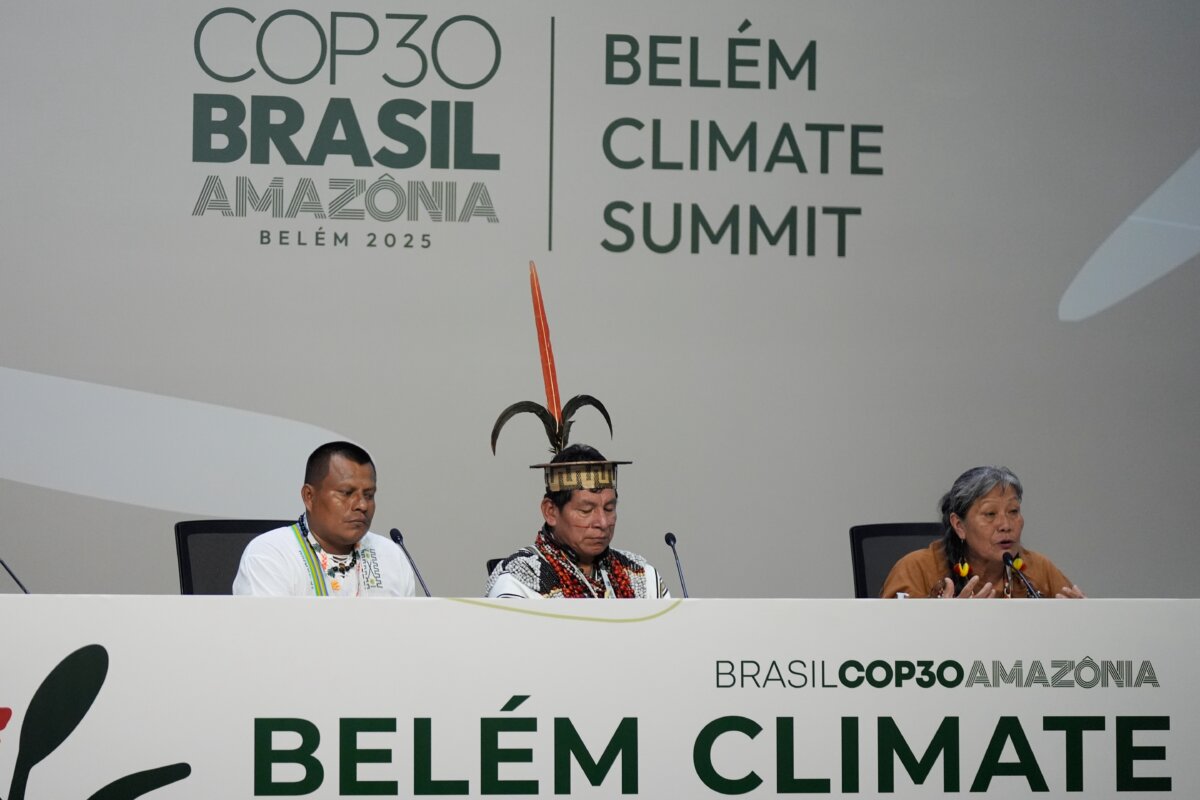
“We want to achieve more than just guaranteeing money or financing,” said Lucia Ixchiu, an Indigenous K’iche from Guatemala, who was among the passengers. “We want to reach a consensus where Indigenous territories are no longer sacrificed.”
“It’s a dream and a goal, but we know there are many interests at play,” she told Reuters while onboard the boat.
Their main goal was demanding a greater say in how their territories are managed, including mining, oil drilling, and logging.
A report last week found that large sections of the roughly one third of the Amazon rainforest occupied by Indigenous or local communities were under threat.
Around 17 percent of those spaces now face encroachment through drilling for fossil fuels, as well as mining, and logging, said the report by the Earth Insight and the Global Alliance of Territorial Communities.
Worldwide, at least 2,253 environmental defenders were killed or disappeared between 2012 and 2024, according to Global Witness, with the majority of those deaths in Latin America, in the nine countries that share the Amazon rainforest, as well as Mexico.
“Not everything has to revolve around money, Mother Earth isn’t a business,” Ixchiu said. “There are other ways of relating with biodiversity and life on the planet that Indigenous populations have been practicing for over 12,000 years.”
“This is the COP of the Amazon because we are here, demanding and taking the places that we deserve,” she told reporters.
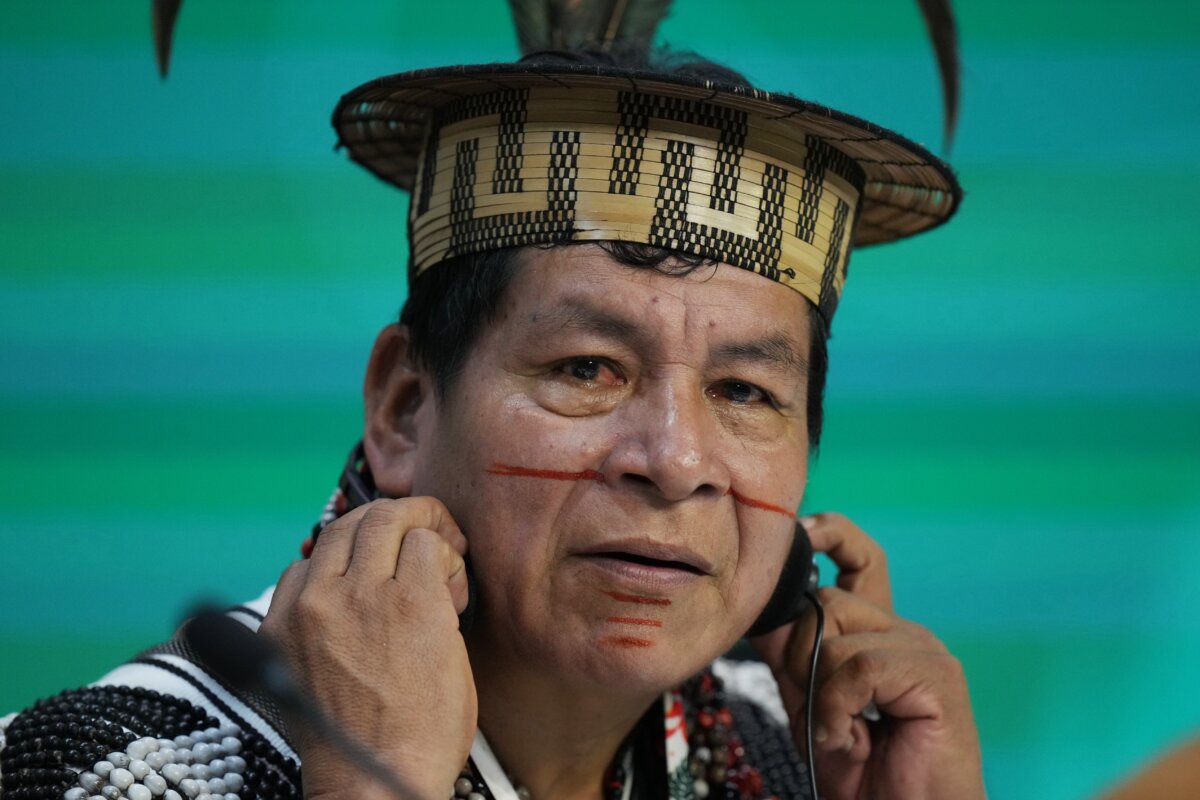
On their 30-day journey, the group stopped in Peru, Colombia, Ecuador, and Brazil to highlight challenges facing the different Amazonian communities.
COP is the annual meeting of the countries that have signed up to the U.N. Framework Convention on Climate Change (UNFCCC)—the treaty signed in 1992 in Rio de Janeiro committing the world to “avoid dangerous climate change” in unspecified ways.
The first summit took place in Berlin in 1995, and more than 190 nations have sent delegations of officials, ministers, and sometimes heads of state in recent years.
At Odds on ‘Net Zero’
While the framework of the summit enables international visibility for issues like tropical forest protection, COP discussions have centered heavily on greenhouse gas mitigation, “net zero” targets, carbon markets, and emissions reductions.
Many of the countries taking part are at odds on net zero targets, and the EU recently agreed to slightly softer targets for 2040 after several of their member states objected to the original aims, saying it would cause economic harm and effectively “deindustrialize” their nations.
The United States has not sent a delegation to this year’s summit, and President Donald Trump has expressed skepticism about the concept of man-made climate change to the U.N., labeling it “a hoax” and a “con job.”
Reuters and The Associated Press contributed to this report.
 Friends Read Free
Copy
Facebook
Tweet
Friends Read Free
Copy
Facebook
Tweet