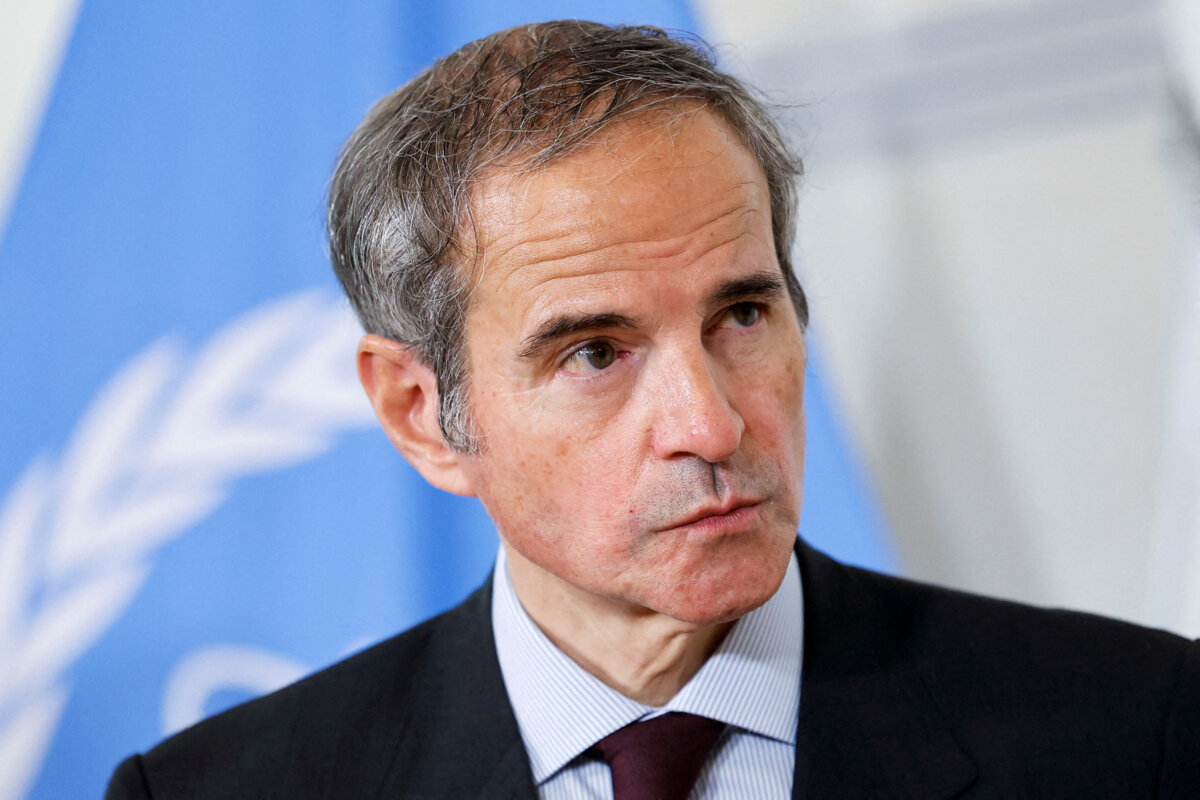

The head of the U.N. nuclear watchdog said on Wednesday that inspectors will eventually return to Iranian nuclear sites, dismissing Tehran’s suggestions to the contrary and describing inspections as a fundamental requirement of the U.S.–Iran preliminary agreement aimed at ending the conflict between the two countries.
Speaking to reporters at Japan’s Fukushima Daiichi nuclear power plant on June 24, International Atomic Energy Agency (IAEA) Director-General Mariano Grossi said inspections of Iran’s nuclear facilities were inevitable under the memorandum of understanding signed by Washington and Tehran.
“I can understand political statements, they are part of the reality, but the fundamental thing I would like to remind you and draw your attention to is that there has been a memorandum of understanding, signed by both presidents,” Grossi said.
The remarks placed the U.N. nuclear chief squarely behind U.S. claims that Iran has agreed to renewed international oversight of its nuclear program, even as Iranian officials have denied that inspectors will be granted access to facilities damaged in last year’s joint U.S.–Israeli bombing campaign targeting Iran’s uranium enrichment capability.
The IAEA plays a central role in verifying the status of Iran’s nuclear program and stockpile of highly enriched uranium.
A joint U.S.–Israeli military operation dubbed Midnight Hammer struck key Iranian nuclear facilities last year, with President Donald Trump repeatedly saying the attacks reduced Iran’s nuclear material to “nuclear dust.”
Since then, Tehran has blocked IAEA access to several enrichment-related sites, fueling uncertainty about the condition and location of portions of its uranium stockpile.
Iran insists its nuclear program is entirely peaceful, although it remains the only non-nuclear-weapons state enriching uranium to 60 percent purity, a level close to weapons-grade material.
Grossi: Inspections ‘Going to Happen’
Speaking to reporters in Japan on Wednesday, Grossi said the U.S.–Iran memorandum explicitly assigns the IAEA responsibility for monitoring Tehran’s nuclear activities.
He said the memorandum “says explicitly that the nuclear activities that are going to be carried out with regards to the nuclear material facilities will be supervised by the IAEA—in all letters.”
“Obviously, to do that, we will have to inspect,” he said. “Whether this happens the day after tomorrow or in one week or in 10 days, it’s important, but not essential. This is going to happen.”
Under the memorandum, both sides agreed that, at a minimum, Iran’s stockpile of highly enriched uranium would be downblended on site under IAEA supervision—and that Tehran would commit to never “procure or develop nuclear weapons.”
Grossi’s comments came after several days of conflicting statements from U.S. and Iranian officials over what exactly Tehran agreed to during negotiations in Switzerland.
U.S. Vice President JD Vance, who attended talks at the Bürgenstock resort near Lake Lucerne over the weekend, said Monday that Iran had accepted the return of IAEA inspectors.
“The Iranians have agreed to invite IAEA inspectors back into their country,” Vance told reporters.
“That is a major milestone for the American people, and the first step in permanently denuclearizing or permanently ending a nuclear weapons program in Iran.”
Vance did not specifically state whether inspectors would be granted access to facilities damaged during the conflict.
Iran Rejects Access to Bombed Sites
Following Vance’s remarks on renewed IAEA inspections, Iranian officials issued statements suggesting a contrary position.
Speaking at a weekly news conference in Tehran on June 23, Foreign Ministry spokesman Esmail Baghaei said Iran had neither met with Grossi during the Switzerland talks nor agreed to inspections of facilities damaged in U.S. and Israeli strikes.
“The short answer to both questions is no,” Baghaei said.
“We have no plans for the agency to inspect Iran’s damaged nuclear facilities resulting from the military aggression of the United States and the Zionist regime. Fundamentally, there is no framework or protocol for such inspections.”
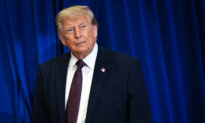
Trump rejected those assertions, insisting Iran had accepted robust international monitoring as part of the interim agreement.
“They’re wrong, they know they’re wrong,” Trump told reporters on Tuesday as he arrived in Pennsylvania.
“If they were right, I’d cancel the meetings right now.”
Earlier Tuesday, Trump wrote on Truth Social that Iran had “fully and completely agreed to highest level Nuclear inspections long into the future,” adding that there would be no further negotiations without such commitments.
Trump also hinted at renewed attacks against Iran, telling reporters in the Oval Office on Tuesday that if Tehran “doesn’t live up to their agreement, or if they’re not behaving, I will do what I have to do.”
 Friends Read Free
Copy
Facebook
Tweet
Friends Read Free
Copy
Facebook
Tweet