
More than a year of strained relations between New Zealand and the Cook Islands appears to be at an end with the signing of a new defense and security declaration in Rarotonga.
The Pacific Island nation is part of the Realm of New Zealand, which means that it should consult the New Zealand government before making decisions regarding foreign relations with other countries.
But a year ago it signed a comprehensive strategic partnership with Beijing without seeking New Zealand’s input.
The new deal signals that the Cook Islands has rethought its push for independence from the country.
Aside from the commitment to joint defense and security interests, it will now “engage with New Zealand on any requests for defence and security before engagement with other partners” and only “discharge its foreign policy and diplomatic relationships subject to the constitutional limits of free association.”
Crucially, the new agreement commits both parties to “[upholding] the defence and security interests of New Zealand, the Cook Islands and the Realm as a whole”—something that Wellington is likely to see as incompatible with a close relationship with the Chinese Communist Party (CCP).
The Cook Islands operates in free association with New Zealand, governing its own affairs while New Zealand provides assistance with foreign affairs, disaster relief, and defense. Cook Islanders are New Zealand citizens, and there is a significant diaspora in the country.
But in February 2025, Cook Islands Prime Minister Mark Brown flew to Beijing, where he met with CCP leader Xi Jinping and emerged with a $4 million grant and a partnership focusing on economic, infrastructure, and maritime cooperation.
Beijing Ties Cause Alarm
That caused alarm in Wellington, Canberra, and Washington, because although the agreement did not explicitly address security and defense, Beijing has a well-established pattern of using financial incentives to open doors in the Pacific, with the next step usually the establishment of a local Chinese police presence—an example being the Solomon Islands, where uniformed CCP police officers are running a “village surveillance” model.
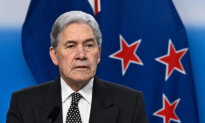
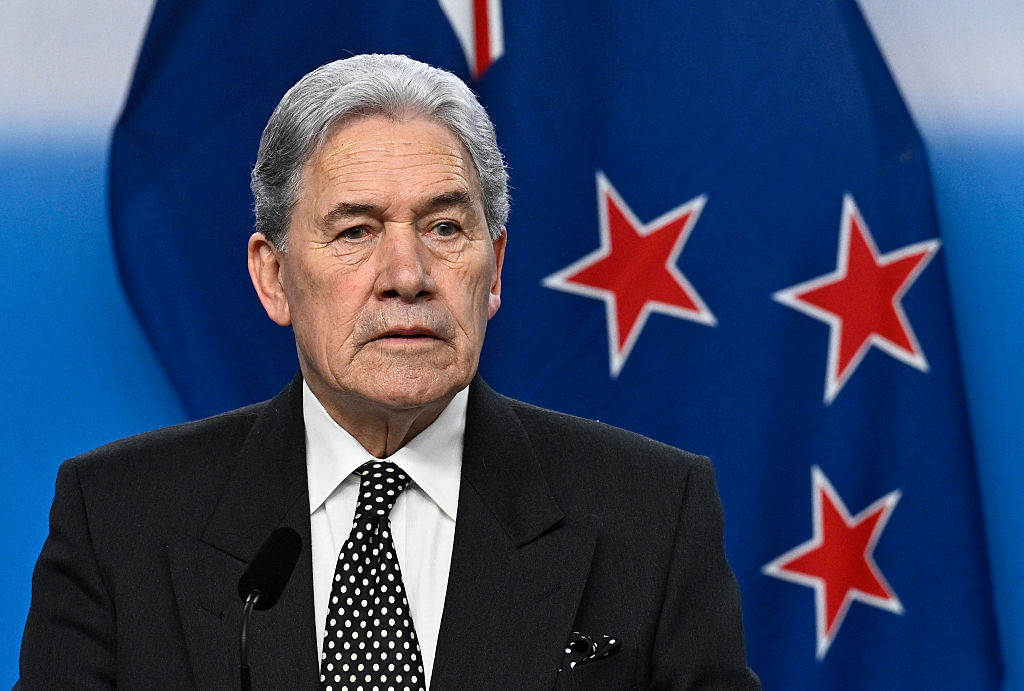
Although Brown, on returning to Rarotonga, assured local reporters that its traditional partner had “nothing to be concerned about,” New Zealand Foreign Minister Winston Peters disagreed and immediately froze $18.2 million in foreign aid—the entire support package for 2025–2026.
Over the previous three years, New Zealand had provided nearly $200 million in aid, which Peters said was based on a “high-trust relationship.” Peters and fellow officials also boycotted the Cook Islands’ 60th anniversary celebrations over the issue.
Other decisions taken by the government in Rarotonga had also caused concern. Brown’s proposal to create separate Cook Islands passports also strained ties and sparked a backlash from his own citizens. However, he later changed his mind.
Allowing Russia to sail its “shadow fleet” under a Cook Islands flag is an ongoing cause of irritation to the United States and its allies, and the revelation that it was considering allowing Beijing to mine critical minerals from the seabed within its exclusive economic zone—one of the world’s largest—caused both environmental and defense concerns, since critical minerals are a key component in modern weapons systems.
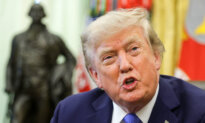
Safeguarding U.S. access to them is a key concern of the Trump administration.
New Agreement Sidelines Beijing Deal
The idea of a new passport for Cook citizens appears to be shuttered; the new deal states that the Pacific nation will “uphold the fundamental values upon which New Zealand citizenship is based.”
The commitment to consult New Zealand first before making foreign policy decisions is repeated in different words across several clauses, such as those that commit the Cooks to regular formal discussions on security and defense and to “providing information to New Zealand on defence or security matters … to the fullest extent possible.”
When announcing the agreement, Peters underlined this return to normalcy by noting that both parties were committed to not entering into agreements that may “undermine the commitments” set out in the declaration.
“The strategic environment we face is more complex and contested today than at any other point since New Zealand and the Cook Islands formed our free association relationship in 1965,” Peters said in a statement.
“In that context, it’s vital that New Zealand and the Cook Islands are clear, with one another and third parties, about the nature of our special relationship and our responsibilities to one another in the defence and security domains.”
Although he avoided referring to past disputes, Brown said at the signing ceremony that the declaration was “a new foundation built on clarity, on mutual acknowledgment and on the shared belief that two nations, different in size but equal in dignity, can build something genuinely worth investing in.”
“Good relationships, like good navigation, require periodic reckoning and honest reading of where we are so that we can chart the course ahead with confidence,” he said. “That is what both our governments have done.”
 Friends Read Free
Copy
Facebook
Tweet
Friends Read Free
Copy
Facebook
Tweet