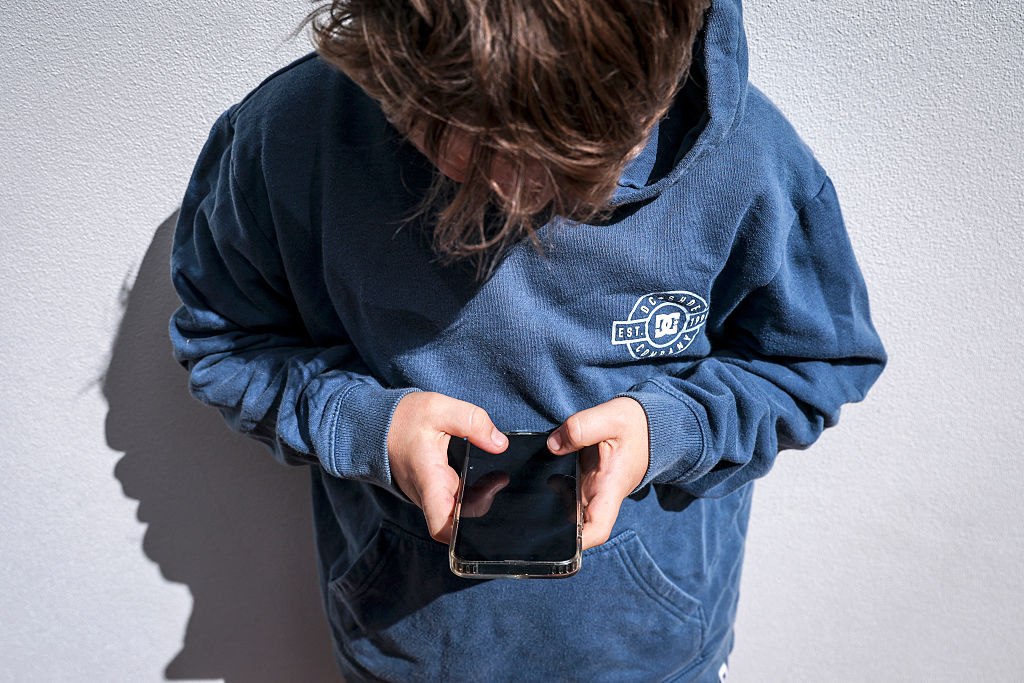

The New Zealand government is facing questions over a proposed ban on social media use by under-16s, after a department began recruiting staff for a potential enforcement regime before legislation has been introduced.
The Free Speech Union (FSU) says a job advertisement from the Department of Internal Affairs, which would administer the ban, suggests preparatory work is already underway.
An advertisement for a Programme Implementation Director says the position will “lead the development and design of an operational model for a potential new regime,” including “the establishment of the Phase One operational service model for the under-16 social media restrictions.”
Rather than introducing a government bill, the National Party—governing in coalition with New Zealand First and ACT—is supporting a Private Member’s Bill, introduced by its MP Catherine Wedd that would impose such restrictions.
The FSU described the approach as “backwards policy-making.”
“Before Parliament has even seen a bill, the machinery to enforce it is already being built,” said FSU chief executive Jillaine Heather.
“That should concern anyone who believes in the democratic process and accountable government.”
Caution Against Haste
The Union said it supports efforts to protect children online but warns that rushed, pre-determined solutions risk doing more harm than good, arguing that broad prohibitions are often ineffective and easy to circumvent.
“We can acknowledge that there are real concerns about the impact of social media on young people, but acknowledging harm does not justify reaching for blunt, unproven tools,” Heather said.
“No country in the world has successfully implemented a social media ban for under-16s at scale. What we are seeing overseas is workarounds, overreach, and unintended consequences.”
The union also warned that enforcement mechanisms could affect adult users.
“Once you start building systems to verify age and control access, you are not just regulating children, you are reshaping the internet for everyone,” Heather said.
“Adults’ rights cannot become collateral damage in a policy aimed at children.”
The FSU called on the government to release detailed proposals and subject any legislation to full scrutiny.
In Australia, similar restrictions have already been widely bypassed by young users, raising serious questions about whether such policies achieve their stated aims. In response, the government recently tightened regulations further.
‘Half-Baked’ Policy: ACT
ACT has also criticised the proposal, despite backing a parliamentary inquiry into the issue.
ACT MP Parmjeet Parmar, who initiated the inquiry through the Education and Workforce Committee in 2025, said the resulting recommendations were “predetermined” and the policy “half-baked.”
“ACT supported this inquiry because Parliament should clearly define the problem, test the evidence, and consider the real-world consequences before rushing into regulation,” Parmar said.
“Instead, it has moved toward sweeping recommendations without adequate analysis.”
The party opposes measures that would require users to provide identification to access social media platforms, citing privacy concerns.
“ACT does not support any move that forces New Zealanders to hand over personal identification to social media companies. Protecting young people must not come at the cost of reduced privacy or increased state overreach,” he said.
It also raised concerns about suggestions that a future regulator could consider restrictions on Virtual Private Networks (VPNs), which it described as legitimate privacy tools.
Concerns Over Broad Definition and Enforcement Powers
The New Zealand Council for Civil Liberties also opposed the proposal, saying the Bill’s definition of social media is so wide it would potentially capture support groups and even email.
“The New Zealand Bill of Rights Act guarantees the right to freedom of expression … and this applies to people under the age of 16 too,” spokesperson Thomas Beagle said.
“They have the right to communicate with each other, their friends, and their family, and the modern reality is that they use social media to do so.”
While Wedd’s Bill takes a legislative approach to the ban, Education Minister Erica Stanford has indicated the government is also considering regulatory options.
After Australia introduced its under-16s ban legislation—which saw five million accounts closed in the early stages in December 2024—other countries have either introduced similar laws or are considering doing so, including those as disparate as Portugal, Slovenia, Spain, France, the UK, Germany, Poland, Austria, Canada, and Indonesia.
The Epoch Times has contacted Communications Minister Paul Goldsmith and Stanford to comment on the job advertisement but had not received a response at the time of publication.
 Friends Read Free
Copy
Facebook
Tweet
Friends Read Free
Copy
Facebook
Tweet