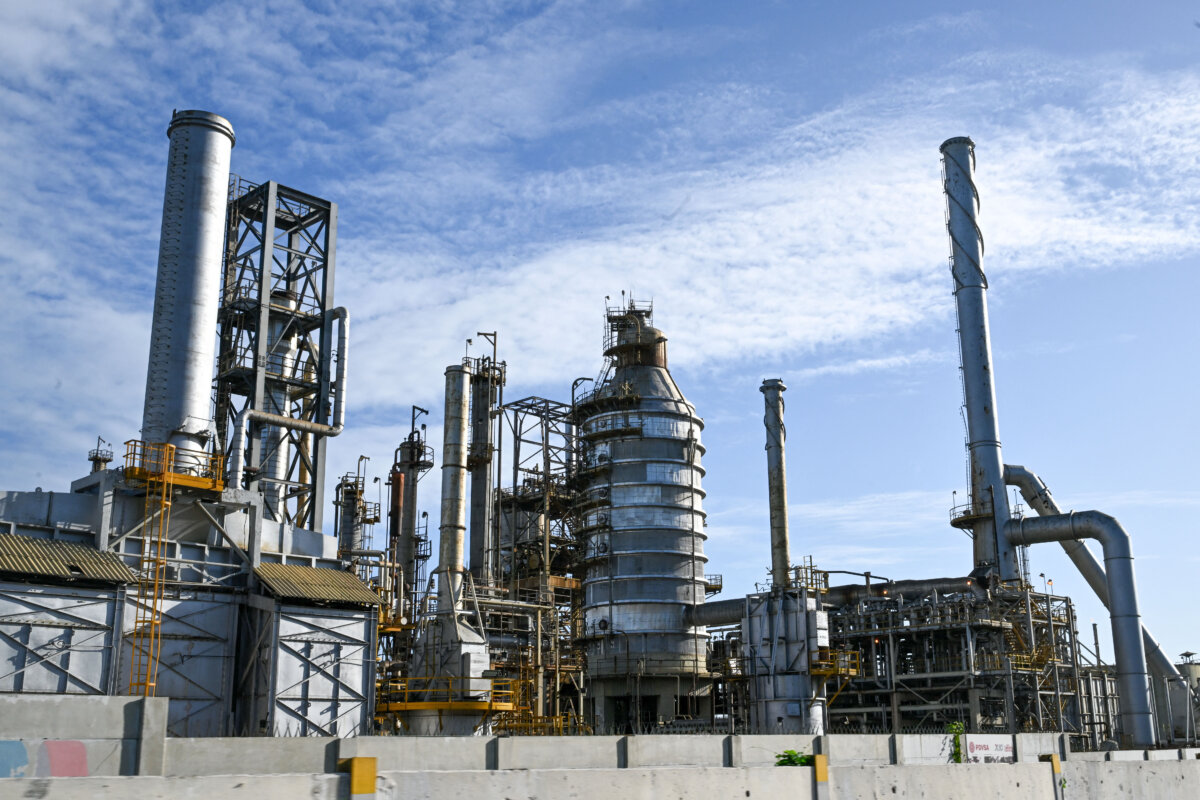
Venezuelan leader Delcy Rodríguez, who was sworn in as the country’s acting leader after Nicolás Maduro was captured and taken to the United States in January based on a narcotics trafficking indictment, announced on Feb. 1 her country’s first export shipment of liquefied petroleum gas (LPG).
Rodríguez posted on X, “Proud to share this moment: the Chrysopigi Lady vessel departed from Venezuela carrying the 1st shipment of Liquefied Petroleum Gas.”
“Together with the working class, we mark this historic milestone by exporting the country’s first gas; an achievement for the wellbeing of the people,” Rodríguez said.
The Singapore-flagged vessel is headed for the port of Providence in Rhode Island, having left Puerto José in northeast Venezuela, according to ship tracking website Marine Traffic.
Venezuela has huge oil and gas resources, but they have been mismanaged for years by Maduro’s socialist regime and his predecessor, the late Hugo Chavez.
On Jan. 3, a Delta Force team captured Maduro and took him to the United States, where he will be prosecuted under an indictment that names as his co-accused Héctor Rusthenford Guerrero Flores, one of the founders of the Tren de Aragua drug cartel.
Rodríguez, who was Maduro’s deputy president, stepped into the breach and was sworn in as de facto leader within hours of Maduro’s capture.
Shortly after Maduro was seized, U.S. President Donald Trump said the United States would “run” Venezuela until a peaceful transition could be made, and that Rodríguez had agreed to work with the White House.
On Jan. 9, Trump signed an executive order that exempted Venezuelan oil revenues from the sanctions that had been imposed on the regime in Caracas.
Oil Sanctions Eased
On Jan. 29, the U.S. Treasury Department issued a general license easing some sanctions on Venezuela’s oil industry, authorizing established companies in the United States to engage in the sale, transport, and refining of the country’s crude. These steps were taken shortly after Venezuelan lawmakers approved changes to the nation’s main oil law to allow private companies, including U.S. firms, greater control over production and management.
The general license specifies, “Any monetary payment to a blocked person is made into the Foreign Government Deposit Funds, as specified in Executive Order 14373 of January 9, 2026, or any other account as instructed by the U.S. Department of the Treasury.”
During a ceremony on Jan. 28 in Caracas, recognizing her as Venezuela’s commander-in-chief, Rodríguez said Venezuela has “opened a space for political dialogue.”
But she warned that “those who seek to perpetuate harm and aggression against the people of Venezuela should stay in Washington.”
“We are unblocking resources from Venezuela that belong to the Venezuelan people,” Rodríguez said in another speech on Jan. 28 at the University Hospital of Caracas.
“That will allow us to invest significant resources in hospital equipment, equipment that we are acquiring in the United States and in other countries, equipment for the electricity sector and for the gas industry in Venezuela.”
Diplomatic relations between the United States and Venezuela have resumed, and on Jan. 31, Laura F. Dogu—the chargé d’affaires to the Venezuela Affairs Unit—arrived in Caracas and resumed the diplomatic engagement, six years after the last U.S. Embassy personnel were withdrawn.
Maduro initiated the breaking of diplomatic relations in January 2019, after the first Trump administration refused to recognize him as the legitimately elected president of Venezuela and instead recognized Juan Guaidó as the interim president of the country.
Venezuela’s interior minister, Diosdado Cabello, said on Jan. 8 that about 100 people are believed to have been killed during the U.S. military operation that captured Maduro.
The newspaper of the Cuban government, Granma, said last month that 32 of its soldiers had been among the dead.
On Jan. 16, Cuban Gen. Lázaro Alberto Álvarez Casas described the 32 as “heroes” and wrote in Granma: “They died as they lived, with their heads held high. They fell convinced that they were fulfilling a sacred duty, that the peoples of Our America will recognize and forever be grateful for their supreme example of sacrifice and loyalty.”
Trump signed an executive order on Jan. 29 threatening fresh sanctions on any country selling oil to Cuba.
Last year, Venezuela was Cuba’s largest oil supplier, providing the communist nation with 26,500 barrels per day—roughly one-third of Cuba’s daily needs.
On Jan. 11, Trump urged Cuba to strike a deal with his administration after the United States pressured Rodríguez to redirect oil deliveries to the United States.
Reuters contributed to this report.
 Friends Read Free
Copy
Facebook
Tweet
Friends Read Free
Copy
Facebook
Tweet