
KOROR, Palau—Taiwanese Foreign Minister Lin Chia-lung told The Epoch Times on Tuesday that a Chinese diplomat’s warning of “consequences” over Taiwan’s presence at an annual Pacific summit in Palau reflected Beijing’s willingness to pressure countries to accept its demands.
Palau, one of Taiwan’s 12 diplomatic allies, is hosting the Pacific Islands Forum (PIF) Leaders Meeting, a gathering of 18 Pacific island nations that brings together dialogue partners, including the United States and China, as well as development partners such as Taiwan, to discuss the region’s challenges and advance shared interests.
Lin had come to Palau to participate in events related to the forum, at the invitation of Palauan President Surangel Whipps Jr.
Taiwan has taken part in the PIF since 1993, but it was excluded from last year’s gathering in the Solomon Islands, which severed its diplomatic relations with Taipei for Beijing in 2019.
“There will always be consequences,” Qian Bo, China’s special envoy for Pacific island affairs, told reporters while leaving Monday’s opening ceremony. “It’s not a threat,” he said without elaborating.
Qian claimed there was a consensus against Taiwan’s participation in the forum. “So this should not have happened. We think it’s very inappropriate to do so,” he said.
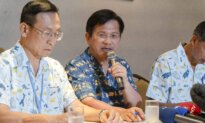
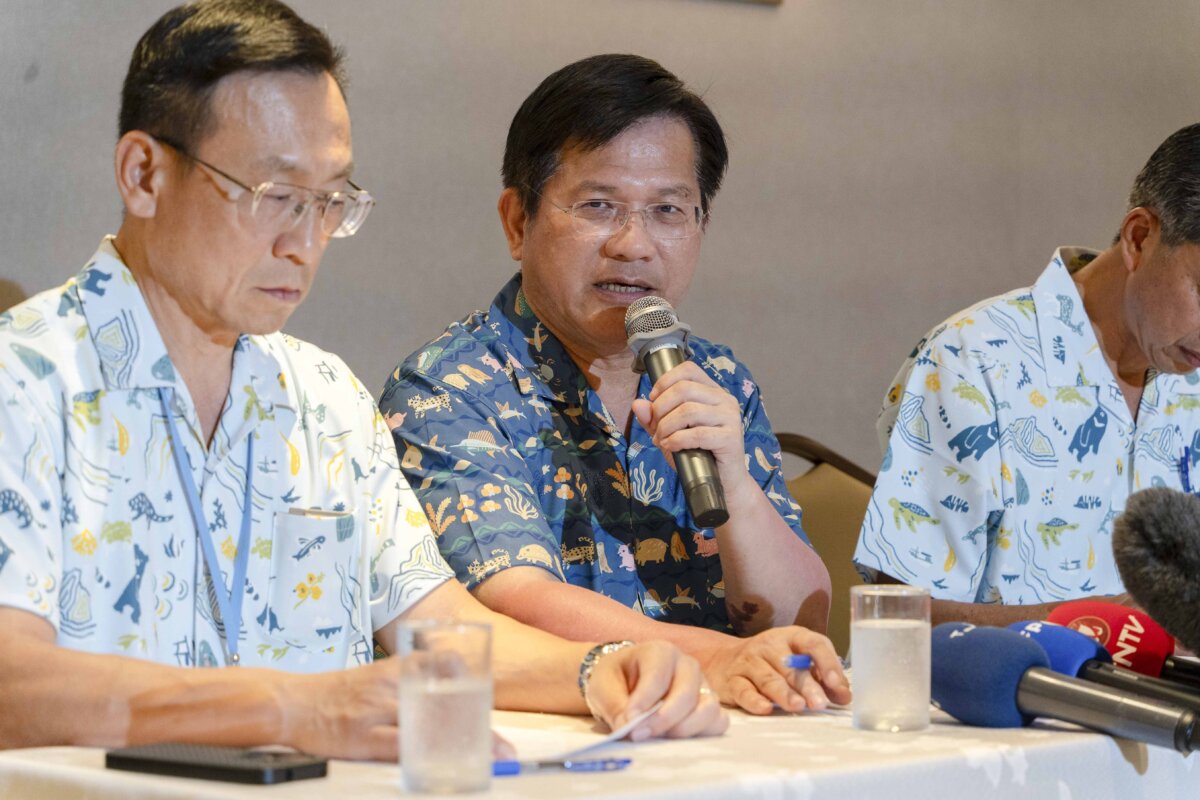
On Sept. 1, Lin described Qian’s remarks as a typical example of China’s “wolf warrior diplomacy,” saying that warning of “consequences” essentially amounted to a threat, in response to a question from The Epoch Times during a press conference in Koror.
In recent years, the Chinese regime’s diplomats have been tagged with the moniker “wolf warriors” over their bellicose rhetoric directed at their foreign counterparts.
One example happened in October 2020, when two Chinese diplomats gatecrashed a reception held by Taiwan’s diplomatic mission in Fiji, resulting in a physical clash that left one Taiwanese official with a head injury.
The consequences had already begun, Lin said, pointing to China’s announcement in mid-August discouraging Chinese tourists from visiting Palau over concerns about theft and robbery, despite Palau being one of the region’s safest countries.
He described the move as “weaponizing” bilateral tourism, a characterization echoed previously by the U.S. Embassy in Koror, which said China was “weaponizing tourism to coerce Palau.”
Lin added that Qian’s remarks reflected China’s tendency to overshadow the host.
“Whenever China participates in a meeting, he makes it seem like he is the host, and makes the whole atmosphere very bad,” Lin said.
Lin drew a contrast between Taiwan and China, describing the former as “a force for good” while saying the latter would “push further and demand more” if countries backed down.
As a result, he said, countries need to establish clear “bottom lines” in dealing with China.
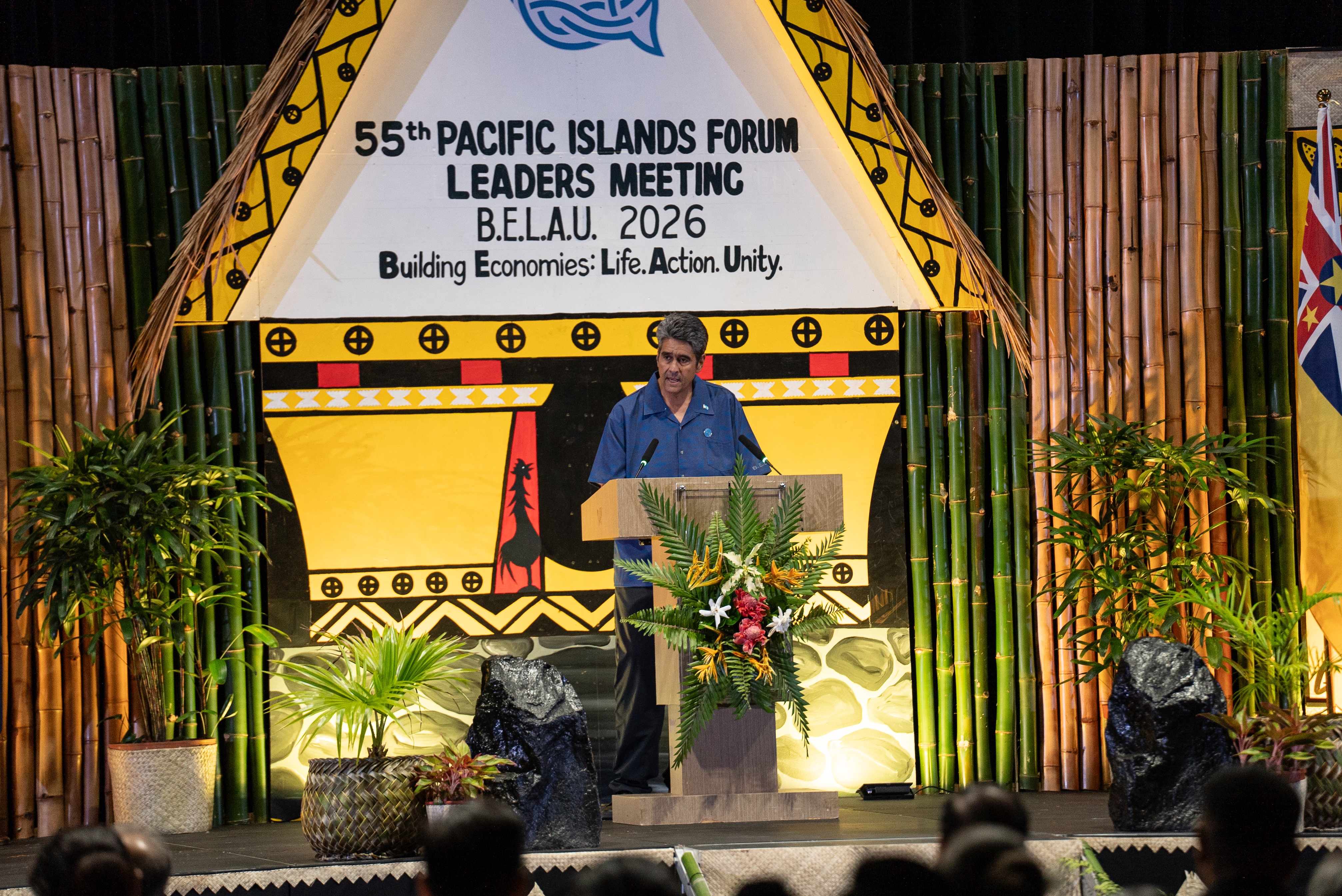 Palauan President Surangel Whipps Jr. speaks at the opening ceremony of the Pacific Islands Forum Leaders Meeting in Koror, Palau, on Aug. 31, 2026. (Tal Atzmon/The Epoch Times)
At the same time, Lin said, “we need to teach China how to become a civilized big country” by following the rules of the international order, so that it can “peacefully co-exist” with Pacific nations and Taiwan and prosper together.
On tourism, Lin said Taiwan would encourage more visitors from other countries to travel to Palau to offset any potential decline in Chinese tourists.
He added that direct flights between Taiwan and Palau were part of efforts to encourage more Taiwanese to visit, making Palau’s tourism industry less dependent on Chinese visitors.
The more a country depends on China, the more Beijing can weaponize that dependence, Lin said, warning that such pressure “will never end” and could eventually lead to disaster.
Taiwanese Vice President Hsiao Bi-khim made a similar call, urging Taiwanese people to visit Palau following her trip there in June.
She highlighted the less-than-four-hour flight each way between Taiwan and Palau, as well as Palau’s natural beauty and sunshine.
The forum has been marked by the absence of several leaders.
The heads of Fiji, Samoa, Vanuatu, the Solomon Islands, Kiribati, and the French territory of New Caledonia did not travel to Palau.
U.S. Deputy Secretary of State Christopher Landau also took part in Monday’s opening ceremony, alongside Lin and Qian.
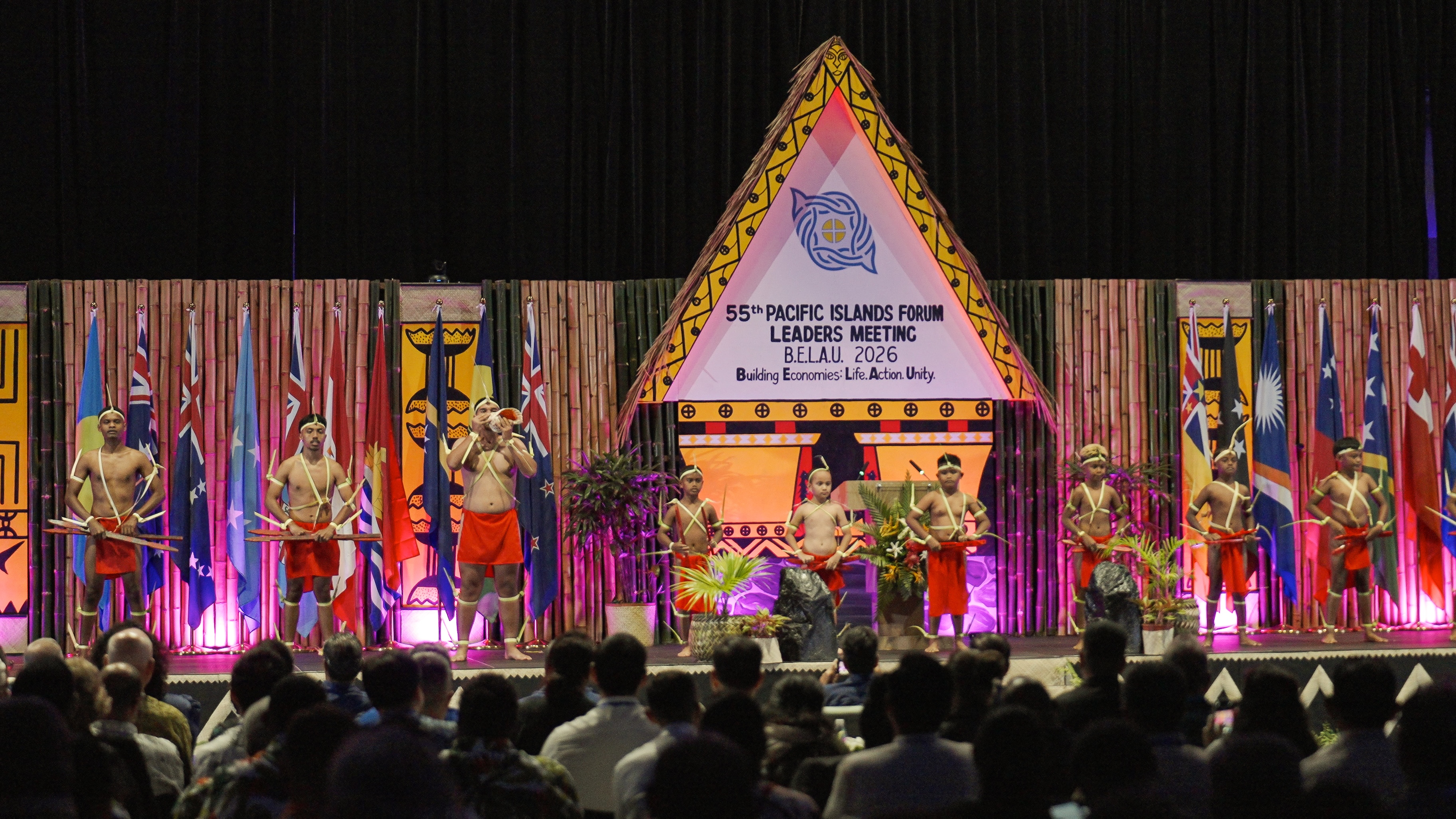 Dancers perform at the opening ceremony of the Pacific Islands Forum Leaders Meeting in Koror, Palau, on Aug. 31, 2026. (Tal Atzmon/The Epoch Times)
He noted that Taiwan had participated in the ceremony in the past.
“Only China would treat Taiwan’s attendance and its attendance as a zero-sum game,” he said, arguing that the gathering should instead be a “positive-sum game” rather than a “life-or-death struggle.”
Australian Prime Minister Anthony Albanese said “the Pacific Islands Forum determines what happens here, not any other country” on Aug. 31, when asked by reporters about Qian’s remarks.
On Monday, the U.S. Embassy in Koror shared on its Facebook page that Landau had met with Whipps to reaffirm the United States’ “enduring [commitment] to a free, open, secure, prosperous Pacific Island region.”
The embassy added that their meeting underscored partnerships that deliver “concrete results” for Pacific communities, including expanding connectivity and “strengthening security cooperation.”
In an opinion published in both The Australian and Palau’s Island Times before Monday, Landau highlighted the importance of partnership through the Compacts of Free Association with the Marshall Islands, Federated States of Micronesia, and Palau.
“Recent submarine-launched ballistic missile tests in the region unfortunately are just the latest example of why we must do so,” Landau wrote, referring to July’s launch by China.
“Evolving risks require re-examination of our defense and security ties with the Pacific Islands,” Landau wrote.
“Strong U.S. ties with the Pacific make our country and the region safer, stronger and more prosperous.”
Reuters contributed to this report.
 Friends Read Free
Copy
Facebook
Tweet
Friends Read Free
Copy
Facebook
Tweet