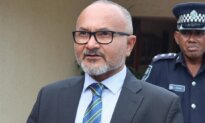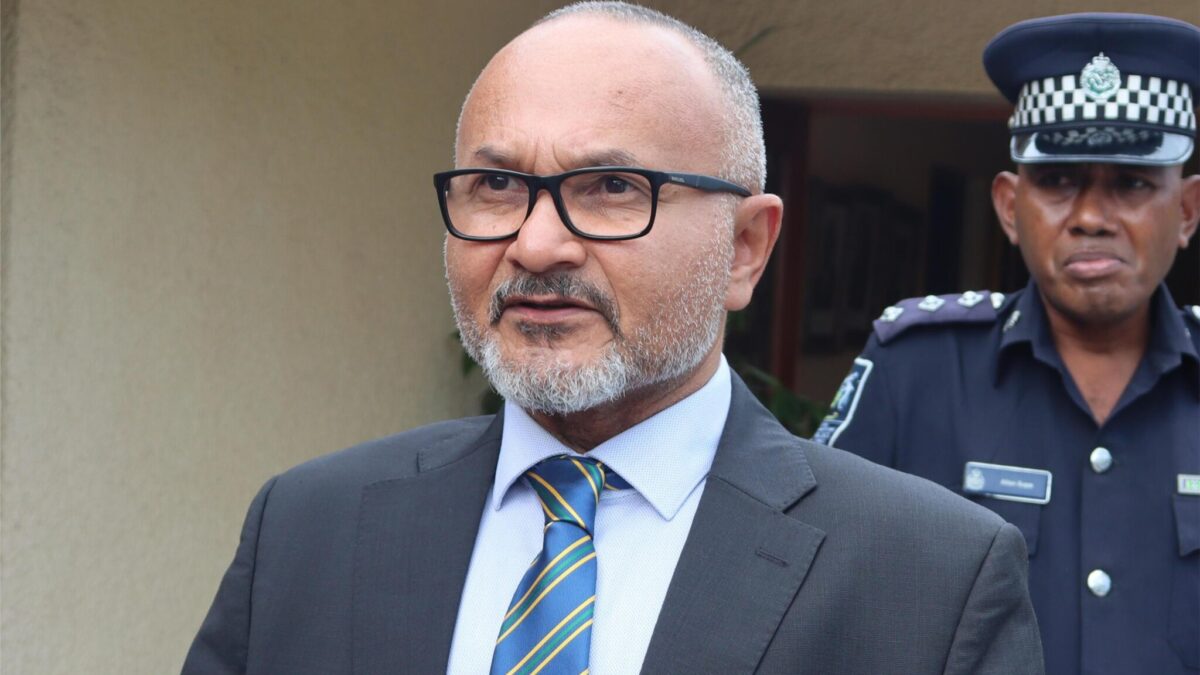

The Solomon Islands has a new prime minister after Jeremiah Manele lost power in a no-confidence vote, ending months of political uncertainty.
The country of Pacific nation of 767,000 people will now be headed by Matthew Wale, the long-time opposition leader who has been critical of the Chinese Communist Party (CCP) in the past.
The change will likely be well-received in Canberra, as Australian authorities have been concerned about Beijing’s influence over the neighbouring country’s previous leader Manessah Sogavare and his deepening ties with Beijing.
Wale has moved quickly to restore stability, announcing a full 24-member Cabinet just days after taking office in Honiara. Several of the new Cabinet members were among the 19 MPs who crossed the floor to help bring down the Manele government.

The new prime minister is a seasoned politician.
He served as Leader of the Opposition for seven years, held a ministerial portfolio in a previous government, and chaired his parliament’s public accounts committee.
Australian Prime Minister Anthony Albanese congratulated Wale in a post on X, saying he looked forward to “working together to continue strengthening our economic, development, and security partnership.”
Wale vehemently opposed the Solomon Islands security pact with Beijing in 2022 that allowed the CCP to station troops and naval ships on the island.
He wrote in an opinion piece that it “may appear to be all about security, but it is in fact counterproductive to the security interests of Solomon Islands and the Pacific Islands region.”
It was eventually signed by then-Prime Minister Sogavare.
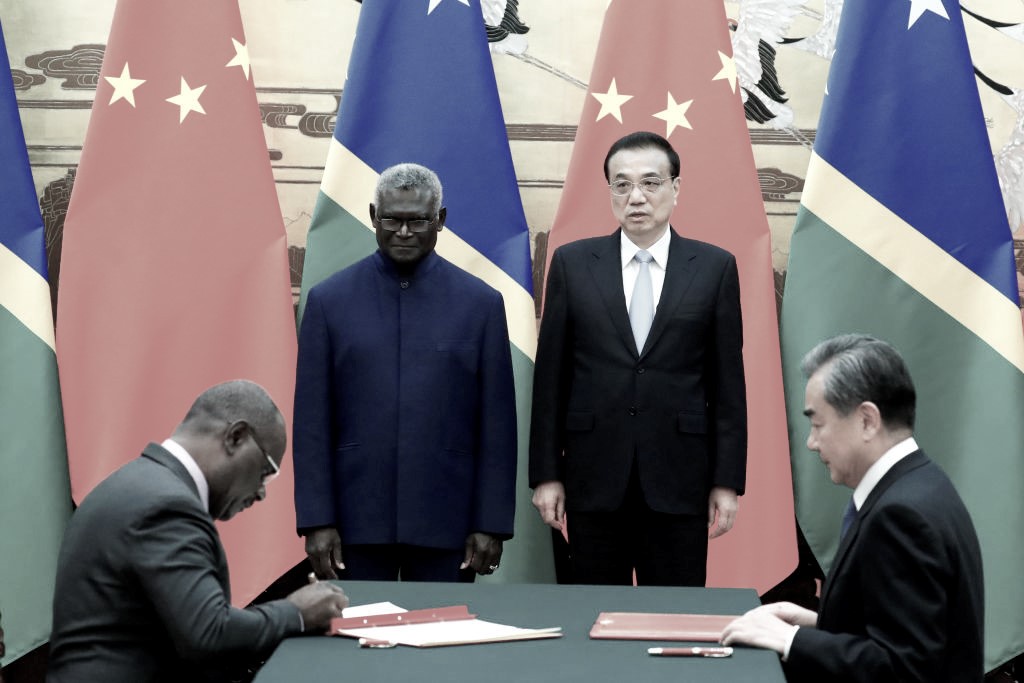
Former Australian Federal Police agent-turned-security analyst Paul Johnstone told The Epoch Times that had the agreement not been publicised by its opponents, there would now be Chinese People’s Liberation Army (PLA) troops on the streets of Honiara, located 1,600 kilometres (1,000 miles) northeast of Australia.
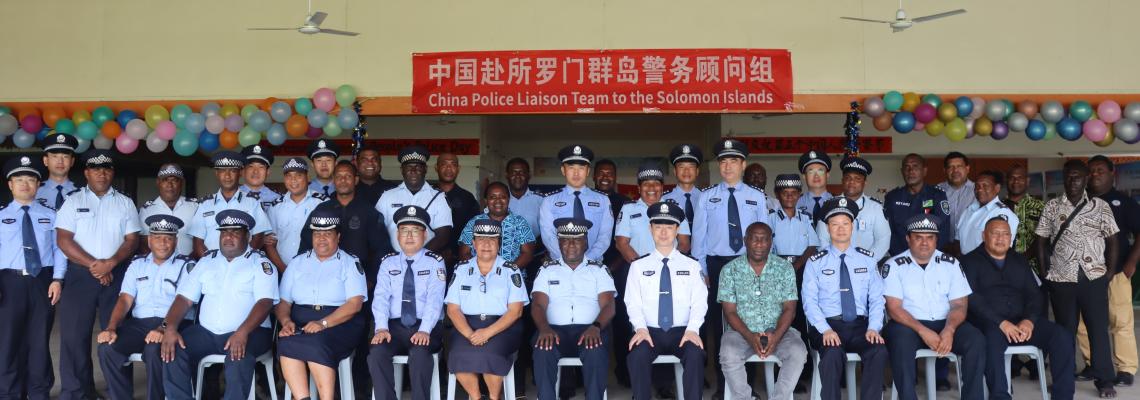
“At the moment, they’ve got Chinese police in the Solomons, training, advising, and mentoring. What could a Chinese police officer teach the local people in a Polynesian or Melanesian country when the Chinese have absolutely zero experience of working in these cultures, and [when] China has no interest in any culture except its own?” Johnstone said.
Will the Hard Line on Beijing Hold?
Prior to his recent win, Wale pledged to release the full text of the security deal, though he said in 2024 that he wouldn’t scrap the agreement if elected because the country needed to be “fair” and avoid “causing problems where it’s unnecessary to do so.”
In 2025, he led a delegation to Beijing, where he praised China’s economic development and said his party supported the one-China principle, according to a readout of the visit provided by the CCP.
Wale’s moderate approach to Beijing is typified by his selection of Rick Hou as foreign minister instead of Peter Kenilorea Jr, whom many expected to be appointed.
Kenilorea has a history of rhetoric critical of Beijing, so Hou’s selection suggests a more careful approach to China ties.
Charles T. Hunt, director at RMIT’s Pacific Initiative, told The Epoch Times he thinks Wale “might try to push for transparency around the text of the 2022 agreement as low-hanging fruit, but is unlikely to rock the boat further.
“There would have been some quiet celebrations at the Australian High Commission in Honiara when Wale walked out of Parliament House as PM,” Hunt says.
“However, he has also been combative towards Australia in the past, accusing them of missing the signals on China’s growing engagement. So he’s not likely to bow down to Canberra.”
That means any approach by Australia should not focus on outspending Beijing or “securitising the relationship,” but instead be “grounded in building trust, being a consistent and dependable partner, and fostering people-to-people ties over decades.”
Nicole George, associate professor of peace and conflict studies at the University of Queensland, predicts Wale will not want to ruffle any feathers.
“[He will have] a more critical instinct on this, and perhaps the instinct to navigate that relationship more carefully, but also, as prime minister, I think the stakes change a little bit, and you’re thinking about how do you protect possible avenues of trade and investment that might be coming into the country,” she told The Epoch Times.
“When you have responsibility for leading the country, and then engaging as a political leader with another important country in the region, I think that’s why we see a more moderate stance.”
During a meeting with Australian High Commissioner Jeff Roach, Wale acknowledged Australia has been the Solomon Islands’ largest donor and development partner for decades.
He said he appreciated Australia’s willingness to listen to his government’s priorities for a more committed partnership.
 Friends Read Free
Copy
Facebook
Tweet
Friends Read Free
Copy
Facebook
Tweet