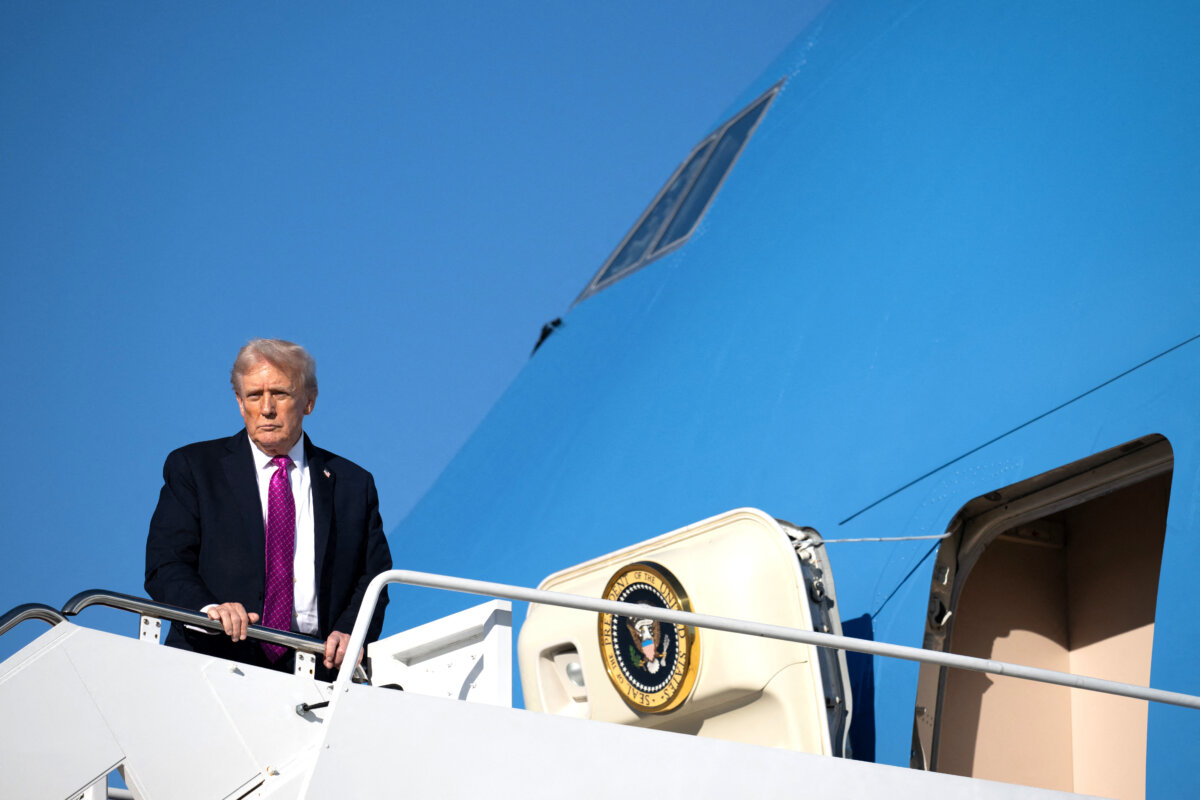
President Donald Trump recently confirmed several stops on his upcoming Asia tour, during which he is expected to hash out trade deals, talk investments, and speak with Chinese Communist Party leader Xi Jinping days before a potential 100 percent tariff on Chinese goods goes into effect.
While Trump has hosted several Asian heads of state in Washington already, this is his first trip to the region in his second term.
He announced stops in Malaysia, Japan, and South Korea, noting that there will be “a couple of others” on the tour and that he has accepted an invitation to visit China early next year.
Malaysia
Malaysia is hosting the Association of Southeast Asian Nations summit from Oct. 26 to Oct. 28, and Trump is expected to attend on the first day.
Malaysian officials have said that Trump is “looking forward” to joining the signing of a cease-fire deal between Thailand and Cambodia, one of several peace deals Trump has helped broker.
“During the summit, we hope to see the signing of a declaration, known as the Kuala Lumpur Accord, between these two neighbors to ensure peace and a lasting ceasefire,” Malaysian Minister of Foreign Affairs Mohamad Hasan told reporters.
Conflict between Thailand and Cambodia broke out in July, as 43 people were killed and 300,000 were displaced during five days of fighting. Trump called the heads of state of the two countries on July 26, and they negotiated a cease-fire in Malaysia on July 28.
The list of attendees of this year’s summit has elevated the event’s profile. In addition to Trump, leaders from China, Japan, Russia, India, and Italy are expected to join the summit.
Japan
Trump is scheduled to travel to Japan on Oct. 27 for a three-day visit.
The trip comes just after the Japanese parliament elected Sanae Takaichi, head of the ruling Liberal Democratic Party, as the new prime minister on Oct. 21. She replaces Shigeru Ishiba, who resigned in September.
Takaichi said that the “Japan–U.S. alliance is the cornerstone of Japan’s foreign and security policy” and that she plans to strengthen ties, according to a translation of remarks she made to the Hudson Institute published on Oct. 1.
Takaichi is expected to meet with Trump on Oct. 28 to talk about regional security, according to Nikkei Asia.
According to The Japan Times, Trump and Takaichi plan to tour the U.S. Navy base in Yokosuka, Japan, and speak with military personnel.
Japan has seen increased Chinese military activity around its territory in recent years, and has ramped up joint drills with allies, including the United States, in response.
The country signed a trade deal with the United States in September that lowers tariffs on Japanese goods to 15 percent in exchange for $550 billion in investments in the United States.
Recently, the Trump administration said it expects Japan to stop buying Russian energy. Japanese officials said they have steadily decreased imports since the Russian invasion of Ukraine began, but did not commit to stopping purchases of Russian liquified natural gas.
South Korea
South Korea is hosting the Asia-Pacific Economic Cooperation (APEC) from Oct. 31 to Nov. 1.
The South Korean presidential office has stated that Trump is expected to visit ahead of the summit, from Oct. 29 to Oct. 30.
“I think we could see drama that APEC is not used to,” said John Delury, a scholar of U.S.–China relations and Korean Peninsula affairs who is based in Seoul, South Korea.
“Because there is such a siege really going on from the Trump administration in terms of withdrawing from multilateral forums like APEC this has really heightened the importance of this effort to bring together leaders from around the Asia Pacific and to focus on kind of the old agenda of … economic globalization, of free trade.”
Trump has said that he is expecting to meet with Xi during his stop in South Korea and that any trade agreements made between the two leaders would certainly have ripple effects on APEC member nations.
South Korean officials said on Oct. 20 that they expect to be able to reach their country’s own trade deal with the United States during the upcoming in-person talks.
The country’s chief policy officer, Kim Yong-beom, has visited Washington to meet with U.S. Commerce Secretary Howard Lutnick. Upon the trip’s conclusion, he said they had made progress on most items and only needed to iron out “one or two” more.
On July 30, Trump announced that a deal had been struck in broad terms for the United States to reduce tariffs on South Korean goods to 15 percent and for South Korea to invest $350 billion in the United States.
Lutnick said in a media appearance after the announcement that while the deal had been agreed upon, nothing had been signed.
Reuters contributed to this report.
 Friends Read Free
Copy
Facebook
Tweet
Friends Read Free
Copy
Facebook
Tweet