
Nigeria said the United States is ready to help it combat what U.S. President Donald Trump has said are large-scale killings of Christians in the West African nation by Islamist militants.
The United States is prepared to expand security cooperation, including intelligence sharing and fast-tracking requests for defense equipment, Nigerian President Bola Tinubu’s office said in a statement on Nov. 24.
Washington is also willing to increase humanitarian aid for affected communities in Nigeria’s Middle Belt region and provide technical support to strengthen early-warning systems, according to the statement.
In return, Nigeria “reaffirmed the government’s commitment to strengthening civilian-protection measures,” Tinubu’s office stated, noting that the two governments agreed to establish a joint working group to ensure a “unified and coordinated approach.”
The announcement follows meetings last week between a Nigerian delegation and senior U.S. officials, including members of Congress, the National Security Council, the White House Faith Office, and officials from the State Department and Defense Department.
Earlier this month, Trump threatened military intervention over what he described as the Nigerian government’s failure to stop the persecution of Christians by Islamist insurgents.
“If the Nigerian Government continues to allow the killing of Christians, the U.S.A. will immediately stop all aid and assistance to Nigeria, and may very well go into that now disgraced country, ‘guns-a-blazing,’ to completely wipe out the Islamic Terrorists who are committing these horrible atrocities,” he wrote on Nov. 1 on Truth Social.
Jonathan Pratt, a senior official at the State Department’s Bureau of African Affairs, testified before the House Foreign Affairs Committee on Nov. 20 that the Trump administration may escalate its pressure by diplomatic and economic means, including sanctions.
“The Trump administration is developing a plan to incentivize and compel the Nigerian government to better protect Christian communities and improve religious freedom,” Pratt told lawmakers. “This plan will consider U.S. State and Treasury engagement on sanctions, as well as possible Department of War engagement on counterterrorism and other efforts to protect religious communities.”
Nigeria, Africa’s most populous country, is nearly evenly split between Muslims and Christians. The country’s Middle Belt, a longitudinal region without a single dominant ethnic group, has been especially affected by violence driven by religious, ethnic, and economic tensions, including deadly clashes between predominantly Fulani Muslim herders and predominantly Christian farmers of various ethnicities.
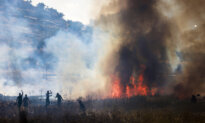
During Christmas weekend in 2023, Muslim Fulani militants attacked more than 160 villages in the Middle Belt, killing at least 200 Christians in what observers called a targeted assault. More recently, in June, attackers burned homes and food stores and locked families inside blazing buildings, killing more than 100 Christians, according to the Nigerian chapter of Amnesty International.
According to the State Department’s annual reports on International Religious Freedom, Nigerian officials have often attributed such killings to the long-running farmer–herder feud and competition over land and water resources. But others, including U.S. Ambassador to the United Nations Mike Waltz, have described the systematic targeting of Christians in the Middle Belt as a genocide.
Tinubu, a Muslim married to a Christian pastor, has said he is committed to protecting all faiths in Nigeria. His office dismissed allegations of genocide or religious intolerance as inconsistent with the reality that both Christians and Muslims have been victims of the violence.
The attacks “affect families and communities across religious and ethnic lines,” his office said.
 Friends Read Free
Copy
Facebook
Tweet
Friends Read Free
Copy
Facebook
Tweet