
The Parti Québécois has returned to power in Quebec for the first time in more than a decade. While the party didn’t win a majority and the incumbent CAQ was shut out of the legislature, which could point to a desire for change rather than an endorsement of separation, the PQ nevertheless received the largest share of the popular vote rather than any of the federalist parties.
There are a number of factors behind this, including the state of the opposition, the PQ’s campaign, and regional voting patterns in Quebec.
As it seeks to maintain its minority government, the Parti Québécois (PQ) will need to work with the other opposition parties and meet their competing demands, ranging from progressive to conservative policies.
The Odds of a Separation Referendum
Polling firm Research Co. President Mario Canseco pointed to a recent exit poll showing less than 30 percent overall support among Quebecers for the province separating from Canada.
He noted that only 36 percent said having a timetable to set a date for a referendum was important, rising to 63 percent among PQ voters.
“The appetite for sovereignty isn’t there,” he told The Epoch Times. “It’s more an election related to changing the government than an endorsement of everything that the PQ wants to do.”
Canseco said that while the 63 percent who support holding a referendum among the PQ may seem high, it pales in comparison to the support levels around 90 percent seen in Quebec in the late 1970s and early 1990s.
PQ has promised not to hold a referendum on separation while U.S. President Donald Trump remains in office.
Canseco said he expects the PQ’s term to last roughly 18 months to two years, noting that minority governments of this type in Quebec are typically short-lived. If the PQ government does fall, it could happen around the time Trump’s term ends in January 2029.
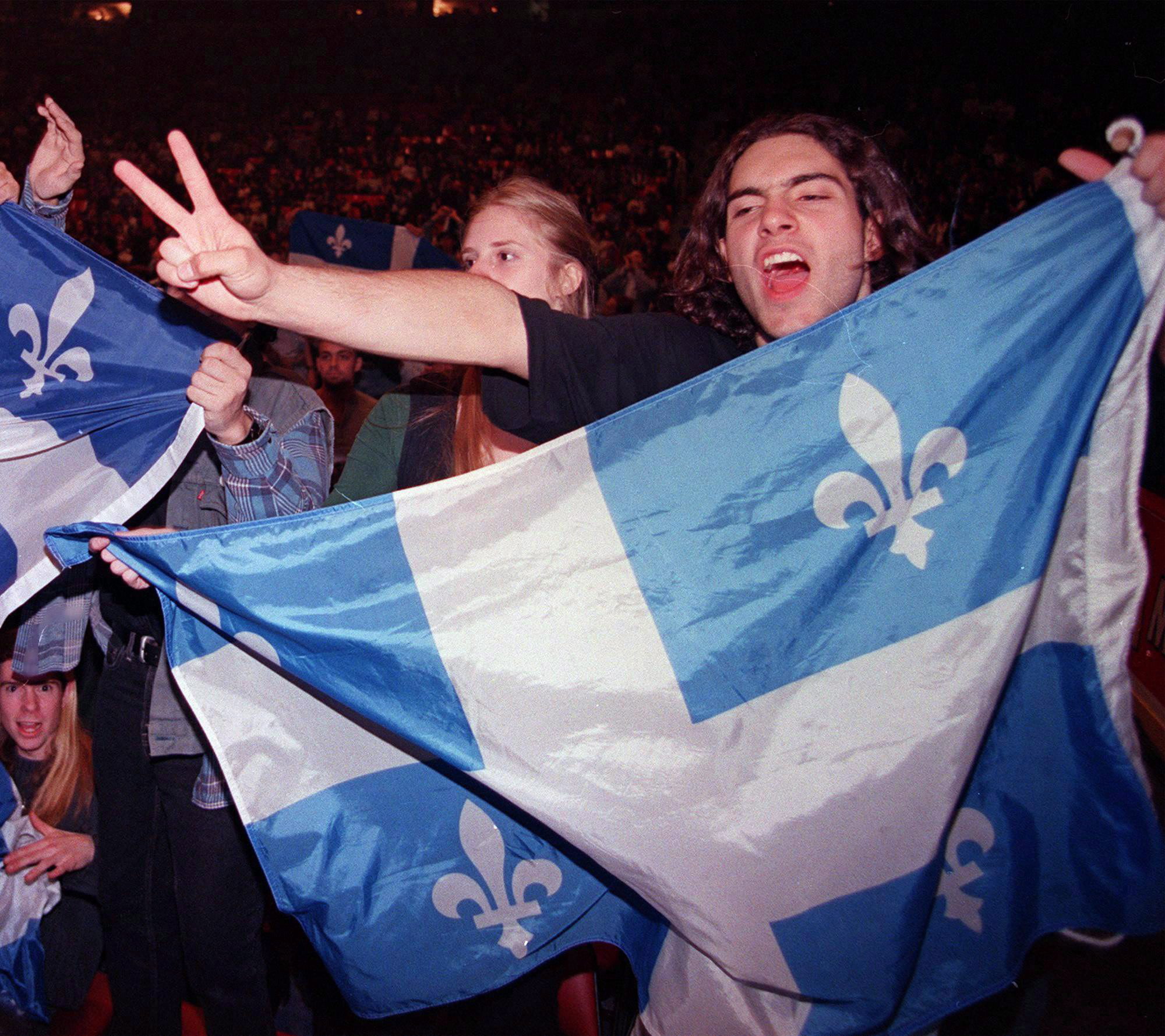 A Yes supporter holding a Quebec flag chants nationalist slogans prior to a concert of Quebec rock stars in support of sovereignty in Montreal on Sept. 29, 1995. (The Canadian Press/Paul Chiasson)
“They wanted the CAQ out,” Shields told The Epoch Times of voters’ intentions, noting that the governing Coalition Avenir Québec (CAQ) won no seats. “But they did not want the referendum.”
Shields said the PQ was seen as being in the “best position to give change,” while also reassuring voters it wouldn’t hold a referendum in the short-term, appealing to enough voters to form a minority government and hold off the surging Quebec Conservatives and fairly strong Quebec Liberals, who had more concentrated regional support rather than diverse pockets of support the PQ had.
University of Toronto political science professor emeritus Nelson Wiseman, however, said he’s not certain whether a referendum in the first PQ term can be ruled out.
“I think it’s just not clear,” he said. “Trump is scheduled to leave the White House in 2029. Lots can happen between now and then.”
McMaster University political science professor Peter Graefe also told The Epoch Times that a referendum is a possibility if the PQ is still in power once Trump is gone, and noted that the party would have enough support from Québec solidaire to move the issue forward if the two sovereigntist parties voted together. Québec solidair is a left-wing sovereigntist party.
Political scientist Evelyne Brie, meanwhile, told The Epoch Times that while PQ’s victory is “no surprise” due to their long-running lead in the polls, it’s not impossible that the governing party would survive until after Trump is out of office and then work to hold a referendum, “but it would be exceptional.”
Brie added that it would be difficult to politically attack PQ Leader Paul St-Pierre Plamondon for attempting to hold a referendum as he had been forthright about his support for one before winning the election.
“PSPP [Paul St-Pierre Plamondo] is well-known politically and has adopted an honest approach about his intentions about sovereignty, which made it difficult for his opponents to mobilize the referendum against him,” she said, adding that this is in contrast to previous PQ leaders who were more ambiguous with their intentions.
Anti-CAQ, More Than Pro-PQ
The PQ victory was driven much more by broad rejection of CAQ after its two consecutive majority mandates since 2018, rather than an embrace of any one party, Shields says.
“None of the parties were that popular,” Shields said, noting that none reached 30 percent of the vote. PQ’s victory with 28 percent of the popular vote is the lowest for a winning party in Quebec’s history.
The PQ received 59 seats, falling five short of the 64 needed for a majority government, while the Quebec Liberals came second at 40 seats with 24.2 percent of the popular vote. The Quebec Conservatives were third at 19 seats and 20.7 percent of the popular vote, and Québec solidaire won nine seats and 12.4 percent of the popular vote. CAQ received 13.3 percent of the popular vote but failed to win any seats.
Taken together, the results could point to there being a broad consensus against CAQ, but not a definitive collective decision on who the alternative should be.
Shields said the incumbent CAQ government had “lost touch with the Quebec public” after two terms in power. Premier Christine Fréchette led CAQ during the election and succeeded former Premier François Legault in April trying to present herself as taking the party in a new direction, but Shields said the party had been dogged by a series of unpopular policies and controversies.
“Parties kind of run out of room after a while, and the time for a change was very much up,” he said.
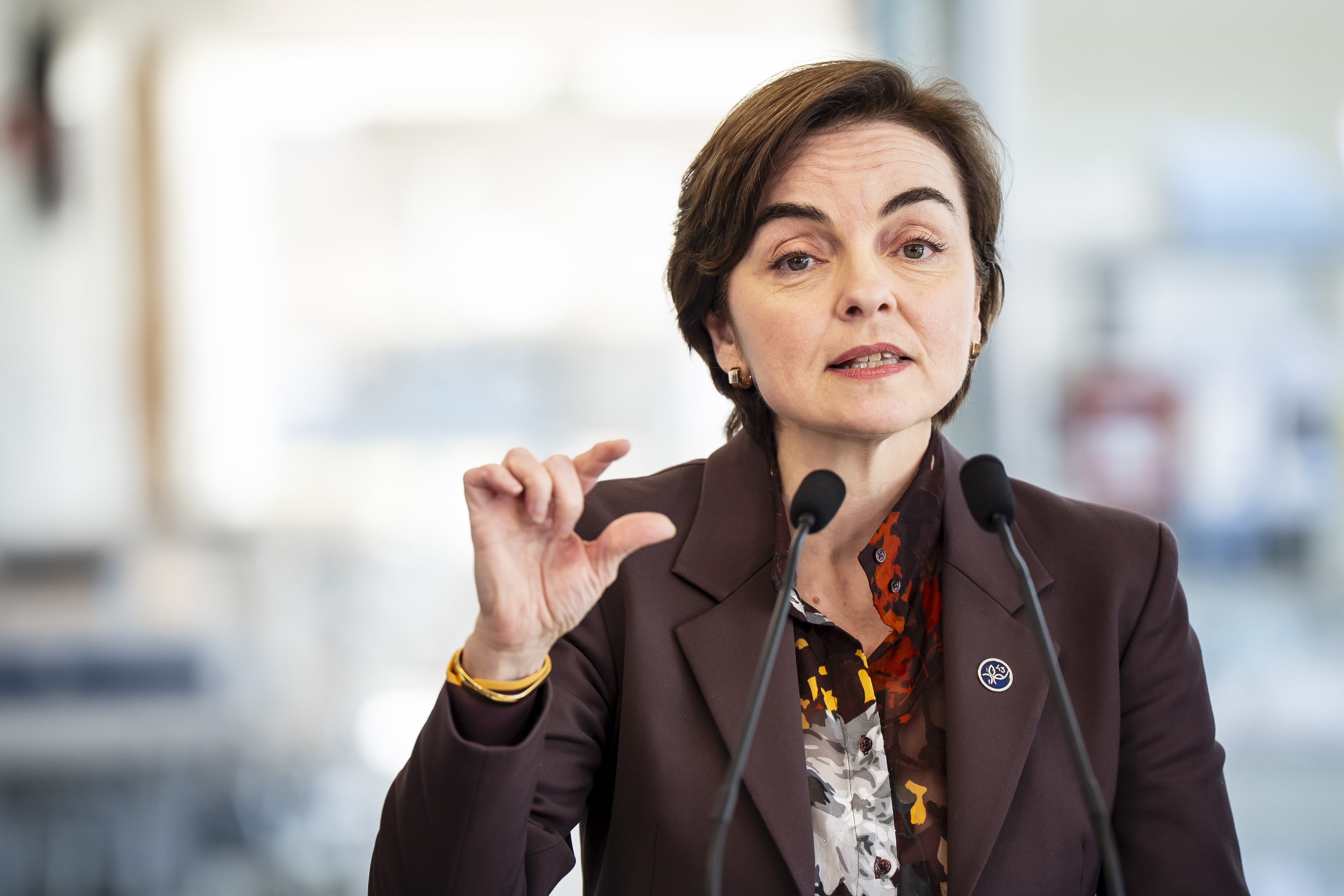 Quebec Premier Christine Fréchette at a press conference in Montreal on April 23, 2026. (The Canadian Press/Christopher Katsarov)
Canseco said the PQ won by positioning itself as a credible alternative that would bring change but also take the Quebec independence question off the ballot for the time being.
Trump-focused messaging from Fréchette, meanwhile, was undermined by her relative newness in office, according to Canseco, who added that it wasn’t the right focus for her to have, unlike Ontario Premier Doug Ford, who was reelected last year on a message of standing up to Trump and capitalized on recently spoken comments about Canada becoming the 51st state.
“The latter stages of the campaign, I think—and this is a cautionary tale for [B.C. NDP Leader] David Eby in that sense—Christine Fréchette was all about Trump,” Canseco said, adding it wasn’t really her strength and ended up falling flat with voters. Fréchette resigned as party leader on Oct. 6.
Why Not the Liberals or Conservatives?
While voters had a choice of three other parties beside PQ to replace the CAQ, it was ultimately the PQ that won.
Support for the left-wing sovereigntist Québec solidaire shrunk in this election, but the Liberals and Conservatives had stronger showing.
Canseco said the Liberals have experienced leadership difficulties in recent years and didn’t manage to re-establish themselves broadly across Quebec as a clear government-in-waiting.
Charles Milliard took over as permanent Liberal leader in February after the party appointed an interim leader following the resignation of former Trudeau cabinet minister Pablo Rodriguez as leader in 2025. Rodriguez stepped down amid allegations of vote-buying in the leadership race, while other resignations and ousters dogged the party. Quebec’s anti-corruption police reportedly cleared Rodriguez of wrongdoing.
Wiseman noted that Quebec Conservative Leader Éric Duhaime benefited considerably from CAQ’s decline, particularly around Quebec City, but was unable to translate that regional strength into broad province-wide support to win the election.
Wiseman noted that the Conservatives were more strategic than in the previous Quebec election, focusing their resources on ridings where they already had strong indicators of support rather than spreading their efforts evenly across the province.
Going forward, however, Canseco said the field is open for the Quebec Liberals or Quebec Tories to emerge as the main federalist alternative to the PQ.
“Are you going to emerge as the unifying force that is more federalist than what Québec solidaire or the PQ are doing?” he said.
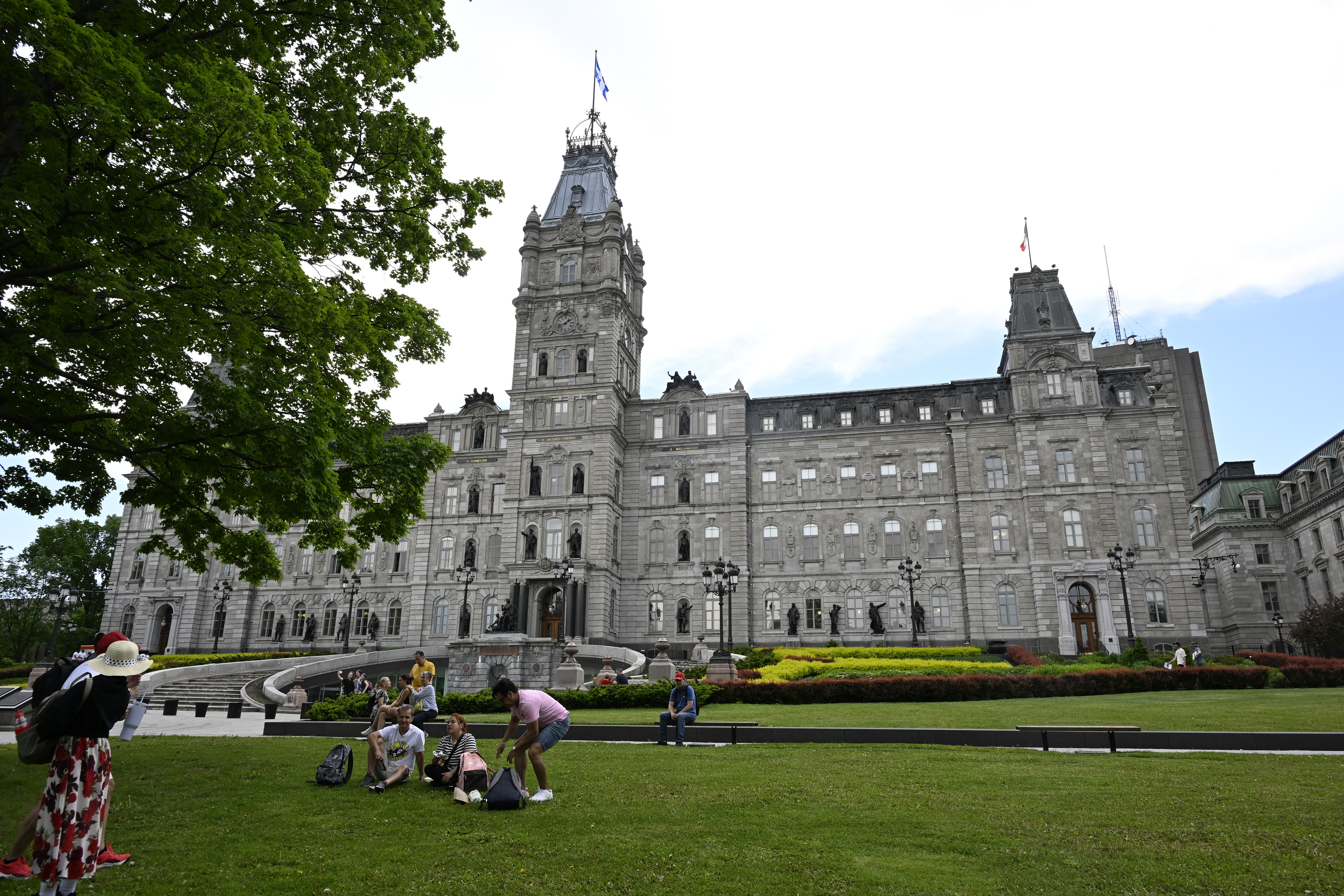 Quebec’s National Assembly is seen in Quebec City in a file photo. (The Canadian Press/Jacques Boissinot)
Governing as Minority
St-Pierre Plamondon said in his victory speech that he will seek common ground in the legislature, as his minority government would need the support of opposition parties to pass legislation.
While Shields said Québec solidaire is a natural ally due to being the sole other party holding seats that supports separation, he said there are also areas where the PQ are likely to be ideologically at odds with their fellow sovereigntists.
“The PQ has moved very far away from its origin, which was in progressive politics,” he said. “I can’t see them actually forming a coalition formally.”
Wiseman said that St-Pierre Plamondon is likely to broker deals with all parties.
“He said he’s going to take elements of the platforms from all of the parties, so you could have the PQ behaving a lot more conservative,” Wiseman said, noting that the government will likely move forward on an issue-by-issue basis.
Brie said Plamondon has options when it comes to whom to work with.
“They might try to secure some support from different parties for different projects, they said they would push some elements from the platform of each of them,” she said.
Canseco noted that minority governments in Quebec have historically been unstable and said this would be the primary challenge facing the PQ.
“It’s going to be very hard to maintain unless you start to offer some tidbits of policy that the other parties are going to find palatable,” he said.
 Friends Read Free
Copy
Facebook
Tweet
Friends Read Free
Copy
Facebook
Tweet