



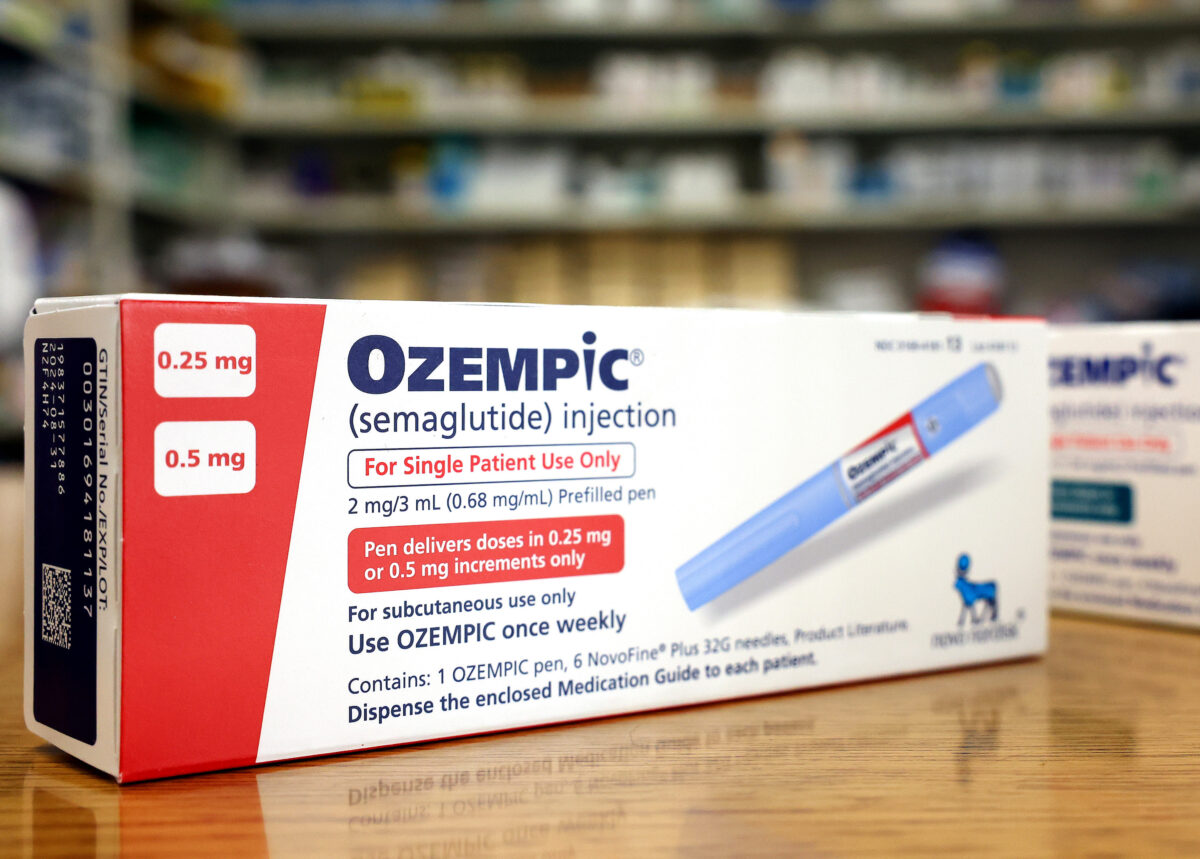
Poisoning related to semaglutide, a medication used for weight loss and diabetes, saw a massive jump this year as many people took incorrect doses of the drug.
Between January and November, American poison control centers received almost 3,000 calls involving semaglutide, according to a Dec. 13 report from CNN. This is a 15-fold increase from 2019.
In 94 percent of the calls, semaglutide was the only substance reported. Kait Brown, clinical managing director of the association, pointed out that most people who called poison control centers reported dosing errors.
“Oftentimes, it’s a person who maybe accidentally took a double dose or took the wrong dose,” she told CNN.
Julie Weber, director of the Missouri Poison Center, said they have received 94 calls related to semaglutide through October this year, up from 28 calls in 2021.
Approved by the U.S. Food and Drug Administration (FDA) in 2017, semaglutide is sold under the brand names Ozempic and Wegovy.
These drugs are manufactured by Novo Nordisk and come in prefilled click pens. Individuals dial the correct dose and inject the semaglutide.
But sometimes, people can end up making mistakes with the dose. According to Ms. Weber, many of the calls the center receives are related to the pens. In one instance, a caller accidentally dialed the click pen all the way up.
“They misunderstood the pen. They did not know how to use it properly,” Ms. Weber said, adding that the person took an entire month’s supply in one dose.
Dosing Errors
Another reason people take incorrect doses is they use compounded versions of semaglutide. According to the FDA, “drug compounding is the process of combining, mixing, or altering ingredients to create a medication tailored to the needs of an individual patient.”
Compounded drugs are not approved by the FDA and are not verified for safety or effectiveness.
The FDA has approved three semaglutide products for use in the United States—Ozempic, Wegovy, and Rybelsus. “All three medications are only available with a prescription, and there are no approved generic versions,” the agency clarified.
The FDA warned that it has received reports of adverse events after patients used compounded versions of semaglutide. The agency noted that compounded versions may be “salt formulations” that have not been shown to be safe or effective.
Unlike branded semaglutide, the compounded products are typically sold in vials, with the patients required to draw up their own doses via syringes. This can lead to people unknowingly injecting themselves with a higher dose and causing harm.
In a statement to The Epoch Times, Kate Hanna, director of communications at Novo Nordisk, said that the company “remains confident in the benefit risk profile of semaglutide.” Medicines like Ozempic, Wegovy, and Rybelsus “should be prescribed in direct consultation with, and under the supervision of, a licensed healthcare professional.
“Compounded products do not have the same safety, quality, and effectiveness assurances as our Health Canada-approved drugs and may expose patients to potentially serious health risks. Novo Nordisk cannot validate the safety or effectiveness of products claiming to contain semaglutide that are not one of our own branded products,” she said.
According to the Missouri Poison Center, overdosing on medications like Ozempic can cause symptoms like lightheadedness, sweating, headaches, weakness, nausea, fatigue, seizures, confusion, and passing out.
People who believe they have overdosed on semaglutide should call their health care provider, contact their poison control center, or call the national poison control hotline at 800-222-1222.
If a glucometer is available, people should monitor for signs and symptoms of hypoglycemia or low blood sugar. In case the individual experiences confusion, seizure, or passing out, they should call 911, the center said.
Previous Cases
A study published in June this year looked at three cases of adverse drug events in people who took an incorrect dose of semaglutide obtained from compounding pharmacies. Two of the patients had administered 10 times the required dose.
“All patients experienced notable symptoms of nausea, vomiting, and abdominal pain with most symptoms lasting for days. Other symptoms of headache, anorexia, weakness, and fatigue were reported in one patient.”
An individual reported that they received semaglutide in vials from a compounding pharmacy together with syringes. No pharmacist counseling was provided to the individual on the proper administration of the medication. Another person reported taking a dose in milliliters rather than in milligrams.
“These 3 semaglutide cases highlight the potential for patient harm given current practices. Vials of compounded semaglutide do not use safety features provided by prefilled manufactured pens and allow for large overdoses,” the study said.
In October, the FDA issued warning letters to two companies—Semaspace and Gorilla Healing—to stop selling online versions of semaglutide.
In November, Novo Nordisk announced that it was taking legal action against two American pharmacies—Wells Pharmacy and Brooksville Pharmaceuticals—which allegedly sold compounded products claiming to contain semaglutide.