



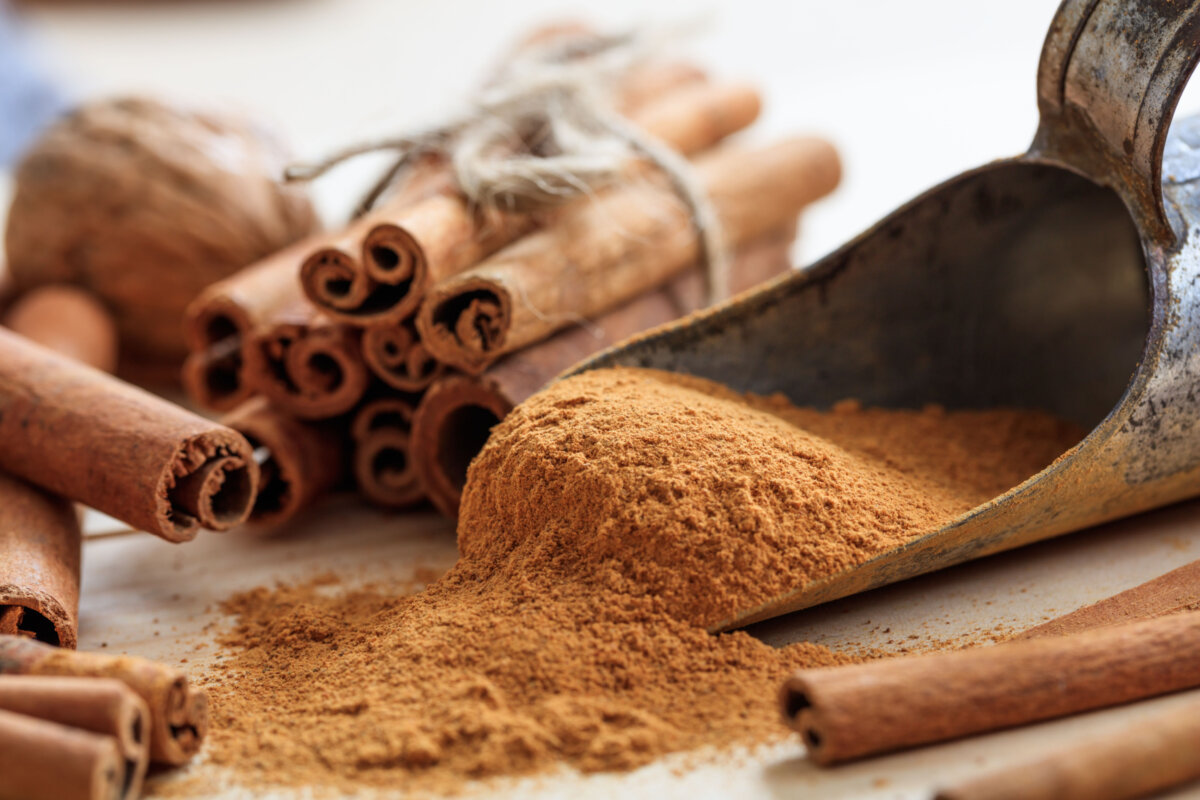
Including cinnamon in your diet may contribute to better blood glucose control, particularly in people with obesity and prediabetes.
One small study published in The American Journal of Clinical Nutrition found that taking cinnamon daily resulted in improved glucose levels in adults with prediabetes who were also overweight or obese.
The study, which was conducted over a 10-week period, included 18 participants who had both an overweight or obese body mass index (BMI) and a diagnosis of prediabetes.
During the first two weeks, participants ate a “beige diet.” This diet included foods typically beige in color, rich in simple carbohydrates, and void of cinnamon.
For the following four weeks, the participants were either given cinnamon capsules or a placebo while continuing on the same beige diet. The capsules looked identical, but one had 4 grams of cinnamon and the other had 4 grams of maltodextrin.
After the four weeks, the participants stopped taking the pills for a two-week “washout” period get back to their baseline state. Then for the next four weeks, they were given the opposite of whatever they had taken previously—those who had taken the placebo took cinnamon, and those who had taken cinnamon took the placebo.
Researchers monitored the participants’ blood sugar levels every 15 minutes through a continuous glucose monitoring (CGM) device for the duration of the study. The CGM results showed that participants had consistently lower blood glucose levels, and lower glucose peaks, when taking cinnamon than when taking the placebo or at baseline.
“The study findings suggest that cinnamon supplementation may help improve glucose control in individuals with obesity-related prediabetes,” Michelle Routhenstein, a registered dietitian and certified diabetes educator, told The Epoch Times in an email. “While promising, further research is needed to confirm these results and understand the long-term effects and potential adverse effects of cinnamon supplementation.”
The Beneficial Properties of Cinnamon
Cinnamon—which is made from the bark of a variety of cinnamon trees—has been used throughout history as a spice and flavoring agent for food, but it has also played an important role in traditional and naturopathic medicine. Cinnamon supplementation is generally considered safe, with minimal toxic or adverse effects.
Studies suggest that cinnamon spice may have antioxidant, anti-inflammatory, antimicrobial, antidiabetic, and anticancer properties. It may also protect against heart disease, high cholesterol, and neurological damage; lower blood pressure; and boost immunity. Finally, cinnamon can affect the gut biome, encouraging the growth of helpful bacteria and inhibiting the growth of bad bacteria.
How Does Cinnamon Help With Blood Glucose Control?
Although the complete mechanism behind cinnamon’s effect on blood sugar levels is not fully understood, some research shows notable link between cinnamon intake and blood sugar control. For example, cinnamon contains polyphenols, which are known to balance glucose levels.
“Polyphenols are known to enhance insulin sensitivity by activating the insulin receptor through mechanisms like activation of glucose transporter-4 receptors, allowing glucose to be more easily brought into the cell,” Routhenstein said. “Additionally, they possess anti-inflammatory properties, which can be advantageous in both diabetes and heart disease management.”
Studies also suggest that cinnamon helps lower blood glucose by imitating the effects of insulin within the body and improving the movement of sugar from the bloodstream into cells. Cinnamon also has the potential to increase insulin sensitivity and improve insulin resistance, which are key to diabetes management.
Study Limitations and Opportunities for Future Research
Two notable limitations of this study are the small sample size—only 18 participants—and the use of maltodextrin as a placebo.
Maltodextrin is often used as an oral placebo during human research trials. However, it is a starchy carbohydrate, and it transforms into glucose when broken down by the body. This can cause a blood sugar spike, which can be particularly problematic for diabetic patients. Therefore, using a different oral placebo with a lower glycemic influence might produce different results.
Yelena Wheeler, a registered dietitian and nutritionist, told The Epoch Times that she is not overly concerned about the use of maltodextrin in the study.
“Consumption of daily maltodextrin, in a way, emulates regular consumption within a typical American diet, which is often layered with multiple sugar sources,” she said. “Therefore, I do not believe that giving the placebo group maltodextrin would have an effect, since they were already fed a fairly low fiber diet, which leads to high glucose levels anyway.”
Wheeler said she is more concerned about the participants’ diet during the study: “The issue I have is that the participants were first on a low fiber ‘beige’ diet which consisted of mostly simple carbohydrates for two weeks. This type of diet can cause anyone to have spikes in blood sugar, but particularly the population that they were studying which mostly consisted of those with higher BMI and blood sugar management issues.”
Overall, the effect of cinnamon intake on diabetes is still somewhat unclear and requires further research.
“I agree with the premise that cinnamon has many properties that benefit glucose management, inflammation reduction, and cardiovascular health,” Wheeler said.